Surrealism in Modern Beauty Packaging: When Imagination Shapes Luxury
How surrealist expression is redefining the luxury aesthetic in fragrance and beauty design — and what it means for brands building lasting visual identity.
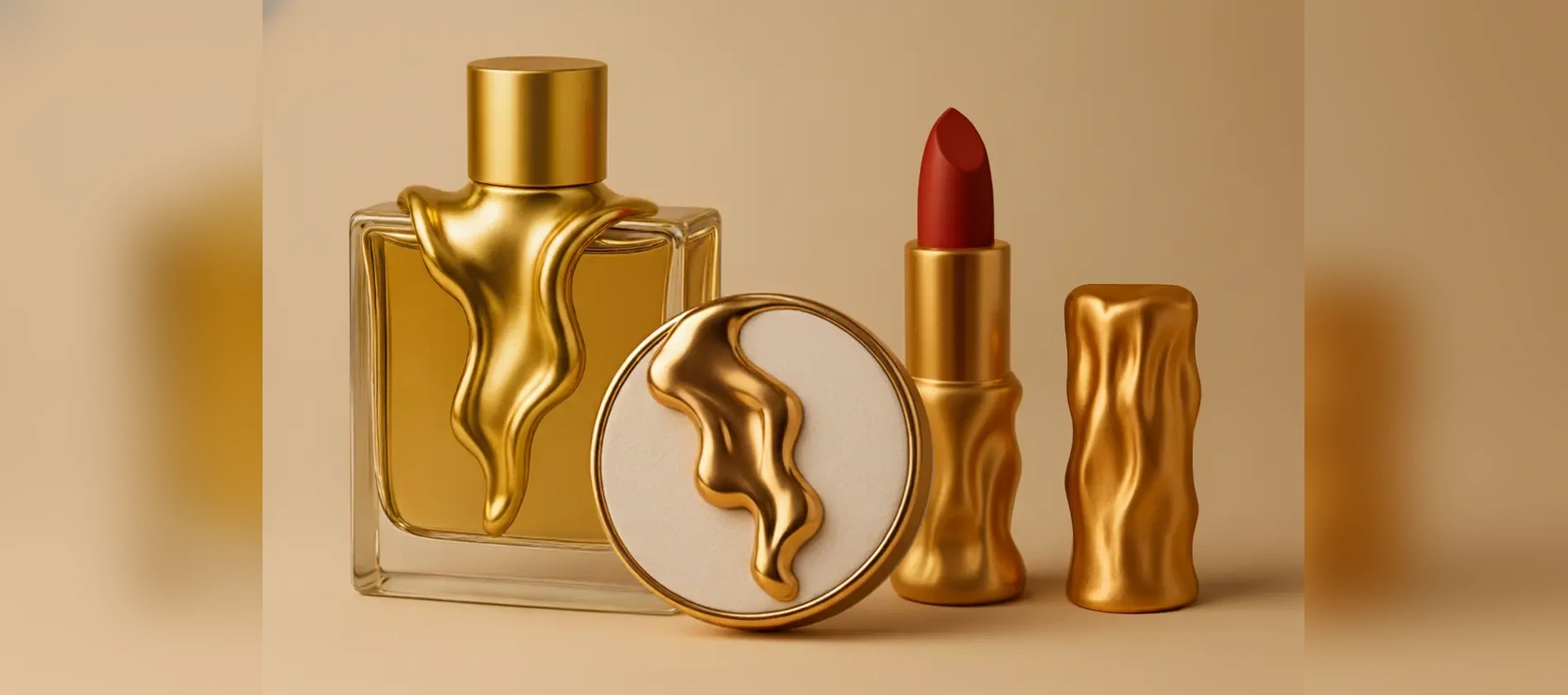
Pick up any beauty product that stopped you in your tracks — really stopped you, the kind where you had to turn it over, feel the weight, run a finger along the surface. Chances are, something about it broke the rules. A form that shouldn’t work but does. A metal detail that looks like it’s moving. A shape that feels more like sculpture than packaging.
That’s surrealism in modern beauty design doing its job. And right now, it’s one of the most powerful tools available to brands that want their packaging to be remembered — not just purchased.
This piece explores why surrealism has become central to contemporary beauty packaging, how the luxury aesthetic is shifting toward emotional and dream-like design language, and how WYSE translates surrealist concepts into precision-crafted metal accessories that brands can actually put into production.
When Reality Meets Imagination: The Case for Surrealism in Beauty
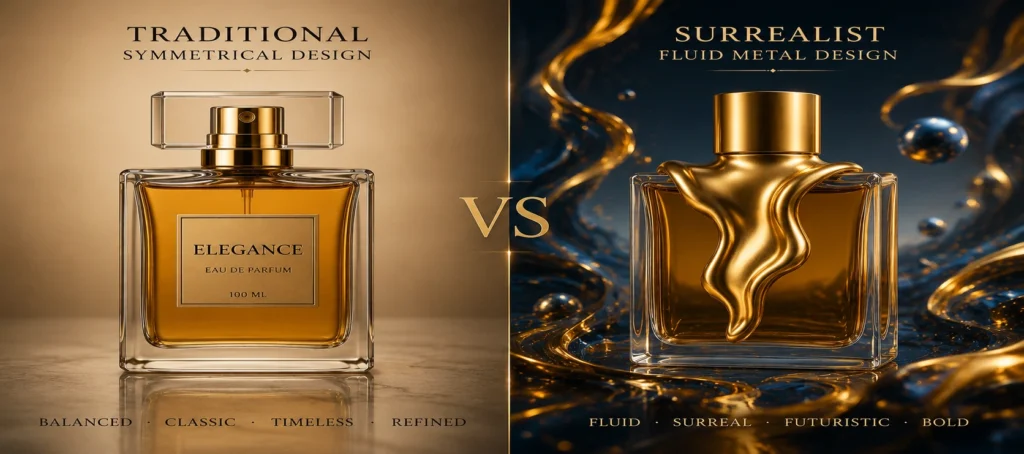
Traditional beauty packaging followed a clear playbook: clean geometry, perfect symmetry, controlled elegance. It worked for a long time. The problem is that everyone ran the same playbook — and now shelves are full of perfectly symmetrical bottles that all look like variations of the same thing.
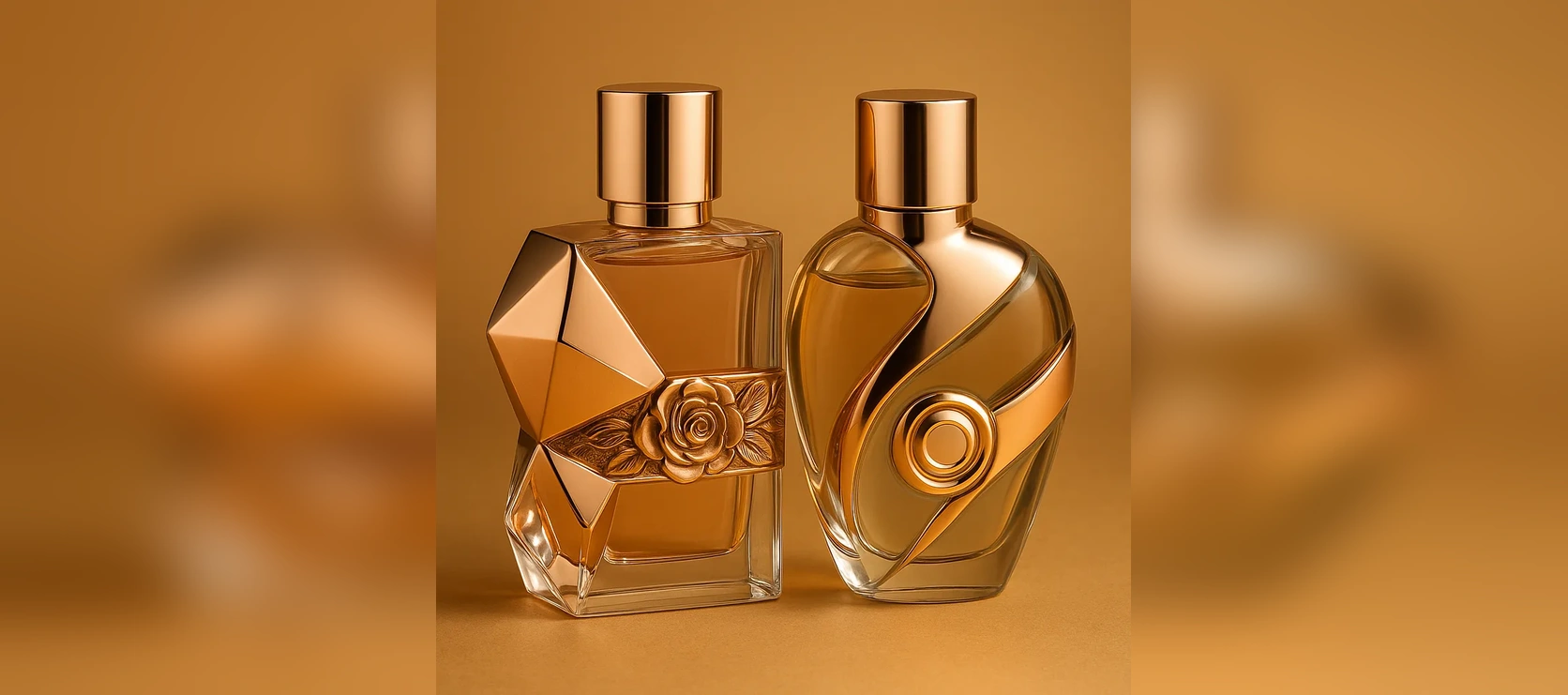
Surrealism offers a way out. It’s a design language built on disrupting expectation — fluid where you expect rigid, soft where you expect hard, organic where you expect geometric. When applied to beauty packaging, it creates something that’s hard to ignore and even harder to forget. The brain registers it as different before it consciously registers it as beautiful.
For brands operating in the upper tier of the market, that moment of recognition — that involuntary pause — is worth more than almost anything else a package can do. It’s the beginning of desire. And desire, in beauty, is the whole game.
Why Surrealism Works — The Psychology Behind the Aesthetic
1. Emotional Impact That Bypasses Logic
Surreal forms don’t ask the brain for permission. A compact with a fluid metal ornament that seems to drape and melt across the surface doesn’t get analyzed — it gets felt. Curiosity. Nostalgia. Intrigue. Sometimes a faint sense of unease that resolves into fascination.
This is what makes surrealist beauty packaging so potent in a commercial context: it creates an emotional response before the rational mind catches up. By the time someone is consciously deciding whether they like it, they’ve already responded to it. That response is what drives desire, sharing, and purchase — especially in a social-media-driven discovery environment.
2. A New Visual Vocabulary for the Luxury Aesthetic
The luxury aesthetic is shifting. For decades, luxury communicated itself through perfection — the most symmetrical form, the most controlled surface, the most restrained color palette. Today’s luxury consumer is more sophisticated than that, and they know it. They’ve seen perfect. Perfect doesn’t surprise them anymore.
What surprises them is intentional imperfection. A melted curve. An asymmetric contour. A sculptural element that breaks the expected geometry of a bottle in a way that feels deliberate rather than accidental. This is what surrealism in modern luxury design delivers — a visual vocabulary that signals:
- Artistic identity — this brand thinks about design beyond convention
- Design courage — they made something that could have failed and chose it anyway
- Emotional depth — there’s something to discover here beyond the surface
- Cultural relevance — this brand is in conversation with contemporary art and design
- Market differentiation — you cannot mistake this for anything else on the shelf
When surreal visual cues are executed well, the packaging becomes instantly recognizable — not just as a product, but as a design object. That recognition is what builds the kind of brand equity that doesn’t depreciate.
3. The Power of Symbolic Form
One of the most underused tools in beauty packaging design is symbolism embedded directly in form. Surrealist design is built on this. The shape of a component carries meaning before a word is read or a logo is noticed.
Some of the symbolic language that surrealist forms bring to beauty packaging:
- A melting or flowing form — transformation, fluidity, the blurring of boundaries
- Soft, draped curves — sensuality, gentleness, the tactile and the intimate
- Unexpected distortions — confidence, the willingness to break convention
- Flowing metal — the coexistence of strength and softness, permanence and movement
- Asymmetric balance — tension resolved, the feeling that something is in motion but controlled
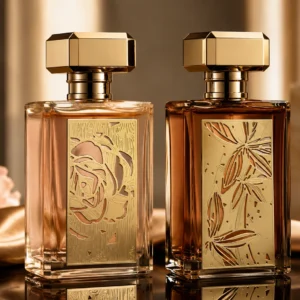
For fragrance brands in particular, this symbolic dimension is especially valuable. Fragrance is already an abstract, emotional product — it sells feeling, memory, and identity. Surrealist beauty packaging extends that emotional register into the physical object itself. The bottle becomes a three-dimensional translation of the same mood the scent is trying to evoke.
The Rise of Sculptural Metal in Surrealist Beauty Packaging
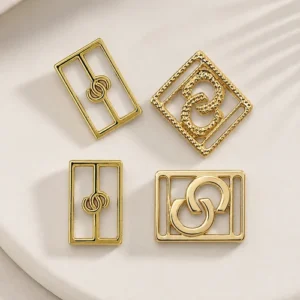
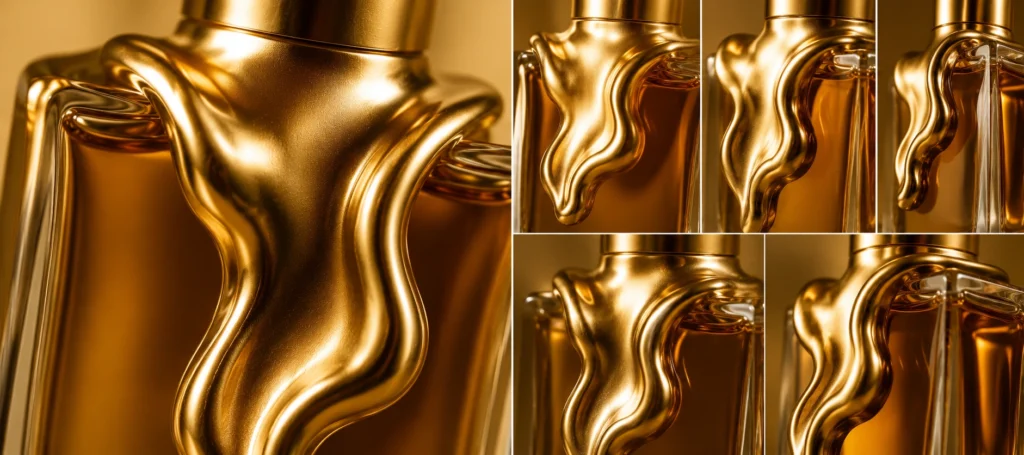
Of all the materials available to beauty packaging designers, metal has become the medium of choice for surrealist expression — and it’s not hard to see why. Metal reflects light the way liquid does. It can be shaped into forms that look like they should be impossible. It adds physical weight that reinforces the emotional weight of the design. And unlike plastic or glass, a well-crafted metal element carries an immediate signal of quality that the luxury aesthetic depends on.
The specific characteristics that make metal ideal for surrealist beauty design:
- Light behavior — metal reflects and refracts light dynamically, so a flowing metal form looks different from every angle — it moves without moving
- Formability — with the right manufacturing approach, metal can achieve organic curves, draped surfaces, and three-dimensional complexity that feels more like sculpture than industrial production
- Physical weight — a sculptural metal element adds mass that the hand registers as quality; this is one of the most reliable subconscious signals of premium value
- Durability — a surrealist metal accent looks as intentional and precise on day 365 as it did on day one; it doesn’t lose its effect over time
- Plating versatility — the same sculptural form can carry completely different emotional registers depending on finish — gold reads as opulent, gunmetal reads as avant-garde, rose gold reads as romantic
Why Not Plastic or Resin?
Plastic and resin can approximate surrealist forms, but they can’t approximate the luxury aesthetic that gives surrealist beauty packaging its market power. The visual effect might be similar. The weight isn’t. The light behavior isn’t. The longevity isn’t. For brands positioning in the premium or luxury tier, metal isn’t just a design choice — it’s a positioning statement.
How WYSE Brings Surrealist Design Into Production
Here’s the challenge that most designers working in surrealist beauty packaging run into: the concept is easy to imagine and hard to manufacture. Organic flowing forms, soft transitions, asymmetric geometry — these are difficult to produce at scale without losing the quality that makes them work. The form has to be emotionally true to the original concept and structurally sound enough for mass production. That’s a narrow window.
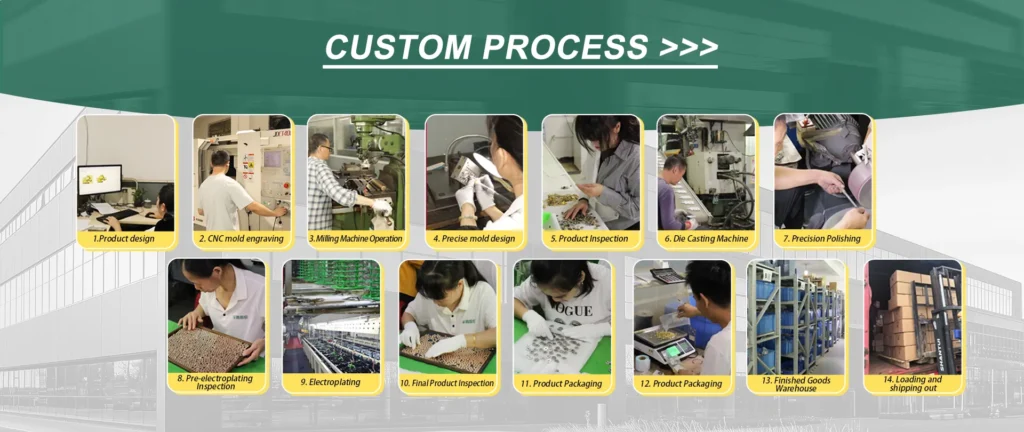
WYSE specializes in navigating that window. Our process translates surrealist design concepts into manufacturable metal accessories without flattening the emotion in the process.
1. Sculptural 3D Modeling & Design Development
Surrealist forms that exist as sketches, renders, or conceptual references need to be translated into engineering-ready 3D models before production can begin. Our design team works with the original concept intent — the flow of a curve, the weight of a drape, the quality of a transition — and rebuilds it in a format that can be manufactured at consistent quality. The goal is to preserve what makes the form emotionally resonant, not just replicate its geometry.
2. CNC Micro-Engraving & Surface Sculpting
For surface details — texture, depth, gentle transitions, the kind of subtle complexity that makes a metal surface feel hand-crafted — CNC micro-engraving is the tool. It allows texture to follow the contour of a surrealist form rather than running across it flatly, which is what gives the finished piece a sense of three-dimensional life rather than decorated flatness.
3. Multi-Layer Plating for Depth & Drama
A well-executed surrealist metal form deserves a finish that matches its ambition. Multi-layer electroplating and PVD coating build color depth, surface richness, and a light behavior that single-layer finishes can’t achieve. For beauty packaging components that need to read as genuine luxury objects — not just well-made accessories — the finishing process is where the difference is made.
4. Hand-Finishing for Emotional Authenticity
This is the step that machines can get close to but not quite replicate. Surrealist forms carry an implicit sense of the human hand — they look like they could have been sculpted. Our artisan hand-finishing preserves that quality: refining transitions, softening edges where they need to be soft, sharpening them where they need to read as intentional. The result is a metal piece that carries the luxury aesthetic of something made with care, not just made with precision.
5. Quality Control for Organic Forms
Standard QC processes are built around geometric tolerances — measuring whether a dimension is within spec. Organic surrealist forms present a different challenge: the ‘correctness’ of a flowing curve isn’t just a measurement, it’s a judgment. Our QC process for surrealist beauty packaging components includes visual reference comparison against approved samples, with specific attention to form character, surface quality, and finish consistency — not just dimensional compliance.
Why Surrealism Is the Future of Beauty Packaging
There’s a structural reason why surrealist beauty packaging is gaining ground — and it’s not just aesthetic trend. It’s about how beauty products are discovered and purchased now.
Beauty purchases increasingly begin with a visual moment — on Instagram, TikTok, a brand’s own content, a shelf display that someone photographs and shares. In that environment, packaging that photographs interestingly is packaging that markets itself. Surrealist forms, with their dynamic light behavior, unexpected geometry, and visual complexity, are naturally photogenic in a way that conventional packaging isn’t.
Beyond discoverability, surrealist beauty packaging creates something that’s increasingly rare and valuable: genuine product desire. Not just purchase intent — desire. The feeling that you want to own this object, hold it, have it on your vanity. That’s an emotional response, and the luxury aesthetic of well-executed surrealist metal design is one of the most reliable ways to generate it.
Timeless or Trend? The Longevity Argument
One reasonable question: is surrealism in beauty packaging a lasting design direction, or a moment that will pass? The evidence suggests it’s structural rather than cyclical. Surrealism as an art movement is over a century old and has never fully left the cultural conversation. Its application to luxury objects — in fashion, jewelry, and interiors — predates its current prominence in beauty. The brands that have built iconic surrealism in modern packaging aren’t riding a trend. They’re building design language that will outlast any season.
Designing Dreams Into Reality: What This Means for Your Brand
Surrealism isn’t right for every brand or every product. But for brands that are building toward a genuinely distinctive visual identity — brands that want their packaging to be part of the conversation, not just on the shelf — it’s one of the most powerful directions available right now.
The questions worth asking:
- Does your brand have an emotional story to tell — and could your packaging tell it more effectively through surrealist form?
- Are you differentiating from competitors — or are your packaging decisions keeping you in the same visual range as everyone else in your category?
- Is your current packaging photogenic — does it create moments that your customers want to share?
- Does the physical object match the emotional promise — of your fragrance, your positioning, your brand narrative?
At WYSE, we believe that beauty packaging should feel like an extension of the brand’s most ambitious thinking — not a functional afterthought. Surrealist metal design is one of the ways we help brands get there.
Where Imagination Flows, Luxury Follows
Surrealism is more than a visual trend. It’s a design philosophy that puts emotion, symbolism, and the power of the unexpected at the center of the creative process. For beauty and fragrance brands building toward a luxury aesthetic that lasts, it offers something that conventional packaging can’t: the ability to make someone feel something before they know what they’re looking at.
WYSE brings surrealism in modern beauty design to life through sculptural metal artistry, precision manufacturing, and a craft process that preserves the emotional intent of the original concept through every stage of production.
If you’re developing beauty packaging that should be felt as much as seen, we’d like to be part of that conversation.
Send us your concept, brief, or reference. Our team will come back with a free development consultation within 24 hours.
Email: sales012@wysecn.com
Website: https://buttonarea.com
WhatsApp: +86 13688844607