The Complete Guide to Swimwear Hardware: Types, Materials, Finishes & Custom Options
Everything swimwear brands and designers need to know about bikini rings, sliders, clasps, and custom hardware — from gold finishes to production-ready sourcing.
A swimsuit lives and dies by its details. The fabric can be perfect, the cut can be flattering, the colorway can be exactly on trend — but if the swimwear hardware is cheap, misaligned, or tarnished after two beach trips, the whole product falls apart. For swimwear brands that care about quality — and especially for brands building toward a luxury or premium position — hardware isn’t a sourcing afterthought. It’s a design decision.
At ButtonArea (WYSE), we manufacture swimwear hardware for fashion brands, independent designers, and OEM buyers worldwide. This guide covers everything: the types of swimwear hardware available, what each one does, how materials and finishes affect both look and longevity, and how to work with a swimwear hardware supplier that can actually deliver at the quality level your brand needs.
What Is Swimwear Hardware and Why Does It Matter?
Swimwear hardware is the collective term for the metal (and occasionally resin or acrylic) components that hold swimwear together, allow adjustment, and add decorative detail. These include rings, sliders, clasps, hooks, D-rings, and decorative charms. Every strap connection, every adjustable tie point, every visual accent on a modern bikini or one-piece comes down to hardware.
What well-chosen swimwear hardware does for a garment:
- Structural integrity — hardware holds the swimsuit together under stress; poorly made components warp, crack, or pull through fabric
- Adjustability — sliders and adjusters allow the wearer to customize fit, which is especially important for swimwear where standard sizing rarely fits perfectly
- Design expression — hardware is visible and prominent; a gold ring at the waist or an asymmetric chain detail across the bust is part of the garment’s visual identity
- Brand positioning — the quality of hardware communicates price point instantly; premium hardware signals a premium product
- Wearability — hardware that sits against skin needs to be smooth, nickel-free, and comfortable; poorly finished components cause irritation
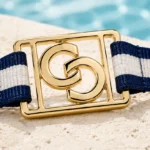
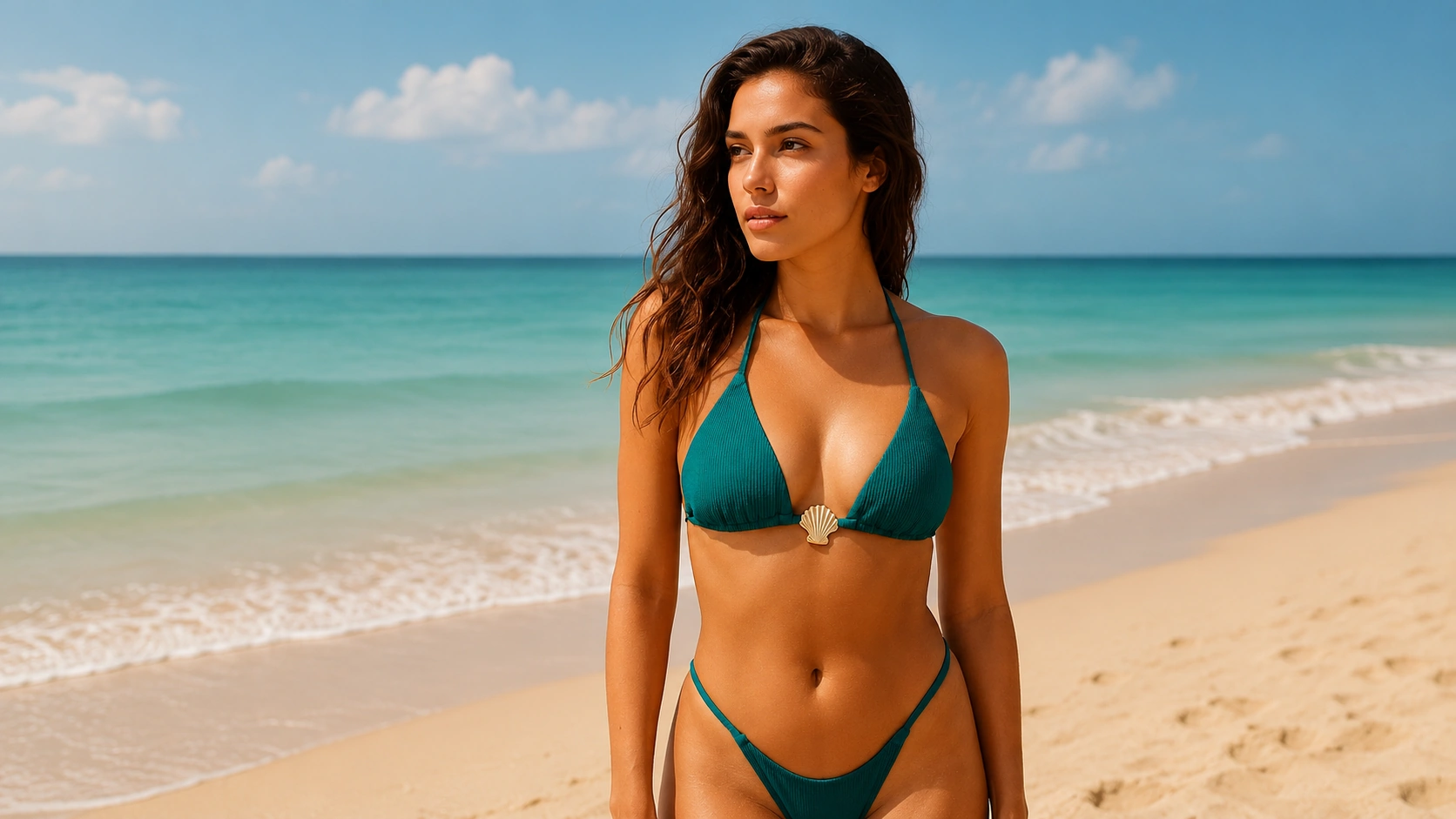
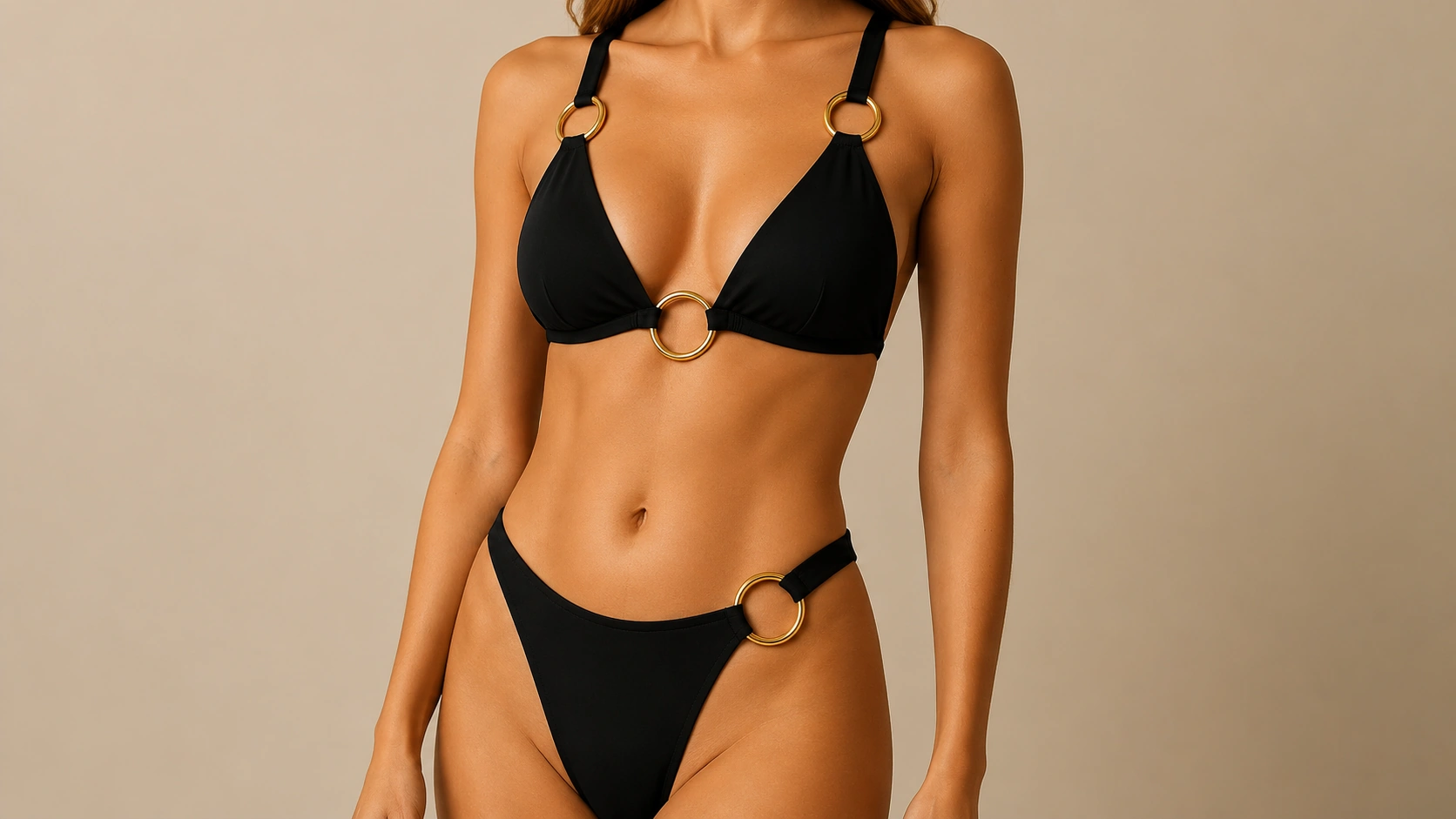
For brands building a recognizable visual identity, swimwear with gold hardware has become one of the most effective signature elements in the category. A consistent hardware finish — the same gold ring style appearing on every piece across a collection — creates visual coherence that customers learn to associate with the brand. Done well, it becomes as recognizable as a logo.
Complete Swimwear Hardware Product Guide
Here’s every type of swimwear hardware we produce, what it does, and where it’s used.
1. Bikini Rings — The Defining Swimwear Hardware Element
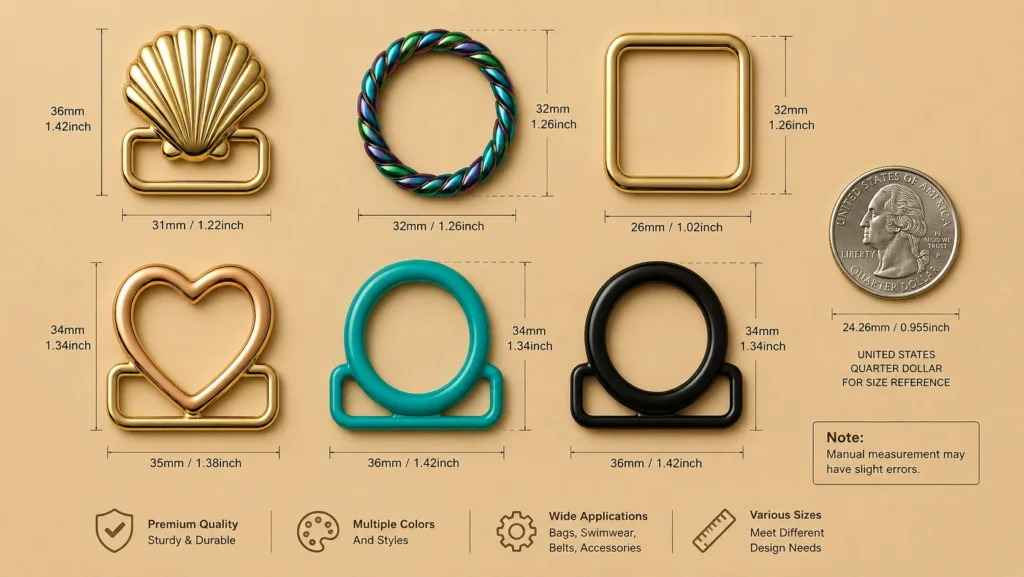
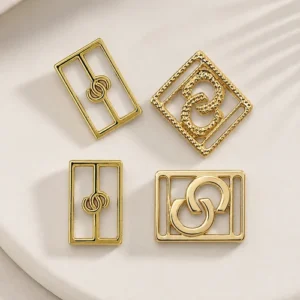
The single most important category of swimwear hardware. Bikini rings are the metal loop elements that connect straps, frame panels, and create the visual focal points of a swimwear design. A ring at the waist junction pulls attention to the hips. A ring at the bustline frames the chest. A pair of rings at the shoulder creates a strappy, editorial look.
Ring styles and their design applications:
- Round rings — the most versatile, works in every placement from waist to shoulder; clean and modern
- Oval rings — softer geometry, more feminine feel; works particularly well at the bustline
- D-rings — one flat edge provides a secure, flat-lying connection point; common at back closures and strap adjustors
- Square and rectangular rings — architectural and modern; strong design statement, suits bold or minimalist brand aesthetics
- Double rings — two concentric rings create a layered, detailed look; popular in Y2K and contemporary resort wear
- Geometric custom shapes — triangle, teardrop, asymmetric forms — when the ring shape itself is part of the brand’s design language
Sizing for swimwear hardware rings typically ranges from 10mm for delicate detail rings to 50mm+ for statement waist and hip rings. Inner dimension must be matched precisely to the strap width — a ring that’s even 2mm too loose looks sloppy and can rotate.
2. Sliders & Adjusters — Functional Hardware That Has to Look Good Too
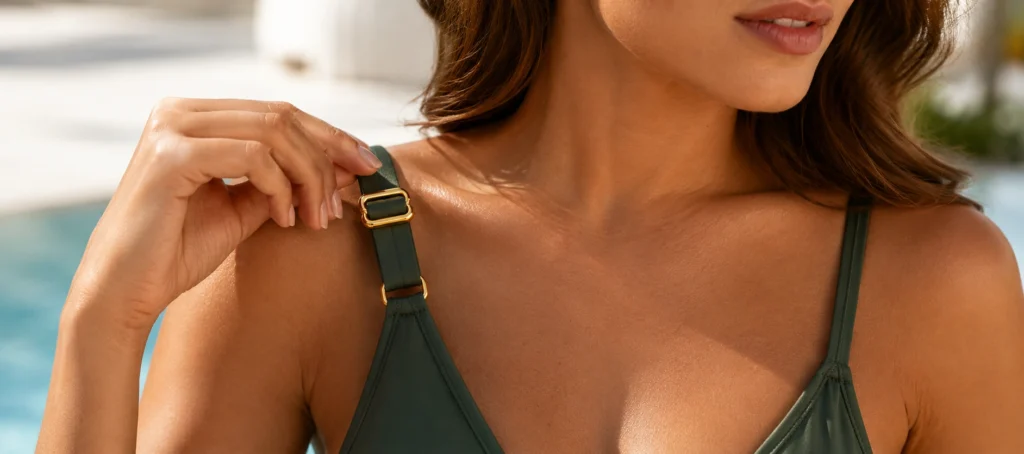
Sliders allow strap length to be adjusted — a practical requirement for swimwear where fit is critical. But a slider is also visible hardware, and it’s handled every time the wearer adjusts the garment. Swimwear hardware sliders need to work smoothly, hold position without slipping, and look as intentional as any decorative component.
Slider types:
- Bar sliders — the most common format; one or two bars allow strap to slide and lock
- Figure-8 sliders — the strap passes through both loops; softer adjustment feel, sits flatter against the body
- Triglide sliders — three-bar format; highest holding strength, used where strap tension is highest
- Decorative sliders — slider hardware designed to be a visible feature element; logos cast into the face, custom shapes
For swimwear with gold hardware, sliders present a common challenge: the sliding mechanism creates wear on the plating over time. Our gold-finish sliders use a hard plating process and internal coating that resists wear at the contact points — so the gold finish holds through the garment’s full product life.
3. Hooks & Clasps — Back Closure and Side Fastening
Back and side closures are one of the highest-stress points in swimwear — they’re opened and closed repeatedly, often with wet hands, and they hold the garment on the body. Swimwear hardware hooks and clasps need to be both secure and smooth to operate.
- Single-eye hook & bar — simple, slim-profile closure for back fastening; clean look, minimal hardware footprint
- Multi-row hook & eye — 3- or 5-position closure allows fit adjustment at the back; common in bikini tops and one-pieces
- Lobster clasps — one-hand operation, secure hold; used where the closure is accessed at the side or hip
- Magnetic closures — premium haptic experience; increasingly used in high-end resort wear where ease of use is a luxury signal
- Snap buttons — flat-profile, quick-release; used in one-pieces and cover-ups where fast opening is practical
4. Decorative Charms & Logo Hardware
The category of swimwear hardware that most directly communicates brand identity. Decorative charms and logo hardware turn functional connection points into brand communication surfaces — and in the current market, where swimwear brands compete heavily on visual identity and social content, this matters a lot.
- Logo charms — brand name or monogram cast in metal, attached to ties, straps, or ring junctions
- Rhinestone accents — crystal or resin stone settings in metal frames; adds sparkle and glamour for resort and occasion wear
- Custom motif charms — brand-specific shapes (shells, stars, geometric forms) that become signature design elements
- Metal tags — stamped or engraved rectangular metal plates attached to waistbands or ties; function as both brand mark and quality signal
A logo charm on a bikini is a specific kind of brand asset. Unlike a printed label that’s hidden inside a garment, a metal logo charm is visible and prominent during wear — in editorial photos, in user-generated content, on the beach. For emerging brands building recognition, this visibility is valuable in a way that interior labeling simply isn’t. And for established brands, consistent swimwear with gold hardware logo charms signal that the product is the real thing — not a dupe.
5. Chain Details & Connector Links
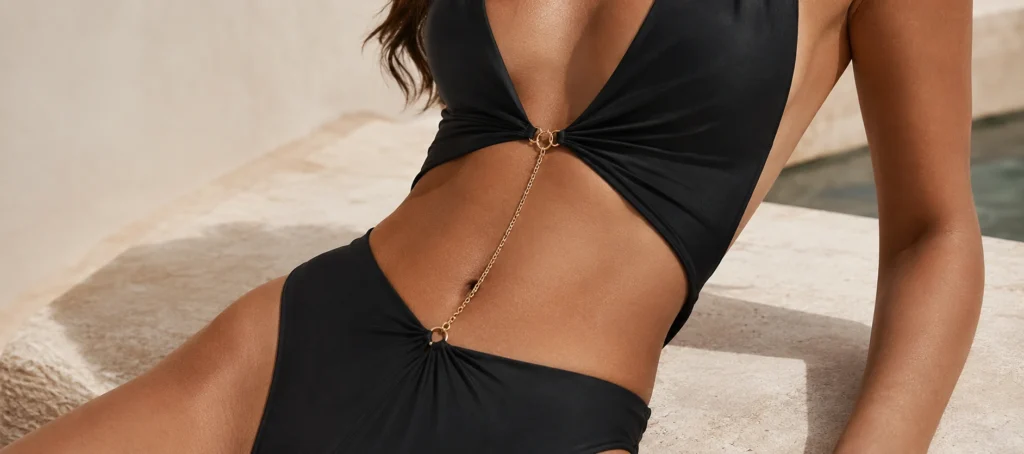
Chain hardware has become a significant trend in premium swimwear hardware design — particularly for brands targeting the resort and luxury swimwear market. Fine gold chains connecting bikini panels, running along the spine of a one-piece, or linking front tie points create a jewelry-like quality that positions the garment at the intersection of fashion and fine accessories.
- Fine link chains — delicate, jewelry-referencing; works between closely spaced panels
- Chain connectors — structured chain segments used as strap replacements for dramatic cutout designs
- Adjustable chain ties — chain-format ties with clasp closure; adds luxury reference and adjustability simultaneously
Chain swimwear hardware is particularly effective for editorial and campaign imagery — it photographs exceptionally well and creates content that organic social sharing drives.
Materials — What Your Swimwear Hardware Is Actually Made Of
The material under the finish determines how your swimwear hardware performs in real use — especially in the demanding environment of a beach or pool. Here’s what matters:
Zinc Alloy (Zamak)
The most widely used material for decorative swimwear hardware. Zinc alloy casts cleanly into complex shapes, holds plating well, and delivers a quality appearance at an accessible price point. It’s the right choice for rings, charms, and decorative sliders where design complexity or custom shapes are required.
- Strengths: design flexibility, complex form capability, cost-effective for custom shapes
- Plating: accepts all major finish types well — gold, rose gold, silver, antique finishes
- Limitation: less corrosion-resistant than stainless steel without proper coating; requires quality plating and clear coat for marine use
- Best for: decorative rings, charms, logo hardware, custom geometric shapes
Stainless Steel
The recommended material for swimwear hardware that will see heavy saltwater and chlorine exposure. Stainless steel is inherently corrosion-resistant — it doesn’t depend on plating thickness for its longevity. For closures, sliders, and any hardware that bears structural load in a marine environment, stainless steel is the professional choice.
- Strengths: exceptional saltwater and chlorine resistance, structural durability, maintains finish through heavy use
- Plating: accepts gold and rose gold PVD coating for premium finish — more durable than electroplating on steel
- Best for: closures, sliders, any load-bearing hardware in premium ocean swimwear
Brass (H59/H62)
The premium-tier material choice for swimwear hardware where weight, feel, and engraving quality matter most. Brass has a natural warmth and density that communicates quality instantly in the hand. Logo charms, signature rings, and decorative hardware in brass with gold plating represent the highest standard available.
- Strengths: premium weight and feel, exceptional engraving clarity, natural warm tone
- Plating: most stable base for gold and rose gold electroplating — deepest color, best adhesion
- Best for: luxury brand logo charms, signature rings, engraved decorative hardware
Finishes — The Gold Standard and Beyond
The finish is what the customer sees. For swimwear with gold hardware — the category that currently dominates the premium end of the swimwear market — finish quality is the whole game. A gold that fades after a season, chips at contact points, or looks different piece-to-piece destroys the premium positioning you’re trying to build.
Gold Finishes
- Shiny 24K Gold — maximum warmth and richness; the benchmark for luxury swimwear hardware; pairs beautifully with warm-toned fabrics
- Matte Gold — brushed or sand-blasted matte surface; sophisticated and modern; less fingerprint-visible than high-gloss gold
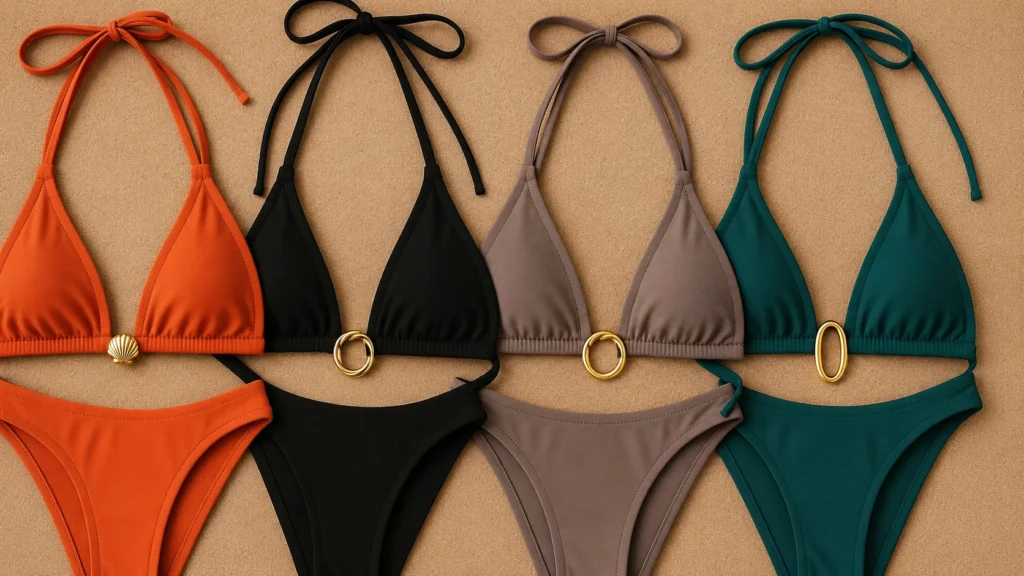
- Champagne Gold — slightly cooler, more subtle than full 24K; contemporary luxury aesthetic; currently one of the most requested finishes
- Rose Gold — warm pink-gold tone; extremely popular for feminine resort and vacation swimwear; pairs exceptionally well with blush, coral, and terracotta fabrics
- Antique Gold — aged, burnished appearance; adds a heritage or artisan quality; popular in boho and vintage-influenced swimwear
Silver & Neutral Finishes
- Bright Silver — clean and modern; works with cool-toned fabrics and architectural swimwear designs
- White K (White Gold Effect) — warm silver with a slight golden undertone; more refined than standard silver, less warm than gold
- Black Nickel / Gunmetal — dark metallic finish; strong visual impact; popular in edgy, urban, or unisex swimwear positioning
Custom & Specialty Finishes
- Pantone-matched PVD — brand-specific color applied via Physical Vapor Deposition; the most durable color finish available for swimwear hardware
- Two-tone finishes — gold and black, gold and silver combinations for complex hardware details
- Enamel color fill — solid color infill in recessed areas of cast hardware; adds color pop to logo or motif hardware
Plating Durability — Why Swimwear Is Different
Standard fashion hardware plating standards are not sufficient for swimwear hardware. Saltwater, chlorine, sunscreen, and UV exposure all degrade standard electroplating faster than normal wear. ButtonArea applies thicker plating layers and adds clear anti-tarnish topcoat to all swimwear with gold hardware — a process specifically developed for marine and pool environments. We also recommend PVD gold coating on stainless steel for brands where maximum finish durability is the priority.

How to Design With Swimwear Hardware — Placement & Application Guide
Knowing what swimwear hardware is available is one thing. Knowing how to use it effectively in a garment design is another. Here’s a placement and application reference for designers:
Waist & Hip Placement
The most impactful placement for a single hardware element. A ring or chain connector at the waist creates a visual focal point that draws the eye and shapes the silhouette. For swimwear with gold hardware at the waist:
- Single large ring (30–50mm) creates a bold, minimalist statement
- Double ring detail adds complexity without visual noise
- Chain connector across the midriff creates a jewelry-like, editorial quality
- Side ring fastenings replace fabric ties for a cleaner, more architectural look
Bustline Placement
Hardware at the bustline frames the chest area and adds visual structure to triangle or bralette tops:
- Center-front ring on a triangle top creates a focal point and allows the fabric panels to be adjusted
- Under-bust ring or chain acts as a structural bra wire substitute with a fashion aesthetic
- Strap ring at the top edge of a bandeau creates a decorative anchor point
Shoulder & Strap Placement
Shoulder hardware defines the silhouette from the front and back view:
- Single shoulder ring for asymmetric one-shoulder styles
- Double ring or chain detail for strappy halterneck designs
- Slider hardware on shoulder straps — visible and functional; must match finish of all other hardware on the garment
Back Placement
The back of a swimsuit is often the most-photographed angle. Hardware choices here matter for both function and aesthetics:
- Ring or chain crossback detail creates visual interest and a secure strap structure
- Hook & eye closure at the back needs to be smooth to operate, secure, and match the finish of all front-facing hardware
- Logo charm at the center back tie is a classic brand placement — visible in beach photos and editorial content
Customization Options — What ButtonArea Offers
As a dedicated swimwear hardware supplier, ButtonArea supports brands at every stage of customization — from choosing a standard ring finish to developing a fully proprietary hardware system.
- Custom mold shapes — round, oval, geometric, heart, multi-ring, or entirely custom; tooling developed in-house
- Logo engraving — CNC or laser engraving on ring faces, slider bars, charm surfaces
- Pantone color matching — any finish color matched to brand specification
- Surface protection — electrophoresis coating, anti-tarnish clear coat, PVD application
- Nickel-free certification — all hardware available in nickel-free, RoHS-compliant formulation
- Mixed-finish sets — for brands that want coordinated hardware sets across a collection
- MOQ: from 100 pcs — accessible for emerging and independent brands
- Sample lead time: 3–5 business days
- Mass production: 10–15 business days after sample approval
Collection-Level Hardware Development
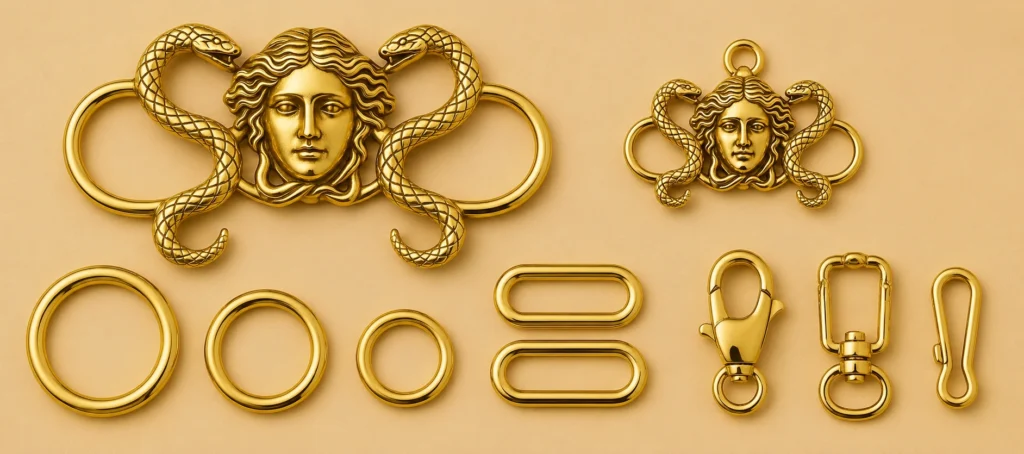
For brands developing a full collection — multiple swimwear styles sharing the same hardware family — ButtonArea offers collection-level development support. We work with you to define a consistent swimwear hardware system across ring sizes, slider types, closure formats, and finish standards. Everything coordinates. Everything ships together. The visual coherence that defines a professional collection is built in at the component level.
Care & Maintenance Guide for Swimwear Hardware
Even the best swimwear hardware benefits from proper care. Share these guidelines with your customers:
- Rinse immediately after saltwater or pool use — this is the single most important step; chlorine and salt begin degrading plating within hours if left on the surface
- Hand wash only — machine washing creates mechanical stress on hardware that loosens plating and deforms rings
- Avoid harsh detergents and bleach — use mild soap or swimwear-specific wash
- Air dry flat — never machine dry; heat accelerates plating degradation
- Store dry — moisture trapped in packaging between uses causes tarnish; store in a breathable pouch or dry flat
- Remove before applying sunscreen — allow sunscreen to absorb before wearing; certain chemical sunscreens react with metal finishes
Why Brands Choose ButtonArea as Their Swimwear Hardware Supplier
There are a lot of swimwear hardware suppliers in the market. Here’s what makes the difference:
- In-house mold making — custom shapes developed and produced under the same roof; no tooling delays from third-party die makers
- In-house plating facility — full control over finish quality, consistency, and the marine-grade durability standards swimwear requires
- Low MOQ — 100 pcs minimum makes custom hardware accessible for brands at every stage
- Fast prototyping — 3–5 day sample turnaround for most standard hardware; 7–10 days for custom mold shapes
- Nickel-free & RoHS compliant — all products meet international skin safety and environmental standards
- Global export ready — export documentation, compliance certificates, and international shipping handled
- Swimwear-specific knowledge — we understand the performance requirements of marine-environment hardware; not all fashion hardware suppliers do
Frequently Asked Questions
Does swimwear hardware rust or tarnish after repeated water exposure?
ButtonArea applies marine-grade anti-corrosion finishes and anti-tarnish topcoat to all swimwear hardware. Stainless steel hardware is inherently corrosion-resistant. With proper care, our hardware maintains its finish through the full product life of the garment.
What’s the best hardware finish for luxury swimwear?
For brands building a premium positioning, swimwear with gold hardware — specifically 24K shiny or champagne gold — is the strongest signal of quality and the most photographed finish in the category. Matte gold is growing in popularity for brands targeting a more understated luxury aesthetic.
Can I get custom logo rings in small quantities?
Yes. ButtonArea supports custom logo hardware from 100 pcs. Custom mold shapes require a one-time tooling investment (typically refunded against minimum production quantity), then produce at standard pricing.
Are the hardware pieces safe for skin contact?
All ButtonArea swimwear hardware is nickel-free and RoHS-compliant. Nickel is the most common cause of skin reactions from metal accessories — eliminating it is a non-negotiable standard for any reputable swimwear hardware supplier.
What’s the difference between electroplating and PVD coating for gold swimwear hardware?
Electroplating deposits gold through an electrical-chemical process and is the standard method for most swimwear with gold hardware. PVD (Physical Vapor Deposition) applies gold through a vacuum process that creates a harder, more scratch-resistant finish — it’s the premium option for brands where maximum finish durability is required, particularly on stainless steel base hardware.
Source Your Swimwear Hardware With ButtonArea
Whether you’re launching your first swimwear collection, scaling an established brand, or developing a fully proprietary hardware system, ButtonArea has the manufacturing capability and the swimwear hardware expertise to support your project from concept to production.
Send us your design reference, hardware specification, or a simple brief. Our team will respond with material recommendations, finish options, and a production timeline within 24 hours.
Email: sales012@wysecn.com
Website: https://buttonarea.com
WhatsApp: +86 13688844607