Custom handbag accessories and custom metal parts: a practical sourcing guide for bag brands
A buyer-friendly guide to choosing locks, clasps, zippers, chains, and other hardware so your next custom bag project is easier to quote, sample, and produce.
A buyer-friendly guide to choosing locks, clasps, zippers, chains, and other hardware so your next custom bag project is easier to quote, sample, and produce.
In handbag design, hardware is never just a small detail. The right handbag accessories help a bag open smoothly, close securely, carry weight properly, and look more valuable at first glance. A turn lock, a zipper pull, a chain strap, or a small rivet can quietly decide whether a bag feels premium, practical, or unfinished.
For bag brands, fashion labels, leather goods factories, and sourcing teams, choosing custom metal parts is also a production decision. The part has to match the design, the leather thickness, the target price point, the order quantity, and the way the bag will be assembled. This guide is written to help buyers prepare clearer specifications and send more accurate inquiries instead of only asking for “some bag hardware.”
Why handbag hardware matters in B2B bag development
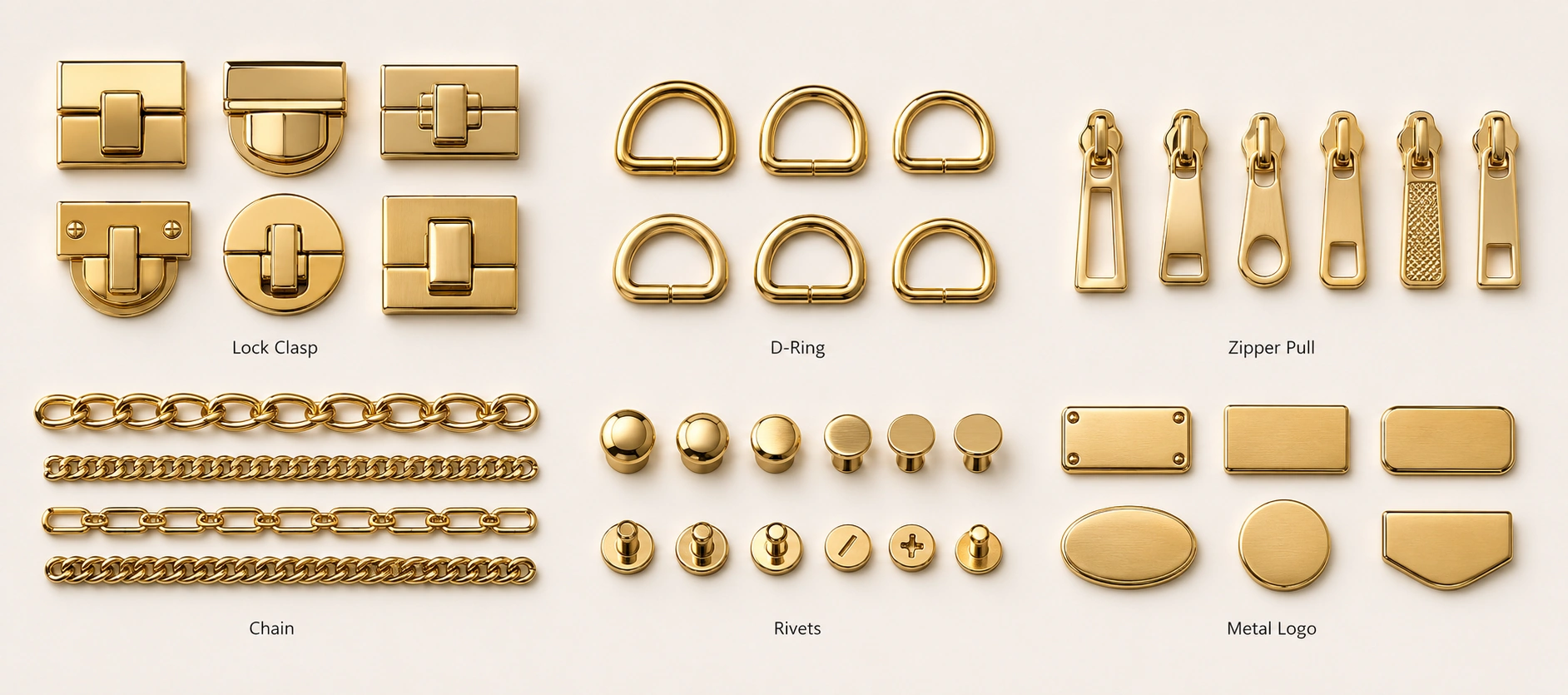
Metal hardware gives a handbag both function and character. Locks and clasps secure the opening. Rings and hooks connect straps. Rivets reinforce stress points. Zippers protect compartments. Chains, frames, logo plates, and decorative trims help shape the style of the finished bag.
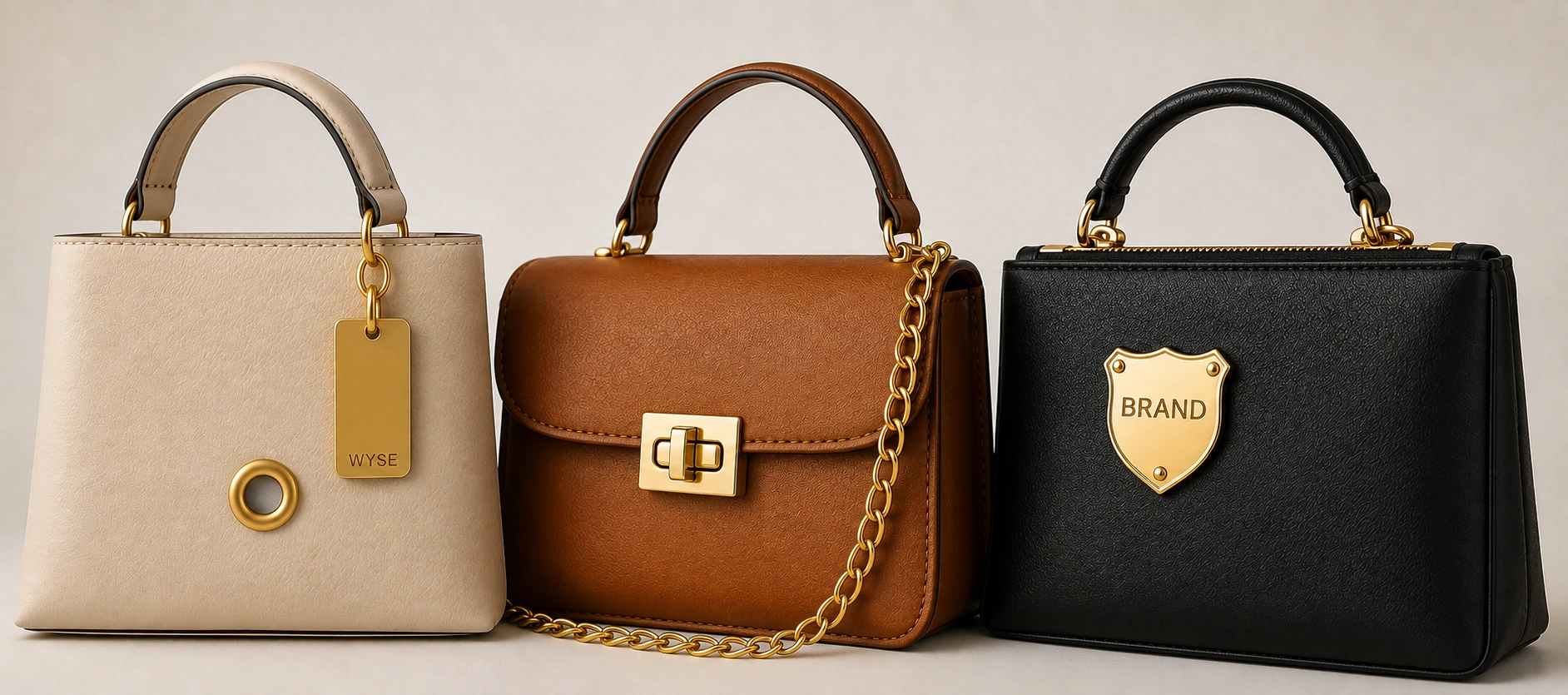
Good handbag accessories can lift the perceived value of a product line, especially when the finish, weight, and detailing feel consistent across the whole design. A polished brass turn lock on a structured leather satchel sends a very different message from a lightweight magnetic snap on a casual tote.
For B2B buyers, the real goal is not only to find attractive custom metal parts, but to find parts that can be sampled, approved, produced, and repeated reliably. A beautiful lock is not enough if the mounting method is wrong, the plating color changes between batches, or the part does not fit the factory’s assembly process.
Common handbag locks and closures
Locks and closures are usually the first handbag accessories people notice because they sit at the front of the bag and are touched every time the product is used. Below are the most common options for fashion bags, leather bags, clutches, briefcases, and structured handbag collections.
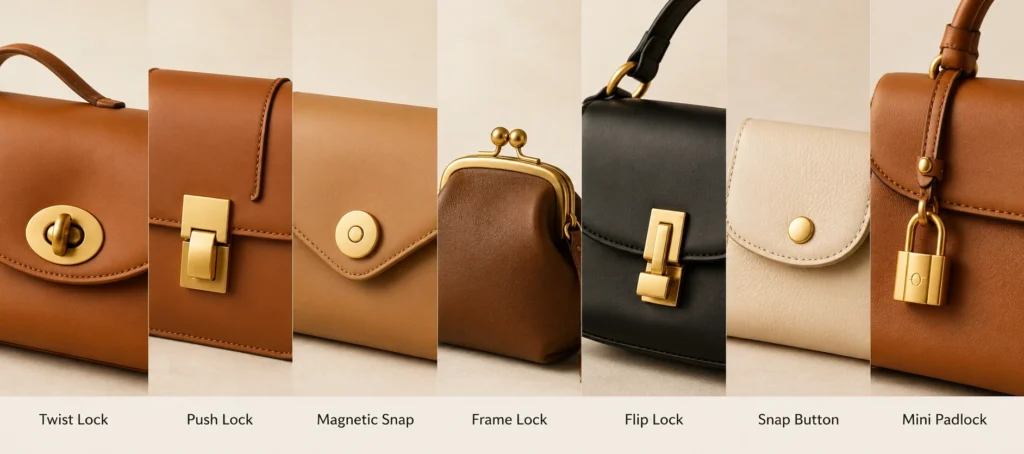
Turn locks / twist locks
Turn locks, also called twist locks, are widely used on flap bags, satchels, briefcases, and structured handbags. The user rotates a knob or bar to open and close the bag. They offer a classic, secure, and recognizable look, which makes them popular for mid-range and luxury leather goods.
They are often produced in brass, zinc alloy, or stainless steel, depending on the price level and durability requirement. Screw-back or prong-back mounting is common.When sending an inquiry, include the flap thickness, front panel thickness, preferred rotation style, finish color, and whether the lock needs a logo or custom face shape.
Push locks / tuck locks
Push or tuck locks use a tab, tongue, or latch that fits into a metal slot. They are often used for structured leather bags, briefcases, shoulder bags, and more formal handbag designs. Many versions include a hidden spring or latch mechanism, giving the bag better security while keeping the front design clean.
For factories, push locks need careful alignment. If the leather panel, flap, and lock plate are not matched correctly, the bag may feel tight, loose, or difficult to close. For custom orders, ask for technical drawings or a sample before bulk production.
Magnetic snaps
Magnetic snaps are simple, fast, and convenient. They are made from two metal halves with built-in magnets that snap together when the bag closes. They are common in tote interiors, casual crossbody flaps, hidden pockets, small clutches, and bags where quick access matters more than high security.
Magnetic snaps are not as strong as mechanical locks, so they work best for lighter openings or smaller compartments. If the bag uses thick leather, lining layers, or stiff padding, confirm the magnet strength and installation depth before approving the part.
Kiss-lock closures
Kiss-lock closures are easy to recognize by the two metal balls or knobs that snap together at the top. They are often used for vintage-style clutches, evening bags, coin purses, and retro-inspired fashion pieces. Modern designs may use cleaner metal frames while keeping the nostalgic feel.
Kiss-lock frames are both functional and decorative, so the frame curve, hinge strength, plating finish, and opening width should be checked together during sampling.
Flip locks and bar locks
Flip and bar locks use a hinged or rotating bar to secure a flap, plate, or side panel. They are often seen on messenger bags, briefcases, structured handbags, and classic leather goods. Brass and stainless steel are common choices when buyers want a stronger, more durable look and feel.
These locks can often be developed as custom metal parts with adjusted bar length, plate shape, screw position, logo embossing, or matching hardware sets for the same collection.
Snap button locks and padlocks
Snap button locks use male and female parts that press together. They are small, practical, and suitable for flap bags, hidden pockets, and light-duty closures. Padlocks are more often used as a luxury-style detail on totes and premium handbag designs, sometimes paired with a small key or decorative lock cover.
Buyers looking for padlocks should specify whether the lock is functional, decorative, removable, or only used as a branding accessory. This avoids quoting the wrong construction.
Beyond locks: essential handbag accessories for complete hardware sets
A complete bag hardware set usually includes more than one lock. For brands developing a full collection, matching the finish, shape language, and quality level of every metal component helps create a cleaner and more professional product.
When buyers source handbag accessories as a set, they can reduce color mismatch, improve sample consistency, and make the final bag look more intentional. This is especially important for collections that include several SKUs, colors, or leather materials.
Connectors: D-rings, O-rings, rectangular rings, tri-rings, hooks, and clasps
Connectors are the parts that carry straps, handles, chains, charms, and detachable accessories. D-rings are widely used for shoulder straps and handle connection points. O-rings give a softer round look and can be functional or decorative. Rectangular rings work well for flat straps, while tri-rings are useful for special strap layouts or unique design details.
Swivel hooks allow quick connection and detachment, making them useful for removable straps or multi-way bags. Clasps can secure straps, charms, small pouches, or decorative elements. For load-bearing connectors, buyers should confirm wire diameter, inner opening size, plating thickness, and pull strength instead of choosing by appearance only.
Decorative and reinforcement parts: rivets, eyelets, grommets, and purse frames
Rivets are used for decoration, reinforcement, or both. Cap rivets add a rounded decorative surface, while jiffy rivets are often used for quick installation in leather goods. Eyelets and grommets reinforce holes and are common on drawstring bags, perforated designs, and strap adjustment points. Metal purse frames give small handbags, clutches, and coin purses structure and shape.
These small custom metal parts may look simple, but they affect durability. The wrong rivet length can damage leather, the wrong grommet size can loosen after use, and a weak purse frame can change the whole feel of a clutch.
Zippers, zipper pulls, and chains
Metal zippers are valued for durability and a premium metallic look, while nylon zippers are lighter and softer for casual bags. Zipper pulls are both functional and decorative, and they can be customized in different shapes, materials, textures, logo styles, or finishes.
Chains are used for straps, handles, edges, and decorative details. Snake chains look slim and streamlined. Heavier metal chains can give a bag a more luxury-inspired look. Decorative chains help add movement, shine, or brand personality.
If a project includes zipper pulls, chains, locks, and rings, it is better to confirm all finishes together. “Gold” can look very different from supplier to supplier, and even small color differences can be obvious on a finished bag.
Choosing materials for custom metal parts
Material choice affects strength, weight, price, corrosion resistance, and the final look of custom metal parts. The right choice depends on the bag’s market positioning, expected use, and target budget.
Brass
Brass is often chosen for luxury handbag locks and premium hardware because it has good strength, corrosion resistance, and a naturally rich appearance. It can be polished to a bright shine or finished in antique styles. Solid brass parts usually feel heavier and more substantial, which can support a premium brand impression.
Zinc alloy
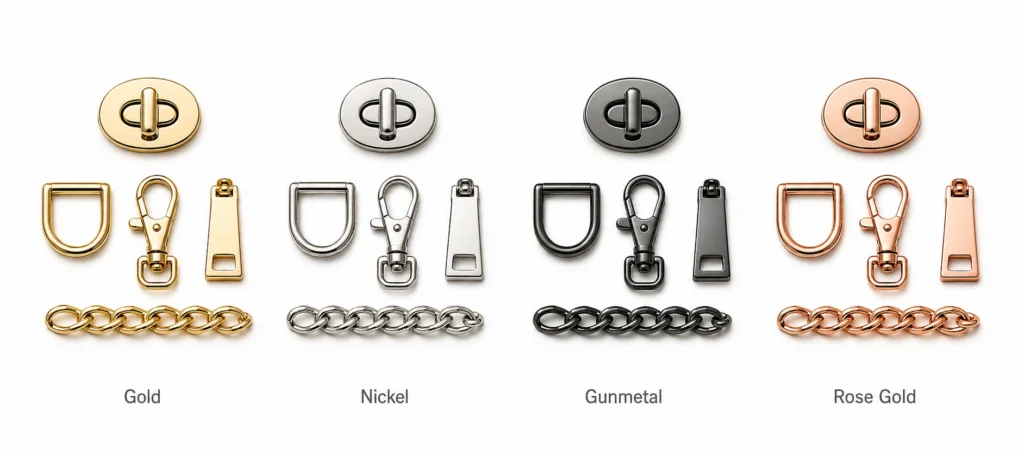
Zinc alloy is common for mid-range handbag accessories because it is easier to form into custom shapes and can be more cost-efficient than brass. It is often plated in gold, nickel, rose gold, gunmetal, or other finishes. It is a practical choice when the design needs shape variety and the project has a controlled budget.
Stainless steel
Stainless steel is durable, rust-resistant, and suitable for sleek modern designs. It can be a stronger option for parts that need long-term performance, although it may cost more and may be less flexible for certain complex decorative shapes.
Copper and plated finishes
Copper is less common for large locks but useful for distinctive decorative pieces, rivets, and specialty parts. Nickel, gold, rose gold, antique brass, black nickel, and gunmetal plating can be applied to different base metals to match the bag design.
For B2B sourcing, do not choose material only by price. Ask what base metal is recommended for the part size, usage, surface finish, testing standard, and order quantity. The most suitable custom metal parts are usually the ones that balance appearance, strength, cost, and production stability.
Surface treatment and finish: make the hardware match the brand
Surface treatment changes both the look and performance of handbag hardware. Polishing creates shine. Sandblasting gives a softer matte texture. Electroplating adds color and surface protection. Antique finishes can make hardware look vintage or handcrafted.
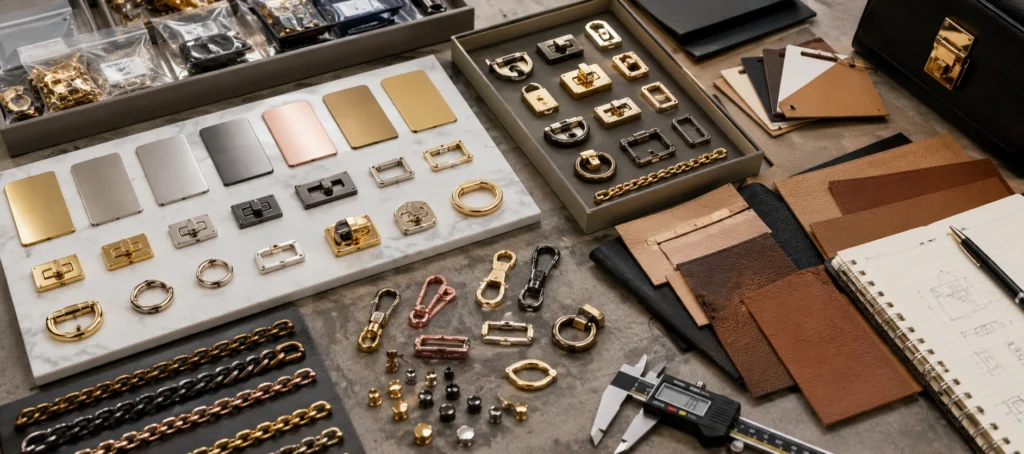
For brand projects, a finish sample or color chip should be approved before bulk production. If the order includes several handbag accessories, approve them together under the same lighting condition so the metal tones match across locks, zippers, rings, chains, and logo parts.
A luxury bag may need a heavier, smoother, more polished finish. A casual canvas tote may use lighter and simpler hardware. A vintage leather line may need antique brass or aged gunmetal. The finish should support the brand story, not fight with it.
Installation methods that affect production
The way a lock or accessory is installed is just as important as the way it looks. The mounting structure affects strength, assembly speed, repair options, and whether the part will stay secure after repeated use.
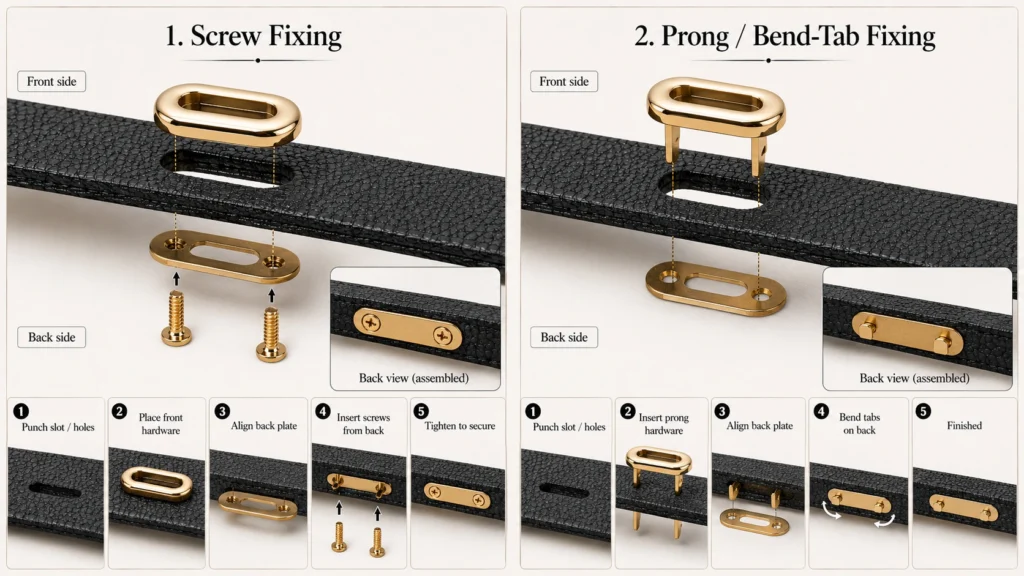
Screw-back mounting
Screw-back hardware uses a threaded post, screw, or nut to secure the part through the leather or material. This method can provide a strong attachment and may be removable for repair or replacement. It is common for strap connectors, lock plates, and heavier hardware.
Rivet or prong-back mounting
Rivet and prong-back mounting are common for flat snaps, turn locks, rivets, and decorative parts. They create a firm permanent attachment, which makes them suitable for heavier use or reinforcement points.
Press-fit mounting
Press-fit hardware is installed by pressing one part into another. It can be fast and convenient for decorative or lighter applications, but it may not provide the same durability as screw or rivet mounting in high-stress areas.
When requesting custom metal parts, share the material thickness, number of layers, lining structure, and installation equipment available at your factory. This helps the supplier recommend the correct post length, screw length, prong length, or backing plate.
Matching hardware with bag styles
Different bag styles need different hardware choices. Casual totes, crossbody bags, and simple clutches often work well with magnetic snaps, snap buttons, light rings, and practical zipper pulls. Structured handbags, satchels, and leather briefcases often look better with turn locks, flip locks, stronger connectors, and more solid metal details.
Vintage-inspired evening bags and small clutches are natural matches for kiss-lock frames, decorative clasps, antique finishes, and refined chain straps. Premium leathers such as full-grain and top-grain leather usually pair well with brass, stainless steel, or carefully plated hardware. Lighter synthetic materials or budget-friendly bags may use zinc alloy or lighter components.
For a complete collection, it is useful to create a small hardware map: which lock, ring, zipper pull, rivet, chain, logo plate, and finish will be used on each bag style. This makes the inquiry more professional and helps the supplier quote the full handbag accessories package accurately.
How to prepare a precise B2B inquiry
A clear inquiry saves time for both the buyer and the supplier. Instead of asking only for a price, prepare enough details so the factory can understand the design, production needs, and quality expectations.
- Accessory type: lock, clasp, D-ring, zipper pull, chain, rivet, eyelet, purse frame, logo plate, or full hardware set.
- Application: flap bag, tote, clutch, crossbody bag, backpack, briefcase, wallet, strap, or decorative trim.
- Material preference: brass, zinc alloy, stainless steel, copper, or supplier recommendation.
- Finish: gold, nickel, rose gold, gunmetal, black nickel, antique brass, matte, polished, brushed, or custom color.
- Size and drawings: dimensions, 2D/3D files, reference samples, photos, or hand sketches.
- Logo and branding: engraved, embossed, debossed, stamped, cut-out, or plain.
- Installation method: screw-back, rivet, prong-back, press-fit, sewing slot, or factory recommendation.
- Quantity: sample quantity, trial order quantity, and estimated bulk order quantity.
- Quality needs: plating durability, rust resistance, pull strength, magnet strength, opening/closing cycle, or color consistency.
- Timeline: sample deadline, production deadline, packaging requirement, and shipping destination.
Buyers who send these details usually receive faster and more accurate quotations for custom metal parts. It also helps filter serious suppliers from general catalog sellers.
Working with a custom handbag hardware supplier
For custom bag projects, the supplier should be able to support more than product selection. Useful support may include material advice, 2D or 3D design review, mold development, logo customization, plating options, sample making, packaging suggestions, and bulk production control.
If your brand needs exclusive hardware, ask whether OEM and ODM service is available. A supplier that can adjust shape, size, logo position, finish, attachment method, and matching sets can help turn general handbag accessories into brand-specific custom metal parts.
Before placing a large order, approve physical samples. Check the weight, surface smoothness, plating color, edges, screw fit, magnetic strength, opening feel, and how the hardware looks on the actual bag material. Photos are helpful, but physical testing is still important for parts that people touch every day.
Conclusion: better hardware specs lead to better inquiries
Choosing the right handbag accessories is about more than decoration. Locks, clasps, zippers, chains, rings, rivets, frames, and logo parts all affect how a bag looks, feels, opens, carries, and lasts.
For B2B buyers, a strong inquiry should connect design ideas with practical production details. When you know the lock type, material, finish, size, installation method, quantity, and quality expectations, suppliers can quote more accurately and recommend better custom metal parts for your handbag project.
Got a handbag, leather bag, or fashion accessories project in mind? Send us your drawings, reference photos, preferred finish, and estimated quantity. We can help you turn the right hardware idea into a workable custom solution.
Email: sales012@wysecn.com
Website: https://buttonarea.com
WhatsApp: +86 13688844607