Magnetic Enamel Fridge Magnets: Development, Production, and Quality FAQ
A practical look at how custom metal enamel fridge magnets are developed, produced, finished, and inspected for tourism, museum, cultural, and souvenir projects.
Why Magnetic Enamel Fridge Magnets Need More Than a Nice Design
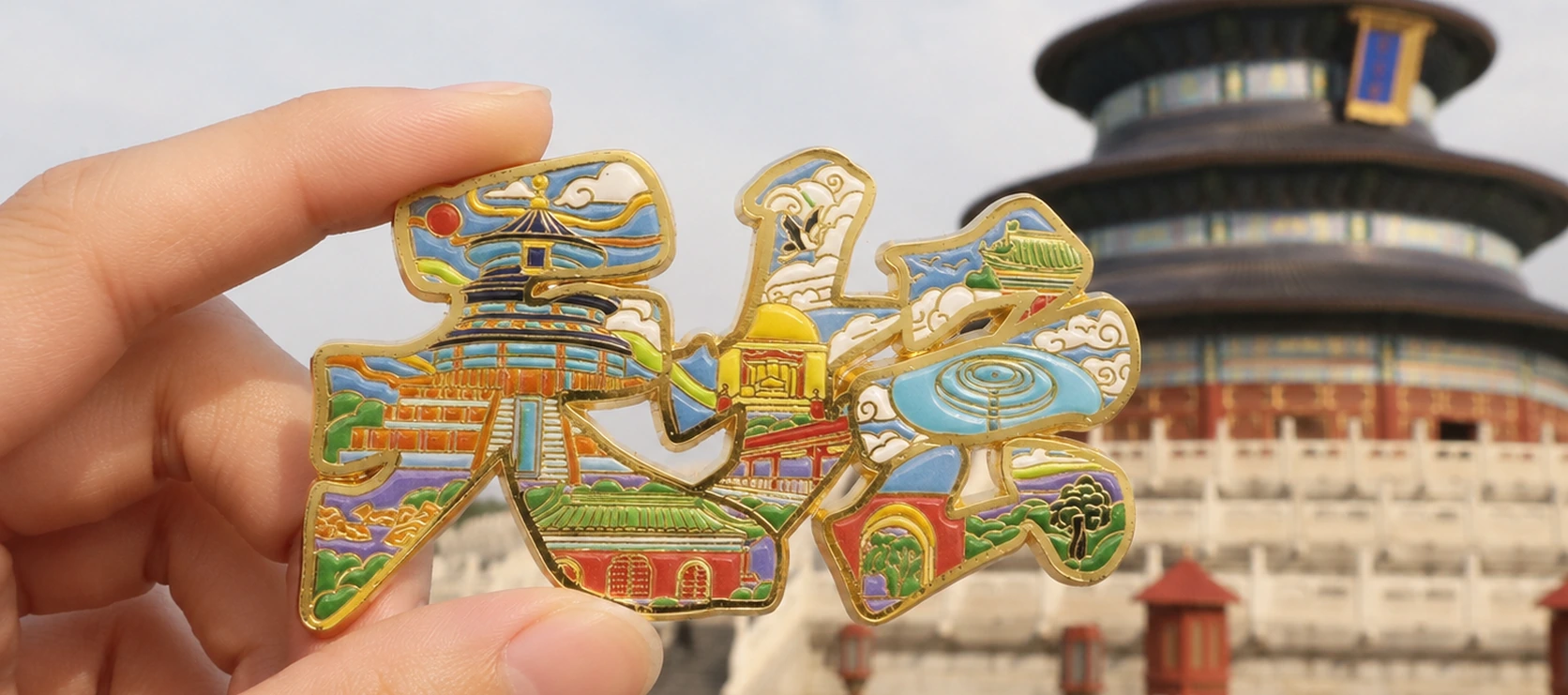
A good souvenir magnet does more than hold a postcard on a refrigerator. It should carry a city story, a landmark memory, or a cultural symbol in a form people actually want to keep. That is why magnetic enamel fridge magnets are often used for museums, tourist attractions, cultural gift shops, city branding projects, exhibitions, and destination souvenir collections.
This type of product usually combines a shaped metal body, detailed artwork, colored enamel or UV printed details, electroplated metal finishes, and a hidden magnetic backing. When these parts are made well, the final piece feels collectible instead of disposable.
For procurement teams, the real question is not only whether the sample looks attractive. It is whether the same look, color, thickness, magnet position, and surface quality can be repeated across hundreds or thousands of pieces without delays or quality surprises.
Product Development Overview: From City Artwork to Finished Magnet
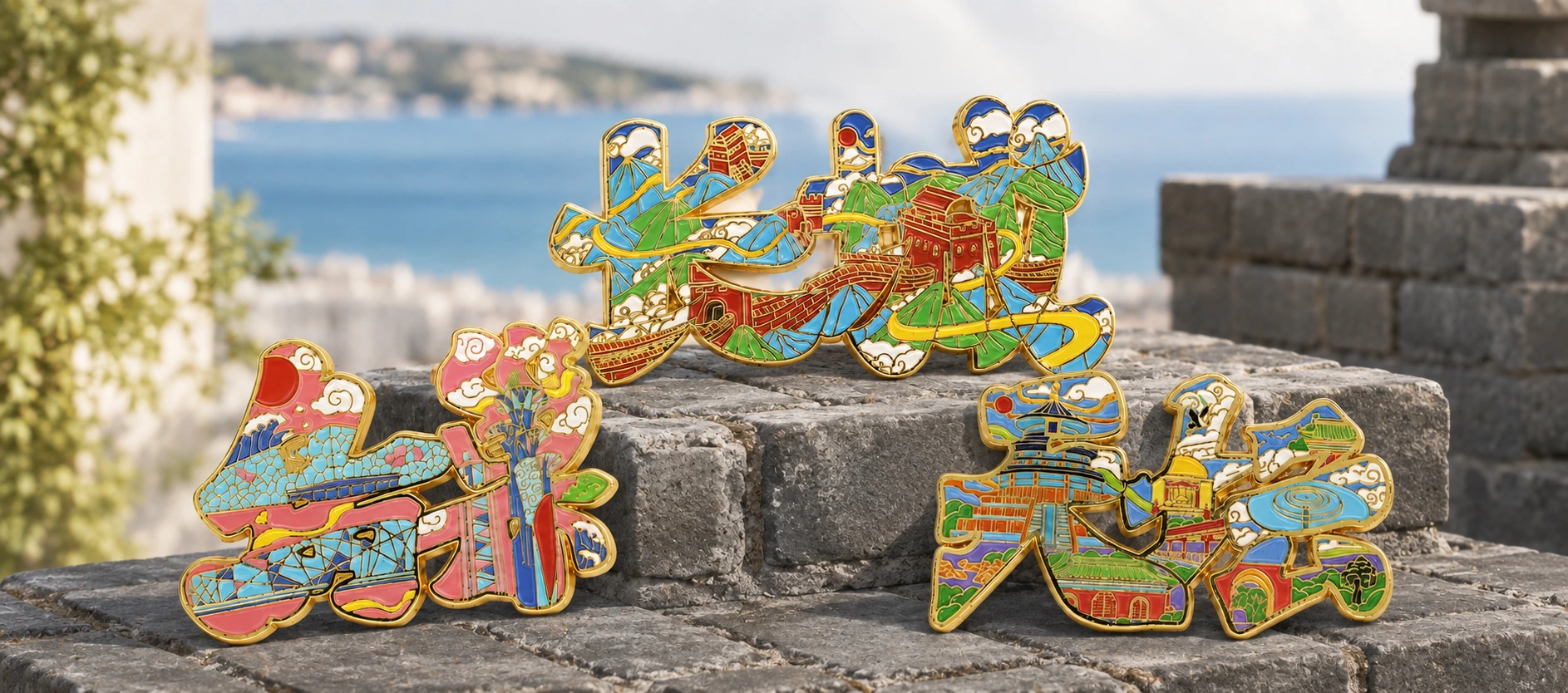
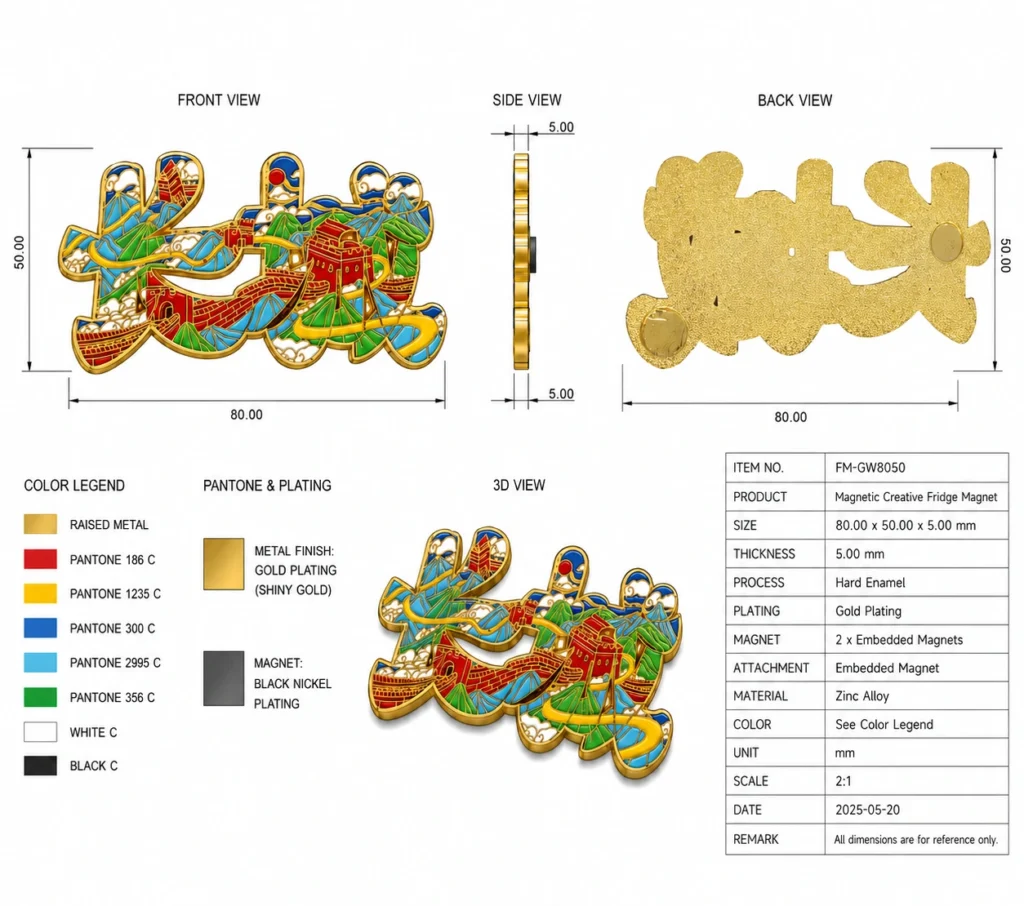
The development process begins with the artwork. City names, Chinese characters, landmark silhouettes, maps, temples, bridges, walls, mountains, skies, clouds, and local cultural symbols can all become part of the design. In many projects, the character or landmark outline forms the outside shape, while the inner space is filled with colorful architecture, landscape, and cultural details.
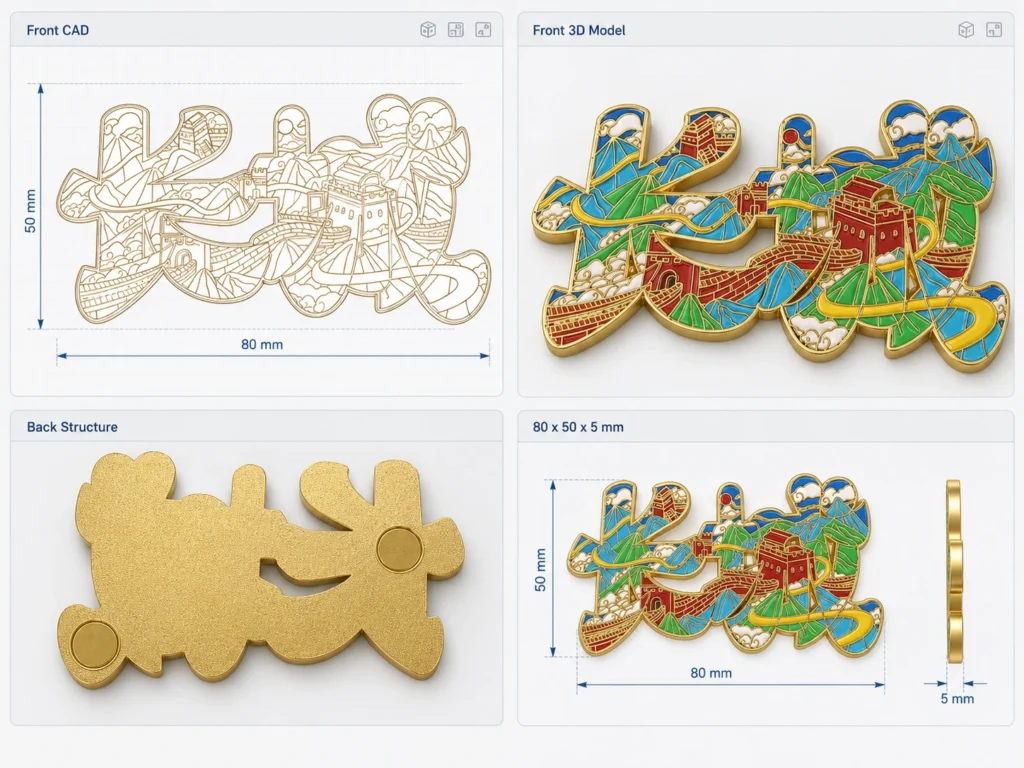
Once the design direction is confirmed, the technical work starts: size review, structural review, mold engineering, sample production, surface finishing, color application, magnet installation, and final inspection. Each step affects the final appearance and the stability of mass production.
A typical project moves through design, sampling, customer approval, bulk production, quality inspection, and shipment. This flow helps both sides confirm the visual result early and avoid costly changes after mass production begins.
FAQ 1: How Do You Keep Fridge Magnet Blanks Accurate and Consistent in Bulk Production?
We use a Beijing Jingdiao three-axis precision engraving center for mold development and precision processing. The X/Y/Z axis positioning accuracy is 0.008 / 0.008 / 0.006 mm, and the repeat positioning accuracy of all three axes can reach 0.005 mm. In actual mold processing, accuracy can be controlled at around 0.01 mm.
This precision machining system helps reproduce the product outline, artwork lines, recessed areas, edge structure, and back-side magnet installation position with a high level of control. It reduces dimensional variation caused by mold error and gives the later production steps a more stable foundation.
After the mold is completed, the first production blanks are checked against the approved sample. We inspect size, thickness, outline, groove details, and assembly position, so different batches can stay visually and structurally consistent.
Key data:
- X-axis positioning accuracy: 0.008 mm
- Y-axis positioning accuracy: 0.008 mm
- Z-axis positioning accuracy: 0.006 mm
- X/Y/Z repeat positioning accuracy: 0.005 mm
- Mold processing accuracy: around 0.01 mm
For souvenir brands and tourism retailers, this level of control helps keep die-cut edges clean, magnet backs properly aligned, and character-based outlines consistent from piece to piece.
FAQ 2: How Are Corrosion Resistance, Wear Resistance, and Anti-Aging Performance Improved?
We select high-purity zinc alloy as the product blank material and use a nickel layer as the base for metal surface treatment. The nickel base helps improve surface flatness, coating adhesion, corrosion resistance, and long-term stability.
Before PVD treatment, products enter a high-vacuum environment of about 10^-3 Pa. Vacuum ion bombardment and plasma cleaning are used to remove surface oil, oxides, and tiny impurities. This activates the metal surface at an atomic level, allowing the later coating to attach more evenly and firmly to the base material.
After pretreatment, we use vapor deposition and multi-arc ion plating to form a high-hardness PVD coating of about 0.3 μm. This dense protective layer helps improve wear resistance, corrosion resistance, oxidation resistance, and color durability. As a result, the magnet can keep a stable metallic look during daily handling, humid display conditions, and long-term souvenir use.
Key process data:
- Vacuum environment: about 10^-3 Pa
- Surface pretreatment: ion bombardment and plasma cleaning
- Surface activation: atomic-level activation
- Coating method: vapor deposition and multi-arc ion plating
- PVD coating thickness: about 0.3 μm
- Coating performance: high hardness, wear resistance, and corrosion resistance
For brands selling magnets in high-touch retail environments, a stronger surface finish helps reduce complaints about tarnishing, fading, or early wear.
FAQ 3: How Do You Make the Color Artwork Accurate and Firmly Attached?
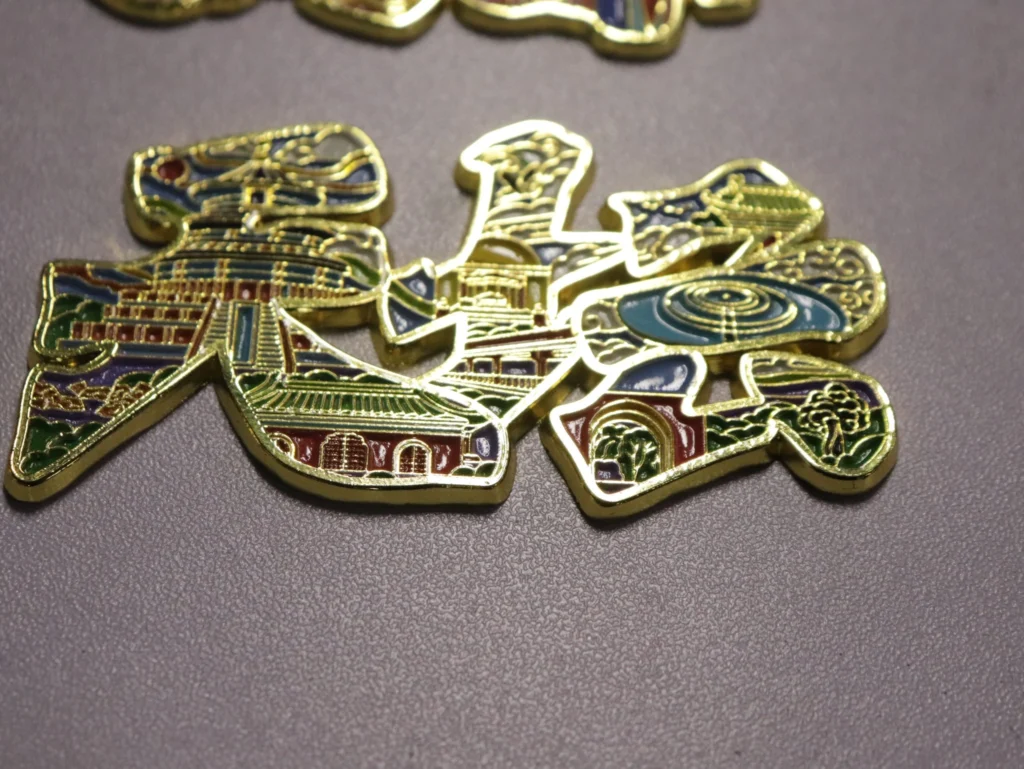
We use UV printing to complete the colorful artwork on the fridge magnet surface when the design requires detailed illustrations, fine lines, gradients, or complex image effects. Before printing, the metal surface is cleaned and checked to prevent oil, dust, or impurities from affecting ink adhesion.
During UV printing, each piece is held in a dedicated positioning fixture to control the position difference between the artwork and the metal blank. After the UV ink is printed, it is immediately cured with ultraviolet light, forming a stable colored layer on the product surface. This helps reduce image shift, color overflow, blurred details, and weak local adhesion.
For projects with brand color requirements, we match colors based on the customer’s Pantone color number or approved sample. Before bulk production, we confirm artwork placement, color, saturation, line quality, and fine detail performance. During mass production, the approved sample becomes the standard for controlling visual consistency between products and batches.
It is also important to use the right terminology. UV printing creates a UV-cured printed color layer. If a project uses true enamel, baked paint, or doming, the corresponding filling, curing, and inspection process will be used instead.
In practice, many custom fridge magnet projects combine processes. Raised metal lines and recessed color areas can create an enamel-like dimensional look, while UV printing can support detailed city illustrations, gradients, or small cultural icons that are difficult to separate by metal lines alone.
FAQ 4: What Quality Tests Are Used for Finished Fridge Magnets?
To verify the stability of the metal coating, colored layer, magnetic backing, and overall structure, we arrange different quality tests according to product requirements.
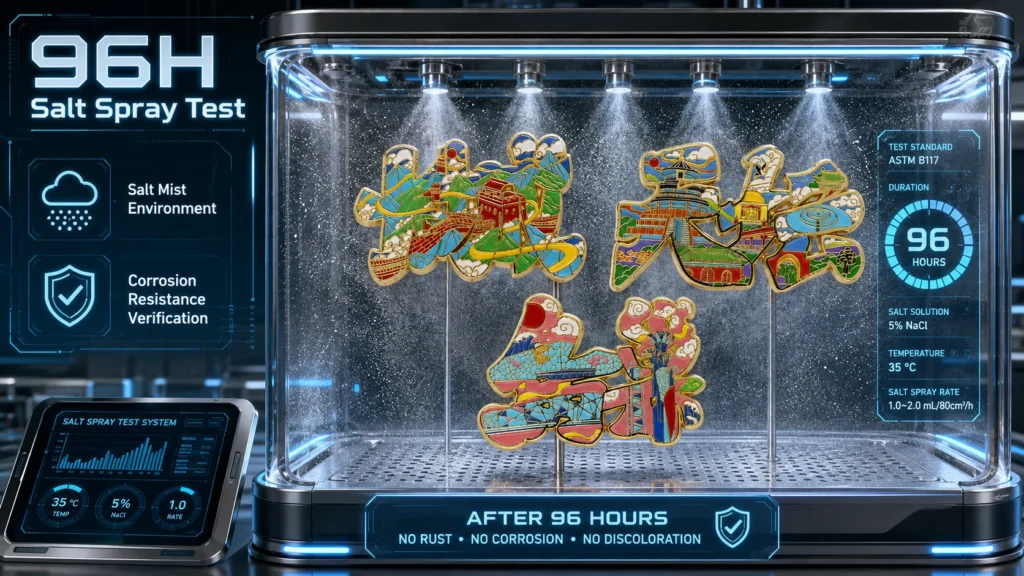
96-Hour Salt Spray Test
Products can be tested for up to 96 hours in a salt spray environment to evaluate the corrosion resistance of the metal base, nickel layer, and PVD coating. After testing, we check whether there is rust, oxidation, coating discoloration, loss of gloss, blistering, cracking, peeling, or abnormal corrosion around edges and grooves.
Artificial Sweat Test
The artificial sweat test simulates long-term contact with hands. It checks whether salt and other components in sweat affect the metal coating or colored layer. After testing, we observe color change, surface corrosion, loss of gloss, artwork fading, and abnormal adhesion of the color layer.
Aging Test
Aging tests evaluate product stability under continuous temperature, humidity, and time. We check whether the metal color changes significantly, whether the UV printed layer cracks, fades, or peels, whether the blank deforms, whether the coating bubbles or loses gloss, and whether the magnet and installation structure remain secure.
Dimension and Appearance Inspection
We inspect size, thickness, outline, grooves, edges, artwork position, and surface completeness according to the confirmed drawing and approved sample. Mold processing accuracy of around 0.01 mm provides a strong basis for stable bulk production.
Adhesion and Magnetic Structure Inspection
Finished products are also checked for the adhesion of the PVD coating, UV printed layer, and other decorative layers. The goal is to confirm that the surface will not peel or fall off easily during normal use. We also check the position, firmness, and holding performance of the back magnet to make sure the magnetic structure meets real-use needs.
These tests are especially useful for tourism, museum, and gift shop buyers because souvenir magnets are often handled repeatedly before and after purchase. Durability is part of the customer experience.
From Precision Mold to Durable Surface: Every Step Is Supported by Data
A reliable magnetic enamel fridge magnet project does not depend on appearance alone. It starts with around 0.01 mm precision mold processing, continues through 10^-3 Pa high-vacuum ion cleaning, atomic-level surface activation, a 0.3 μm multi-arc ion coating, UV printing, and multiple finished product tests.
Together, these steps help control dimensional consistency, surface durability, artwork accuracy, and long-term use performance. For buyers, this means a smoother development process, clearer quality expectations, and fewer production risks.
Product Advantages for Tourism, Museum, and Souvenir Brands
Magnetic enamel fridge magnets are a strong choice for destination brands because they combine visual storytelling with practical everyday use. They are small enough for easy retail display, but detailed enough to carry landmark artwork, city identity, event themes, and cultural symbols.
- Strong visual identity: custom shapes, Chinese characters, city names, and landmark illustrations help the magnet feel exclusive to one place or campaign.
- Premium souvenir positioning: metal, enamel-like color, polished edges, and a hidden magnet create a more valuable look than flat printed souvenirs.
- Flexible customization: size, thickness, shape, plating color, artwork style, enamel effect, UV printing, and magnet configuration can be adjusted for different projects.
- Better collection potential: city series, museum editions, cultural festival themes, and matching gift sets can encourage repeat purchases.
- Stable mass production: precision mold development and approved sample control help keep the final products consistent across batches.
What to Prepare Before Sending an Inquiry
To help us evaluate your project faster, you can send your city name, landmark references, logo, artwork files, preferred size, plating color, color requirements, magnet strength needs, estimated quantity, packaging idea, and expected delivery schedule. If you only have a rough concept, a sketch or reference photo is enough to start the discussion.
Have an idea for your next custom project? Whether you already have a clear design, a rough sketch, or just an early concept, feel free to contact us through the details below. Our team will review your request carefully and get back to you within 24 hours.
Email: sales012@wysecn.com
Website: https://www.buttonarea.com
WhatsApp: +86 13688844607