How We Developed a Halloween Bottle Decoration Series in 30 Days
A fast-turn B2B development case showing how a coordinated Halloween bottle-neck accessory collection moved from approved artwork to sampling, die casting, bulk production, and inspection within a one-month schedule.
Halloween packaging has a very short selling window. A design can be visually strong, but if sampling, tooling, production, and delivery miss the launch date, the whole seasonal opportunity can disappear. That is why this Halloween project was not only about making decorative metal pendants. It was also a test of how quickly a factory could turn a complete visual concept into a coordinated, production-ready collection.
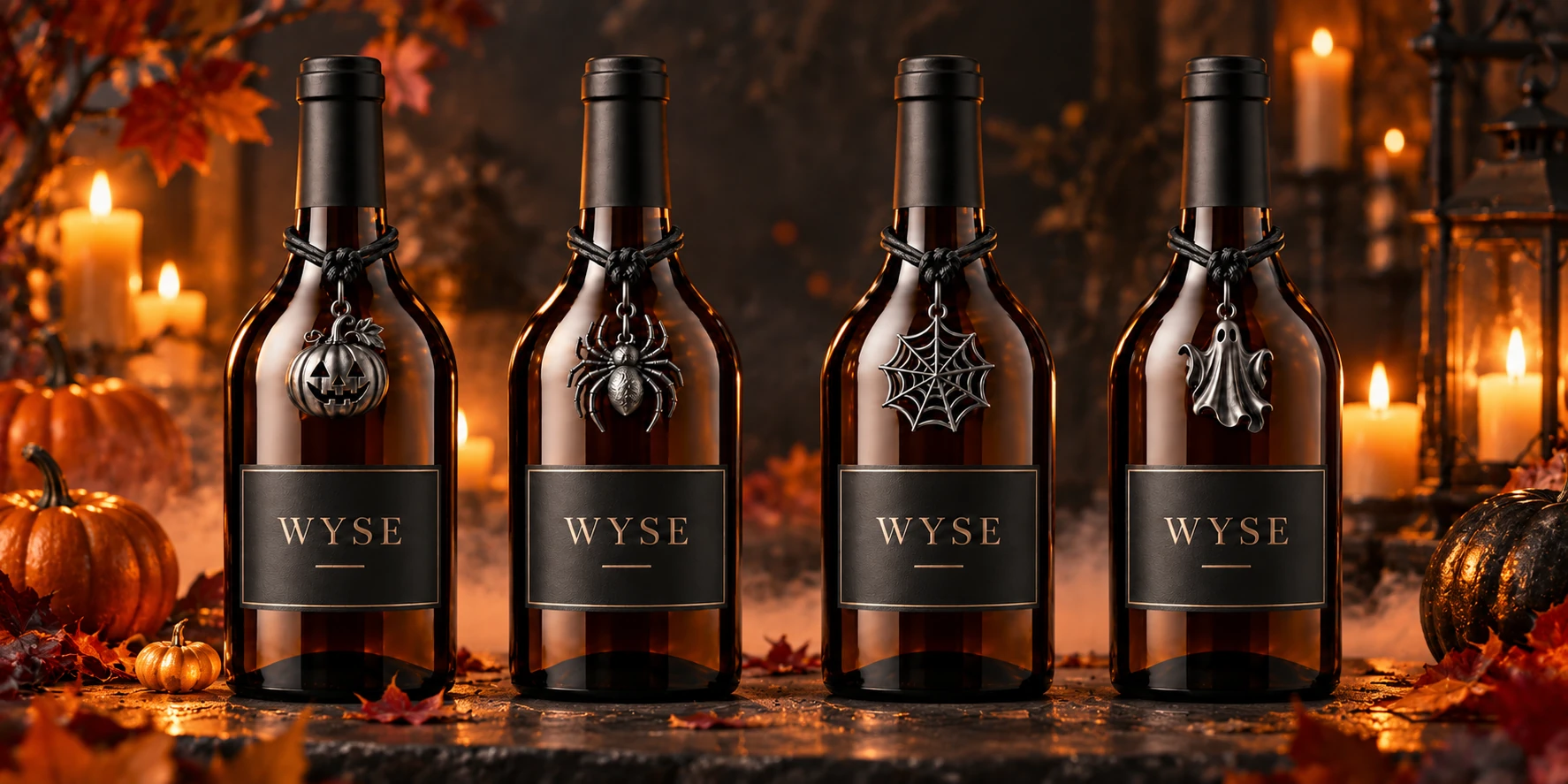
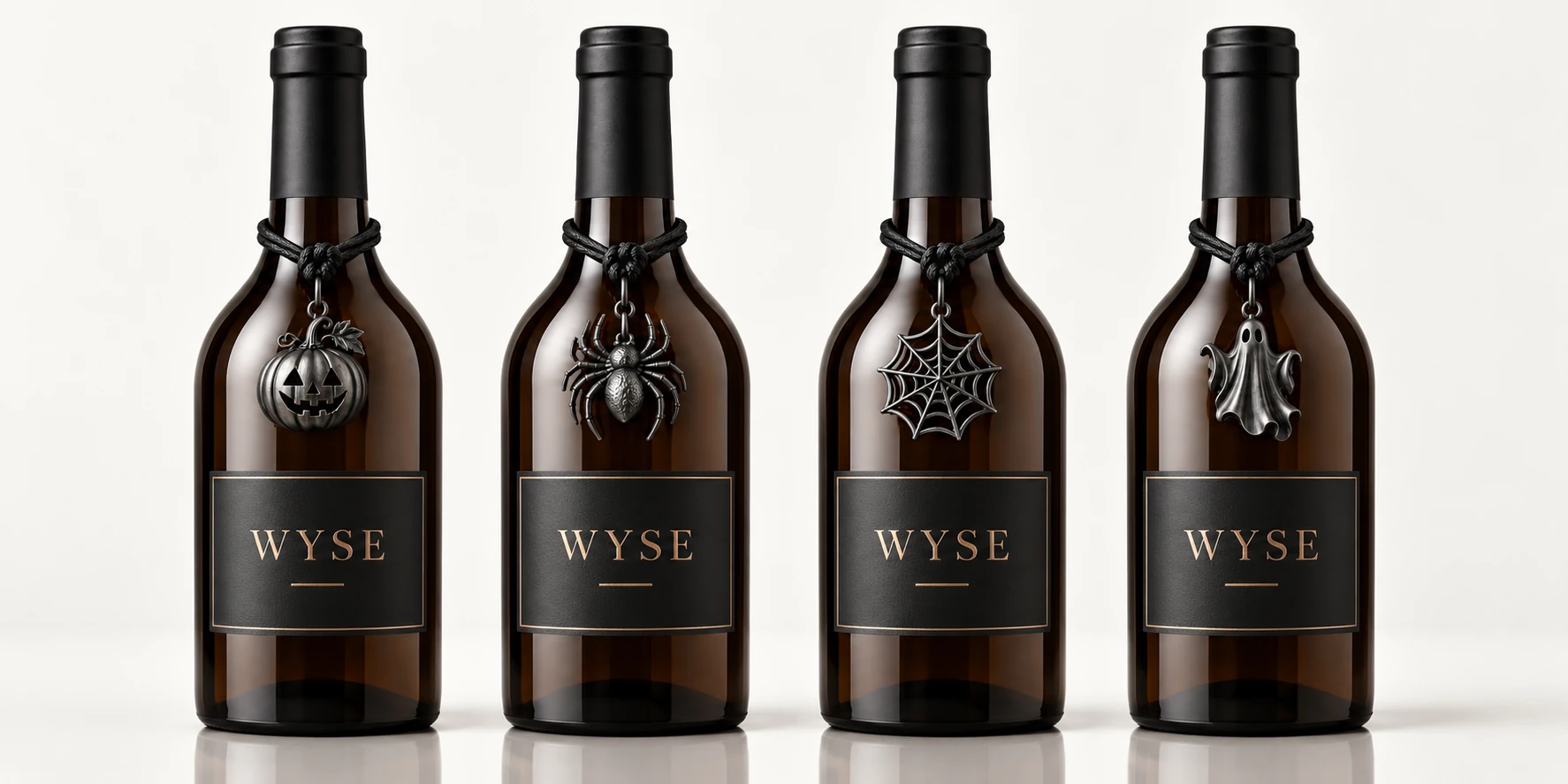
For this project, we developed a series of halloween bottle decorations designed for the neck area of spirits bottles. The collection included pumpkins, spiders, spider webs, ghosts, and other motifs associated with Halloween. A mainly black color direction was used across the series so that the products would feel connected and immediately recognizable as part of the same seasonal campaign.
Why a Coordinated Halloween Series Works Better
A single seasonal ornament can attract attention, but a coordinated family of products gives a brand more room to build a complete campaign. When the bottle-neck pendants share a consistent finish, scale, visual language, and packaging mood, buyers can use different motifs across multiple SKUs while keeping the collection visually connected.
For spirits brands and seasonal gift programs, this consistency can strengthen shelf recognition, improve gift-set presentation, and make it easier to extend one concept across whiskey, gin, rum, liqueur, or other alchohol bottles. A coordinated whiskey bottle decoration series can also help limited-edition packaging feel more deliberate rather than looking like a one-off add-on.
Brands looking for a more nostalgic mood can also adapt the same design language into antique black, antique gold, aged silver, or other finishes suited to vintage hallmark halloween decorations, while keeping the same core motifs.
The Biggest Challenge: Only One Month for Development and Production
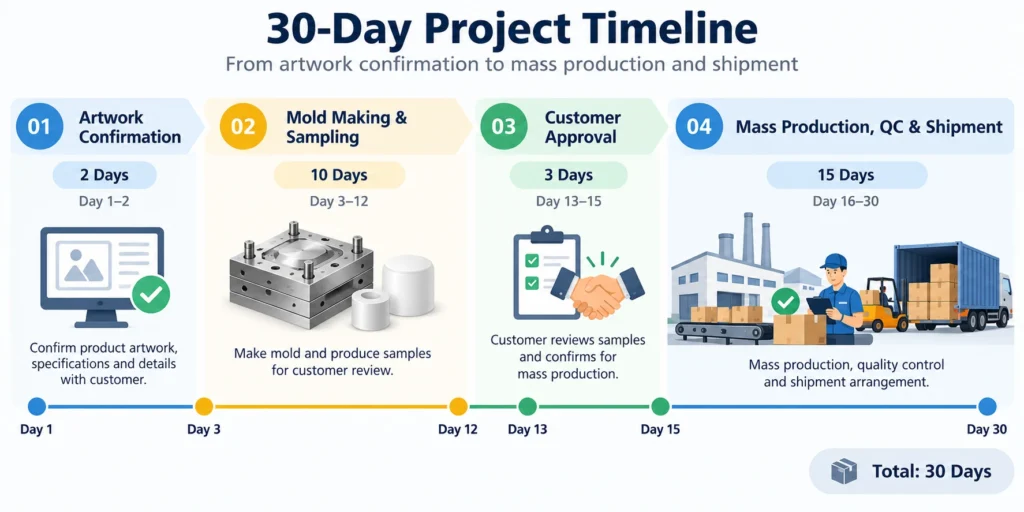
Halloween products have a fixed market deadline. In this case, the entire development and production window was only about one month. Fortunately, the customer already had complete design artwork. That removed a major early-stage delay: instead of spending time developing the concept from scratch, we could move directly into artwork review, sampling, customer approval, and bulk production.
The working rhythm was straightforward: confirm the supplied drawings, prepare samples, wait for approval, and then release the approved design for mass production. For a seasonal project, shortening unnecessary back-and-forth at the artwork stage can make a meaningful difference to the final delivery schedule.
Die-Casting Capacity Behind the Schedule
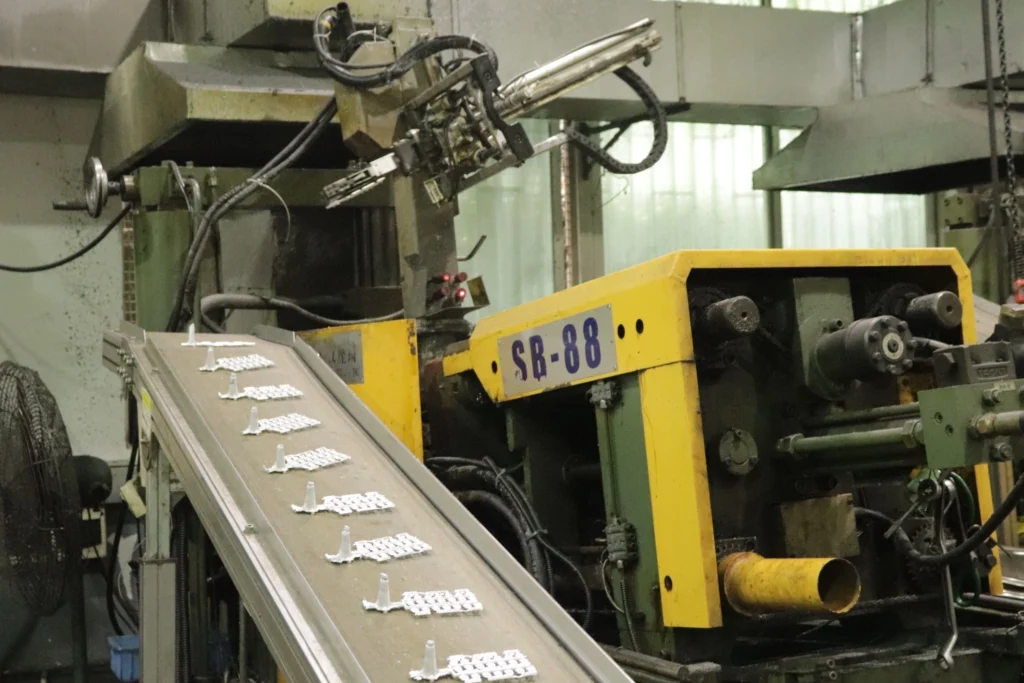
The metal pendants were produced from quality zinc alloy using die casting. Our factory currently operates four 88T die-casting machines, with further capacity expansion planned. Depending on mold structure, one die-casting cycle can be completed in approximately 8-12 seconds.
The number of blanks produced per shot depends on product dimensions and mold layout. A mold can be designed to produce roughly 1-14 blanks at the same time. For this Halloween series, the mold used six cavities, meaning six product blanks could be formed in one cycle. This multi-cavity setup gave us confidence that the project could move from approved sample to bulk production within the customer’s seasonal deadline.
Fast cycle time alone does not guarantee a successful rush order. Mold stability, material flow, blank consistency, machine availability, finishing capacity, and inspection all have to stay synchronized. For B2B buyers, that is why production planning should be discussed before sample approval rather than after the order is already urgent.
From Zinc Alloy Blank to Finished Bottle Ornament
The collection uses quality zinc alloy as the base material. Zinc alloy is well suited to compact decorative hardware because it can reproduce raised details, recessed textures, small cutouts, and dimensional shapes through die casting. That makes it practical for motifs such as spider legs, pumpkin contours, ghost silhouettes, and web structures.
After die casting, the blanks can move through trimming, deburring, surface preparation, finishing, and any required assembly before final inspection. The exact finishing route depends on the approved design – for example, black plating, coating, antiquing, or another customer-specified effect.
We also pay attention to environmental considerations in material use and production planning. Our goal is to reduce avoidable waste, keep processing controlled, and use production methods that support more responsible manufacturing wherever practical.
Why Quality Inspection Still Matters in a Rush Order
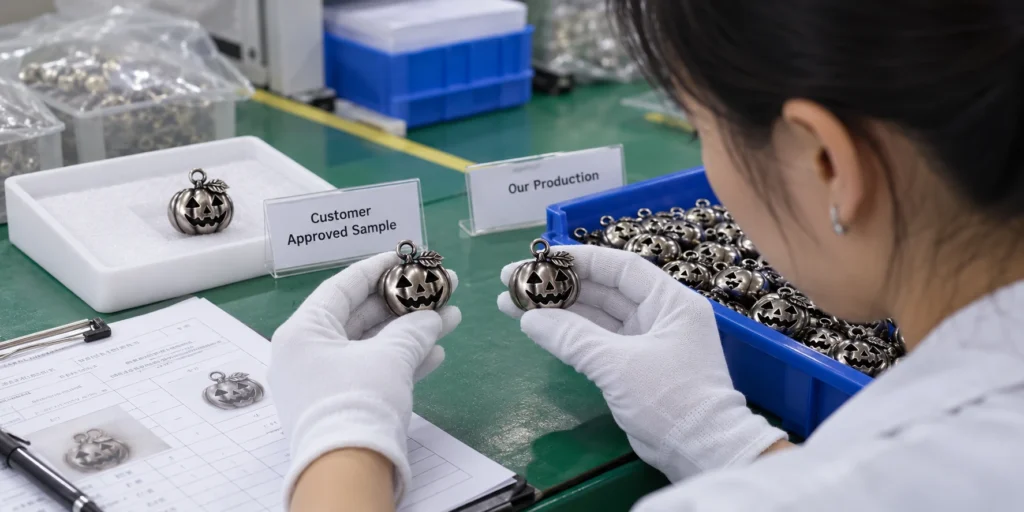
Speed cannot replace inspection. Before packing and shipment, the products go through quality checks so that each production batch can remain aligned with the approved sample and customer requirements.
For a metal bottle-neck ornament project, inspection can include overall shape, die-cast completeness, burrs, scratches, finish consistency, color consistency, deformation, attachment points, assembly condition, and obvious surface defects. Where a collection contains several Halloween motifs, visual consistency across the full family is also important.
This is especially important for seasonal launches because there is usually little time for rework after goods arrive. A stable QC process helps reduce the risk of mixed finishes, incomplete pieces, damaged details, or obvious visual differences reaching the customer.
What B2B Buyers Should Prepare for a Fast Seasonal Project
If your launch date is fixed, giving the factory complete information at the beginning can save valuable development time. A useful RFQ package normally includes:
- Final vector artwork or clear 3D/reference drawings.
- Target dimensions and preferred thickness.
- Bottle-neck size or the intended attachment area.
- Required finish and color reference.
- Order quantity for each motif.
- Packaging or attachment requirements.
- Sample approval deadline and final delivery deadline.
The more complete the brief is, the easier it is to evaluate tooling, mold cavities, machine planning, finishing capacity, and inspection time before production begins.
A Seasonal Collection Is More Than a Single Ornament
For ButtonArea, this Halloween project shows how a themed accessory program can combine design consistency with practical manufacturing. Pumpkins, spiders, spider webs, ghosts, and other motifs can share one visual system while still giving each bottle or SKU its own character.
The same development model can be used for Christmas, Valentine’s Day, Lunar New Year, anniversaries, limited-edition spirits, gift boxes, and other seasonal campaigns. Brands can customize the motif, size, finish, attachment method, packaging, and product mix while keeping one recognizable collection language.
If your brand needs halloween bottle decorations for a time-sensitive launch, early artwork confirmation and realistic capacity planning are often just as important as the design itself. With clear drawings, an approved sample, suitable multi-cavity tooling, controlled die-casting capacity, and batch inspection, a short seasonal schedule can become much more manageable.
Talk to ButtonArea About Your Seasonal Bottle Accessory Project
Have a seasonal bottle-decoration project in mind? Send us your artwork, target size, finish, quantity, and delivery schedule. Our team will review the project and get back to you within 24 hours.
Email: sales012@wysecn.com
Website: https://buttonarea.com
WhatsApp: +86 13688844607
You form directly to us. can also click the text to submit the
If you would like to know more about this product:
Halloween Perfume Bottles with Custom Bows & Metal Charms | Luxury Seasonal
Camping Metal Bottle Tags for Beverages