
The Art of Fabric Accessories in Perfume Bottle Design

Why Fabric Accessories Matter in Packaging
Fabric accessories like satin bows or lace trims are often added to perfume bottles to elevate their aesthetic appeal. These tactile touches catch light and add texture, signaling handcrafted quality and helping the product stand out on the shelf. In a competitive market, such sensory cues play a vital role in shaping first impressions. A well-executed fabric bow or ribbon tag can make a perfume bottle feel gift-like and special. For example, one supplier notes that a “fabric ribbon bow for [a] perfume bottle is manufactured with a combination of durability and elegance,” which “helps to enhance the product presentation.” This blend of style and function is why custom ribbon tags and embroidered labels are popular: they turn a simple bottle into a memorable, luxury experience. For example, a custom ribbon tag for perfume stamped with the brand logo or scent name can function as an elegant label and elevate the unboxing moment.

Styles and Design Options
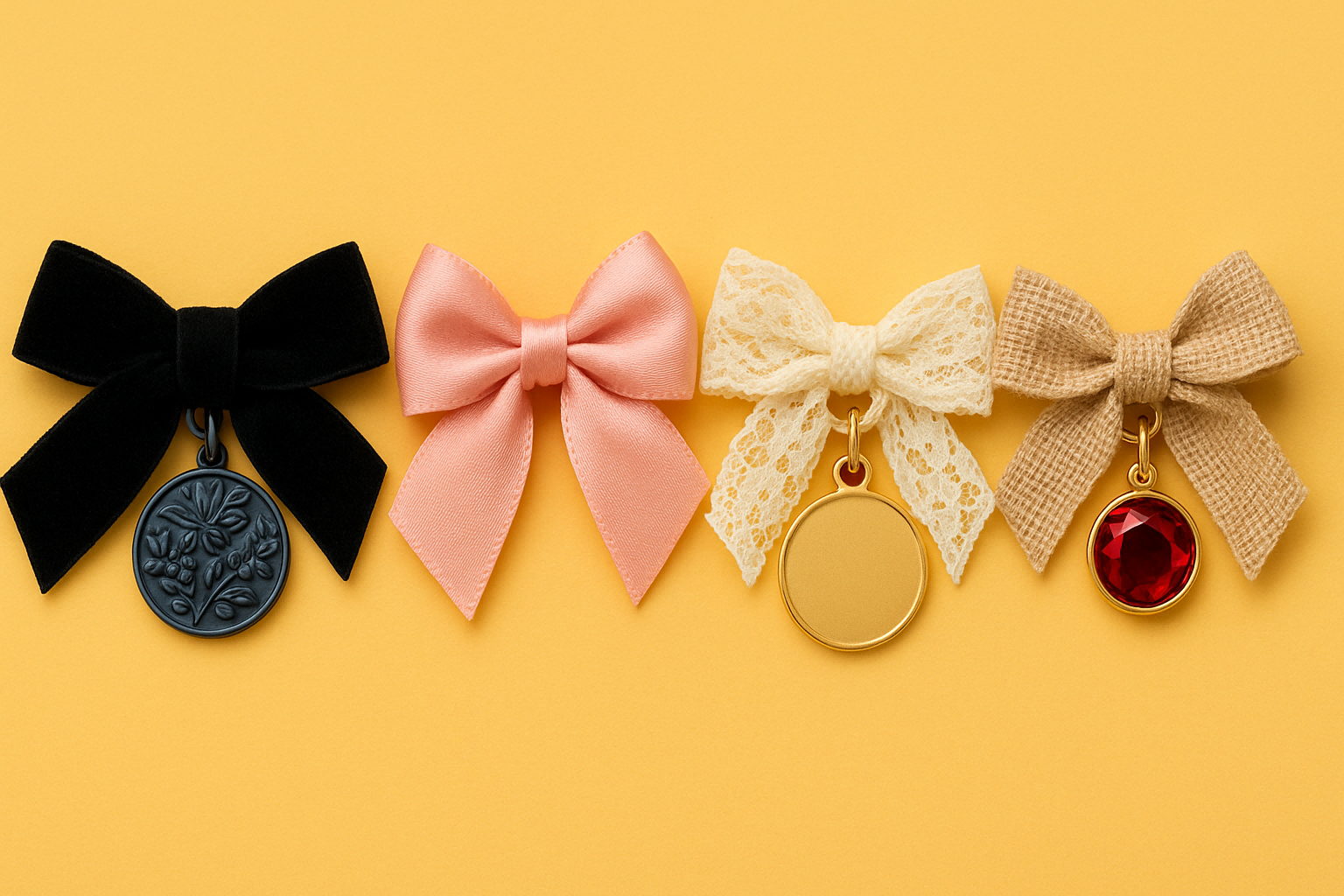
Designers have many options: everything from a simple satin bow to an intricate lace appliqué or a branded fabric tag can accent a bottle. Popular materials include satin, organza (sheer tulle), grosgrain, burlap, and velvet, each giving a distinct look. Lace trims or stitched cotton tags add a romantic or artisanal feel. Textile hang tags—woven or embroidered labels attached around the neck—can be finished with a small metal medallion bearing the logo. As one manufacturer notes, a metal label makes a perfume bottle look “way more professional” than a sticker label, enhancing perceived quality. These options allow endless customization: bows can be pre-tied or tied on-demand, ribbons can be dyed or printed, and tags can be personalized.

Common Styles and Materials:
-
Satin Ribbon Bows: Known for luxurious shine and softness, perfect for large decorative bows.
-
Organza (Tulle) Bows: Sheer and stiff, great for delicate, shape-retaining bows.
-
Grosgrain Ribbon Bows: With ribbed texture, firm structure, and formal appearance.
-
Burlap or Jute Ribbons: Rough texture and rustic appeal for natural-themed packaging.
-
Velvet Ribbons and Labels: Rich texture, often used in high-end packaging.
-
Lace Overlays: Adds romantic, vintage elegance.
-
Fabric Tags with Metal Medallions: Combines textile warmth with a professional metallic touch.
Material and Manufacturing Tips
Fabric trims often begin life on industrial looms. Ribbon material is woven into wide rolls and then precision-cut to the required width. Edges are usually heat-sealed or hemmed during the finishing stage to prevent fraying. At each step, factories enforce strict quality control: one manufacturer notes that ribbons are "thoroughly inspected for width, thickness, durability, and overall quality." These checks ensure that every roll of fabric meets the smoothness and consistency needed for luxury packaging.
After raw ribbons and fabrics are produced, they must be assembled onto products. Textile tags may have logos embroidered or metal pieces attached before being cut to shape, and bows can be tied either by hand or by specialized equipment. Common adhesives—such as heat-activated glue dots or double-sided tape—are chosen for a strong bond without visible residue. For large runs, automated tying machines can loop and secure ribbons much faster than manual tying, improving efficiency. Even so, final inspection is usually manual. Alignment and fit are critical: a tag or bow is placed within a few millimeters of its intended spot to look perfectly centered. Any ribbon with a loose thread or misaligned print is trimmed or rejected in final quality checks to maintain the brand’s premium image.
How Fabric Enhances Brand Storytelling
Fabric details in packaging become part of the brand’s narrative. Branding experts say that every design element is "a thread in the larger tapestry of [a] brand story." By picking materials that fit a fragrance’s identity (light chiffon for airy scents or velvet for rich accords), a brand can suggest its values and heritage. Indeed, "luxury packaging is about storytelling," and a tactile ribbon or lace trim can communicate quality and tradition. Tactile elements can also trigger emotion. For instance, one analysis notes that when a consumer physically handles packaging, they should "feel anticipation and excitement." Embroidered details, silk tassels, or embossed fabric labels convey craftsmanship that reinforces a luxury image. A well-chosen fabric accessory essentially weaves the brand’s identity into the unboxing experience, making every aspect of the presentation feel intentional and cohesive.
Broader Industry Applications
These fabric techniques are not limited to perfume. Anywhere luxury packaging is needed, bows, ribbons, and textiles are used. Beauty and perfume brands regularly incorporate silk pouches or satin ribbon bows on boxes to signal elegance. Even in wine and gourmet gifts, organza or velvet drawstring bags are common to make each bottle feel special. Seasonal or limited-edition collections often feature festive fabrics (e.g. tartan or metallic ribbons at holidays) or decorative lace overlays. Packaging suppliers note that their ribbons and trims can be applied across industries—from apparel and confectionery to cosmetics and giftware. As one report observes, materials like velvet often "pop up on custom gift boxes, ribbon, [and] shopping bags" in fashion and gift packaging.
Consumer Psychology and Perception
Research shows that premium packaging elements like fabric add perceived value to a product. High-quality textures and materials create a "premium feel," making customers more likely to view the item as valuable. For example, a velvet ribbon or silk tassel signals richness, so consumers may subconsciously assume the perfume itself is high-quality. In contrast, flimsy or plain packaging can reduce trust in a product.
Tactile cues also trigger emotional responses. Studies note that when a consumer handles a well-made package, they should "feel anticipation and excitement." A decorative bow or lace trim gives the impression of a gift, which delights the shopper. In fact, elegant fabric adornments often justify a higher price: consumers are often willing to pay more for perfumes whose packaging conveys exclusivity and care. These embellishments improve shelf appeal by catching the eye and resonating emotionally with the desire for a special experience.

