Metal Wine Labels for Spirits & Wine Bottles: Types, Sizes & Materials
A practical guide to choosing metal label structures, dimensions, materials, finishes, and attachment methods for 750 ml wine and spirits bottles.
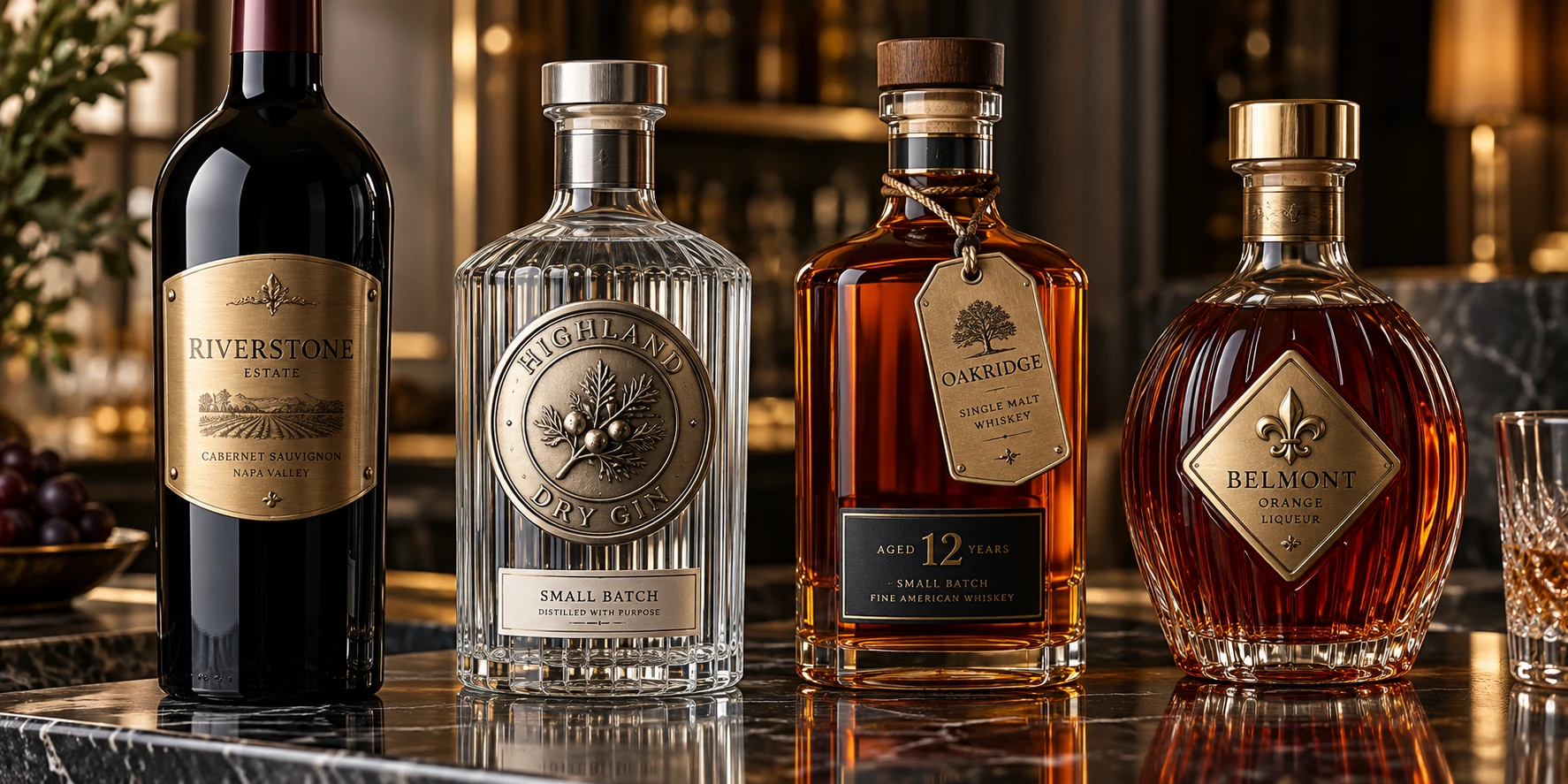
Metal decoration can do something a paper label cannot: add real depth, weight, texture, and a tactile brand cue. For wineries and distilleries, the best metal detail is not simply the most decorative one. It needs to match the bottle curvature, storage environment, packaging line, brand positioning, and final budget.
When buyers compare metal wine labels, the first questions should be where the label will sit, whether it needs to follow a curved glass surface, whether the bottle will be refrigerated or placed in an ice bucket, and whether the decoration is permanent, removable, or designed as a collectible hanging piece.
1. Four Common Types of Metal Labels for Wine and Spirits Bottles
1.1 Pre-shaped Curved Labels
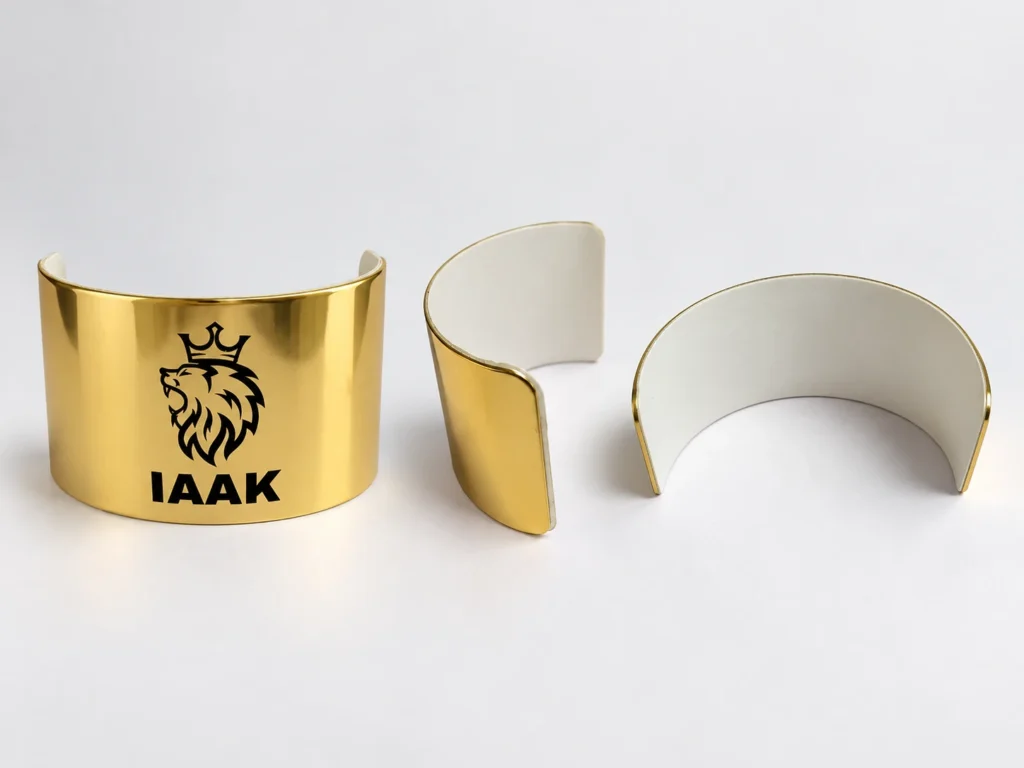
Many wine and spirits bottles have cylindrical or partially curved bodies. When a rigid metal such as brass or thicker aluminum is used, the label can be pre-formed to a controlled radius before installation so it sits closer to the glass instead of fighting against the bottle curve.
For this type of project, the bottle diameter or local curvature at the installation area matters more than the nominal bottle volume alone. A 750 ml bottle can still have very different shoulders, sidewalls, and front-panel geometry, so physical bottle fitting or an accurate bottle drawing is recommended before bulk production.
If you plan to customize wine label structures that cover a wider area of the bottle, pre-shaping can help reduce edge lifting and improve the visual fit of the metal piece.
1.2 Metal Medallions
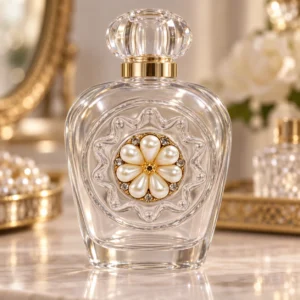
Metal medallions are thicker, more three-dimensional pieces commonly made from zinc alloy, brass, or other suitable metals. Round, shield, crest, and custom silhouettes can be used on the bottle front, shoulder area, neck, or as a separate award-style decoration.
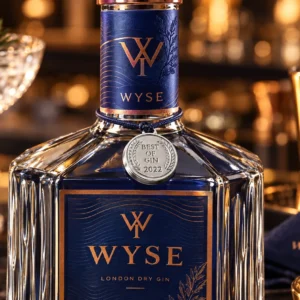
ButtonArea’s Silver Gin Bottle Neck Medallion is a compact example: the current style is 20 mm in diameter and 5 mm thick, with stamped “Best of Gin 2022” wording and a navy cord. It demonstrates how a small metal medallion can add an award or limited-edition cue without covering the main paper label.
1.3 Hanging Metal Tags
Hanging wine bottle tags do not rely on adhesive. Instead, they use cord, chain, ribbon, or another connector around the bottle neck. This format works especially well for tasting awards, collector editions, holiday gift bottles, event releases, and promotional spirits packaging because the metal piece can move independently from the printed label.
A hanging format is also useful when the brand wants a removable decoration or when the bottle surface is difficult to bond to consistently.
1.4 Cellar- and Ice-Bucket-Ready Adhesive Metal Labels
For bottles stored in humid cellars, refrigerators, or ice buckets, the adhesive system becomes just as important as the metal itself. A high-tack waterproof backing can help the metal label stay in place when the glass is exposed to condensation and moisture.
The adhesive should still be tested on the actual bottle because glass coatings, lacquers, surface contamination, label size, metal stiffness, and condensation cycles can all change bond performance.
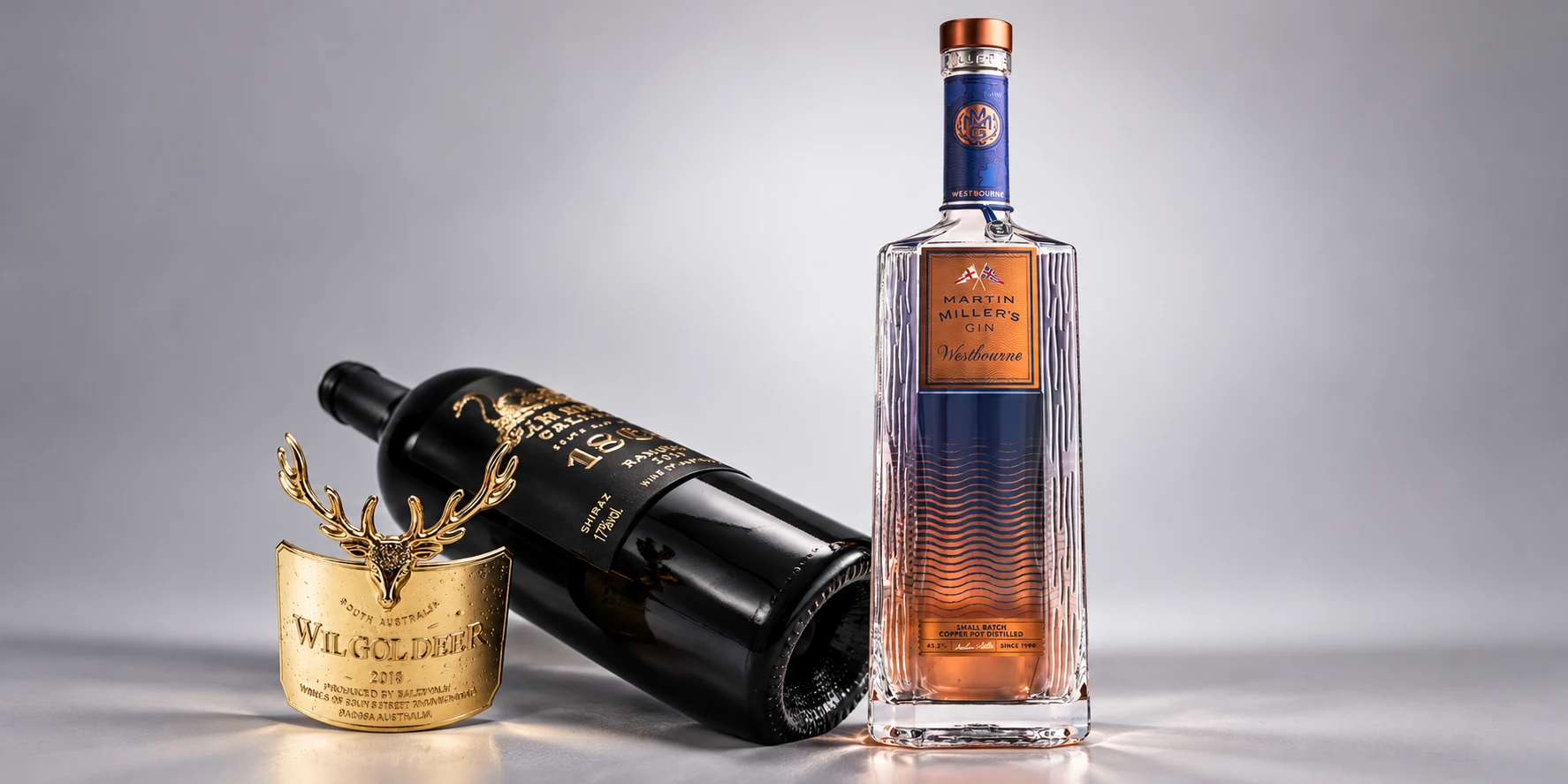
The Gold Deer Head Wine Bottle Badge page offers standard self-adhesive, high-tack waterproof, and removable adhesive options. It also lists embossed aluminum, electroformed nickel, and zinc alloy badge constructions, making it a useful reference for brands comparing decorative metal label structures.
2. Wine Label Size: Practical Starting Points for 750 ml Bottles
There is no single universal wine label size that fits every 750 ml wine or spirits bottle. Bottle diameter, shoulder angle, front-panel width, glass embossing, and the space reserved for mandatory printed information all affect the final dimensions. Still, the following sizes can be useful starting points during early design discussions.
Format | Starting size | Typical use |
Rectangular main label | 90 × 120 mm | Large classic front-label proportion for many straight or Bordeaux-style bottle concepts. |
Compact rectangular label | 80 × 100 mm | Useful when a cleaner, more contemporary layout is preferred. |
US-style reference size | 3.5 × 4 in (about 89 × 102 mm) | A practical reference proportion for front-label planning. |
Small badge / emblem | 50 × 50 to 70 × 70 mm | Suitable for center-front emblems, shoulder badges, shields, and decorative plaques. |
Round medallion | 40–60 mm diameter | Useful for front medallions, crest-style details, and larger badge applications. |
Neck medallion example | 20 mm diameter | A smaller bottle-neck format, as shown by the Best of Gin medallion. |
These dimensions are planning references rather than fixed industry rules. Final wine bottle label dimensions should be confirmed against the actual bottle, especially for rigid or pre-curved metal parts.
3. Choosing the Right Metal for the Label
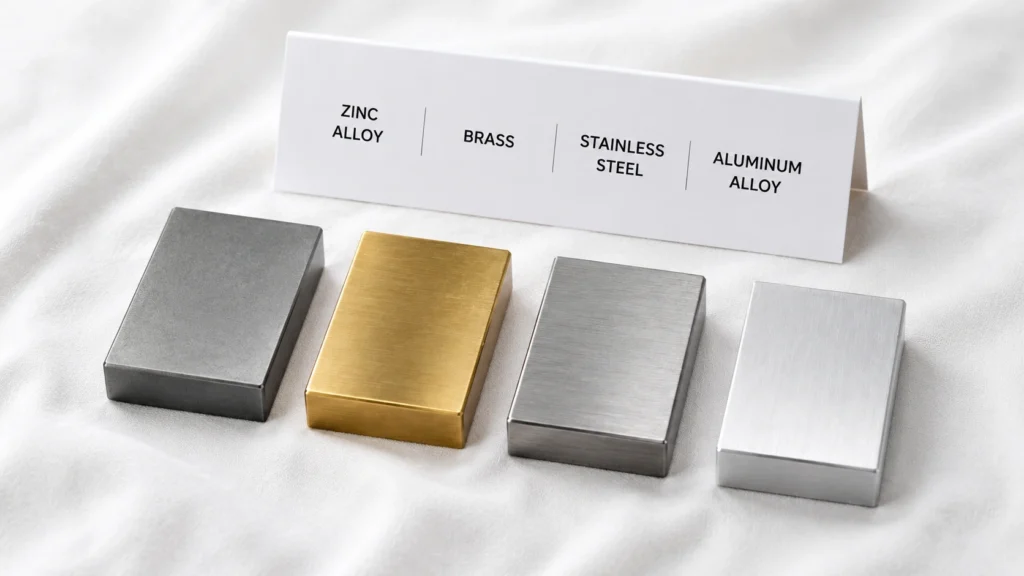
Material choice affects weight, detail reproduction, forming method, corrosion behavior, surface finish, cost, and how easily the label can conform to a bottle. Zinc alloy, aluminum, brass, and stainless steel are among the most common options.
3.1 Zinc Alloy: Strong 3D Relief and Efficient Die Casting
Zinc die-casting alloys are widely used when the design needs deep relief, sharp logo details, complex geometry, or a heavier premium feel. Common Zamak grades are zinc-based alloys with roughly 4% aluminum plus small amounts of magnesium and, depending on the grade, copper. Their relatively low casting temperature and strong fluidity make them well suited to hot-chamber die casting and detailed decorative components.
Exact alloy composition, casting tolerance, and impact performance depend on the specific Zamak grade, part geometry, die design, and process. For procurement, these should be confirmed on the drawing rather than treated as one fixed value for every zinc-alloy label.
Zinc alloy is especially suitable for medallions, badges, crests, thick decorative plates, and designs where weight and 3D relief are part of the premium effect.
3.2 Aluminum: Lightweight and Easy to Form
Aluminum is a strong choice when weight matters or when the label needs to be thin, stamped, embossed, or pre-shaped to follow a curved bottle. It is useful for larger decorative areas where a heavy zinc-alloy piece could add unnecessary weight.
3.3 Brass: Premium Weight and Heritage Character
Brass has a warmer, heavier feel and works naturally with vintage wine, whisky, cognac, heritage, estate, and collector-style packaging. It has good formability for stamping and can also be etched, engraved, brushed, polished, or aged for antique effects.
3.4 Stainless Steel: Corrosion Resistance and Clean Modern Finishes
Stainless steel is useful for clean brushed, mirror, etched, or laser-cut designs and offers strong corrosion resistance. It can be a good option for bottles that may experience repeated cold or wet handling, but the stainless grade still matters.
4. Quick Material & Label-Type Matching Guide
Packaging goal | Recommended direction | Why |
Premium 3D crest or badge | Zinc alloy / brass | Die-cast or stamped relief, plated or antique finish |
Large curved front metal label | Aluminum / brass | Pre-shaped to the bottle radius; adhesive validated on actual glass |
Award or limited-edition neck piece | Zinc alloy / brass / aluminum | Hanging medallion with cord, ribbon, or chain |
Ice-bucket or refrigerated bottle | Thin metal + waterproof high-tack adhesive | Test condensation, immersion, coating compatibility, and edge lift |
Lightweight packaging | Aluminum | Thin, embossed, stamped, or pre-shaped |
Modern clean look | Stainless steel / aluminum | Brushed, mirror, etched, or laser-cut finish |
Heritage or vintage look | Brass / antique-plated zinc alloy | Warm metal tone, aged finish, crest or medallion styling |
5. Two ButtonArea Product Directions to Consider
Best of Gin Bottle Neck Medallion
This style is useful for brands that want a compact recognition element rather than a large front metal plate. Its 20 mm round medallion, 5 mm thickness, stamped detail, and navy cord show how a bottle-neck piece can communicate an award, anniversary, competition result, or limited-edition message.
Product: https://buttonarea.com/product/best-of-gin-bottle-neck-medallion/
Gold Deer Head Wine Bottle Badge
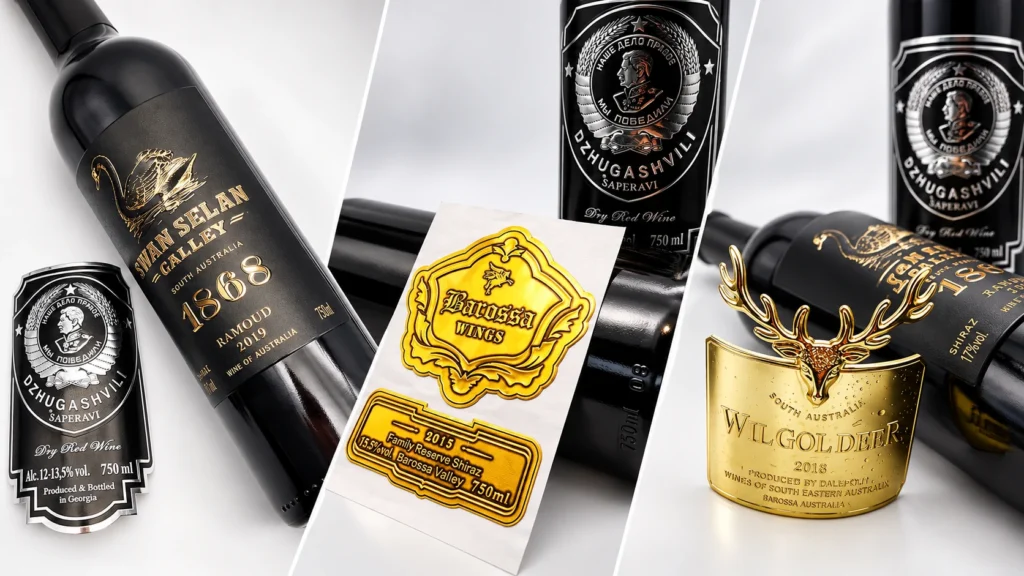
This direction is better for brands that want a front-facing emblem with stronger shelf presence. The product can be developed in embossed aluminum, electroformed nickel, or zinc alloy, with polished, antique, matte, silver, and two-tone finishes. Its high-tack waterproof adhesive option is particularly relevant when refrigeration or ice-bucket use is part of the packaging requirement.
Product: https://buttonarea.com/product/deer-head-wine-bottle-badge/
6. What to Send Before You Ask for a Quote
A clear RFQ helps the factory recommend the right construction and avoid repeated sample revisions. For custom metal wine labels or wine bottle tags, prepare:
- Bottle capacity and actual bottle sample, 3D file, or dimensioned drawing.
- Exact installation area and available flat/curved surface size.
- Target label size, thickness, and approximate weight preference.
- Artwork in AI, PDF, CDR, or another usable vector format when available.
- Preferred material: zinc alloy, aluminum, brass, stainless steel, or supplier recommendation.
- Surface finish: bright gold, antique gold, silver, gunmetal, brushed, matte, two-tone, etc.
- Attachment method: adhesive, pre-shaped adhesive plate, hanging cord/chain, mechanical fitting, or another structure.
- Storage condition: room temperature, cellar, refrigeration, ice bucket, freezing, humid storage, or long-term display.
- Order quantity, target sample date, and mass-production delivery date.
For rigid curved labels and adhesive labels intended for wet or cold conditions, physical testing on the final bottle is strongly recommended before bulk production.
7. Further Reading: Build the Label as Part of a Packaging System
A strong bottle program usually works better when the paper label, metal plaque, neck decoration, cap detail, and gift packaging are planned as one visual family rather than as separate parts. For more product directions and series-planning ideas, see ButtonArea’s wine bottle label guide:
Recommended article: https://buttonarea.com/recommendations-for-wine-bottle-labels/
Final Thought
The best metal label is not always the largest or heaviest one. It is the one that fits the bottle correctly, survives the real storage environment, supports the brand story, and can be produced consistently at the required quantity. Start with the bottle geometry and use case, then choose the label structure, material, finish, and attachment method around those constraints.
Have a wine, whisky, gin, spirits, or private-label packaging idea? Send us your bottle drawing, artwork, target dimensions, or reference images through the contact details below. Our team will review the project and get back to you within 24 hours.
Email: sales012@wysecn.com
Website: https://buttonarea.com
WhatsApp: +86 13688844607
You form directly to us. can also click the text to submit the