Baroque Art in Modern Product Design: From Pearl Brooches to Perfume Packaging
From dramatic jewelry to delicate bottle detailing, we explore how the Baroque approach to curves, contrast and ornament still shapes the metal accessories we develop today.
When someone says “Baroque,” it’s easy to picture gilded ceilings, carved marble and grand European palaces. But there’s more to the style than adding gold and decoration. The best Baroque designs know how to guide your eye, create a sense of movement and make an object feel memorable.
We see that same idea in some of the accessories we develop at ButtonArea. A brooch can turn a simple cape into the focus of an outfit. A decorative collar can give a clear perfume bottle the feel of a collector’s piece. The products are completely different, but the design thinking behind them has a lot in common.
Where Did Baroque Style Come From?
Baroque took shape in Italy around the end of the 16th century and flourished across Europe through much of the 17th and first half of the 18th century—roughly 1600 to 1750. It brought a more dramatic energy to architecture, painting, sculpture and the decorative arts. Rather than relying only on the calm proportions often associated with the Renaissance, Baroque artists worked with sweeping curves, deep shadows, rich materials and compositions that seemed to move.
Even the name has a story. “Baroque” is often connected to the Portuguese word barroco, meaning an irregularly shaped pearl, although the exact origin is debated. The term was once used dismissively for art considered excessive or oddly shaped. Today, it usually brings to mind something expressive, theatrical and richly detailed.
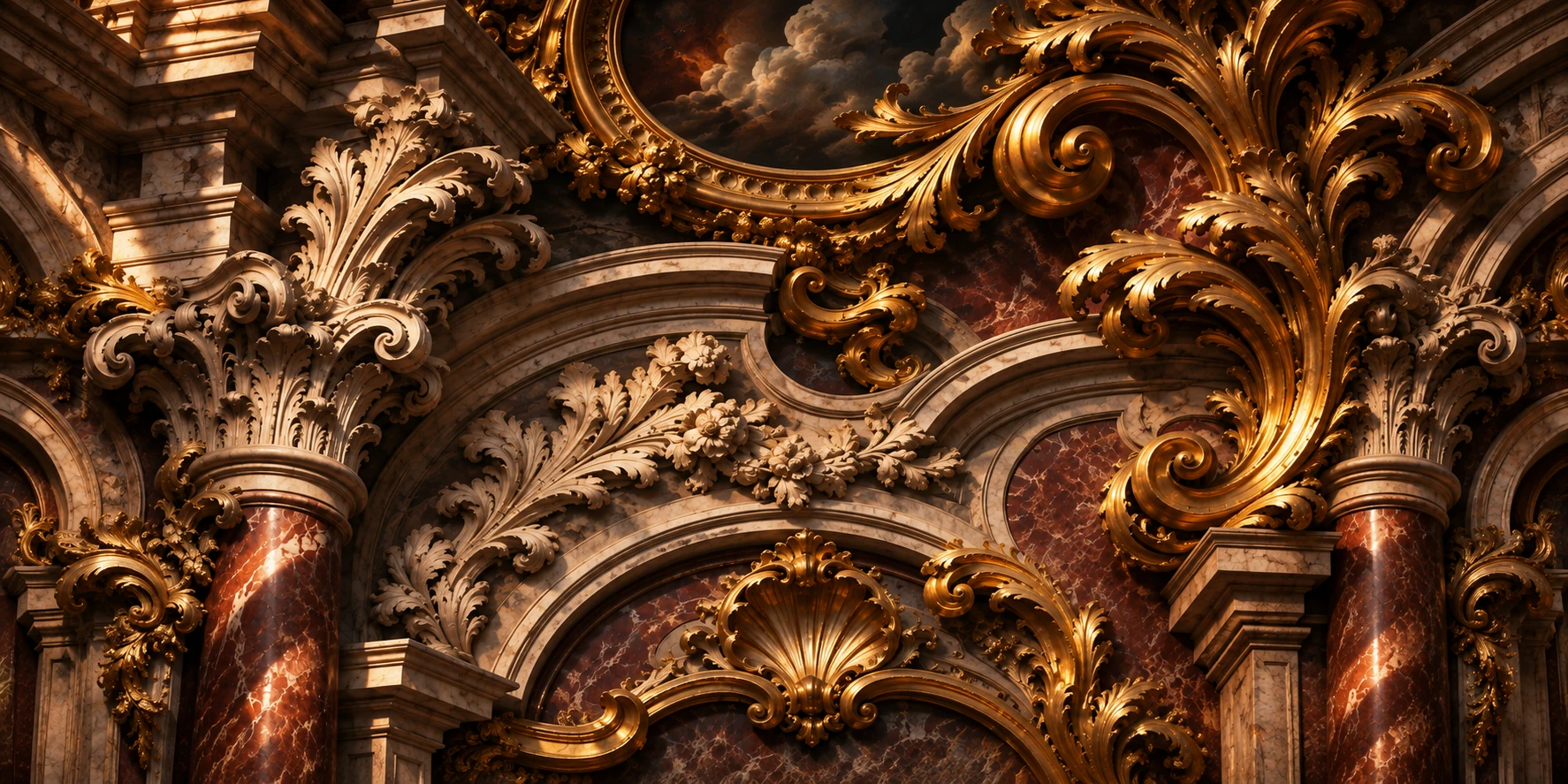
When we look back at baroque arts, what interests us most isn’t simply the lavish use of gold, marble or elaborate carving. It’s the way these elements work together. Architecture could feel sculptural; sculpture could seem to move; light and shadow became part of the design itself.
What Makes a Design Feel Baroque?
Movement Starts with the Lines
Straight lines feel controlled. Baroque-style scrolls, curved leaves, waves and layered flourishes feel as though they’re growing or turning. The movement may be subtle, but it gives even a small object more personality. That’s why we often pay close attention to how a line travels around a central stone, across a metal border or out towards the edge of a design.
Ornament Needs a Focal Point
Baroque doesn’t have to mean covering every square millimeter. A strong design usually gives your eye somewhere to land—a center gem, a framed emblem or a clear opening—and lets the surrounding details support it. Symmetry can help give the overall piece structure, even when the individual curves feel lively.
Materials and Light Do Some of the Work
Raised relief catches highlights; recessed patterns produce shadows. Metal gives the piece a defined outline, while pearls and gemstones soften it or add color. On glass packaging, openwork can be just as powerful as solid metal because the clear bottle becomes part of the composition.
Example One: A Baroque Pearl Brooch That Becomes Part of the Outfit
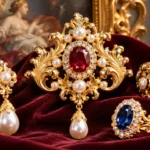
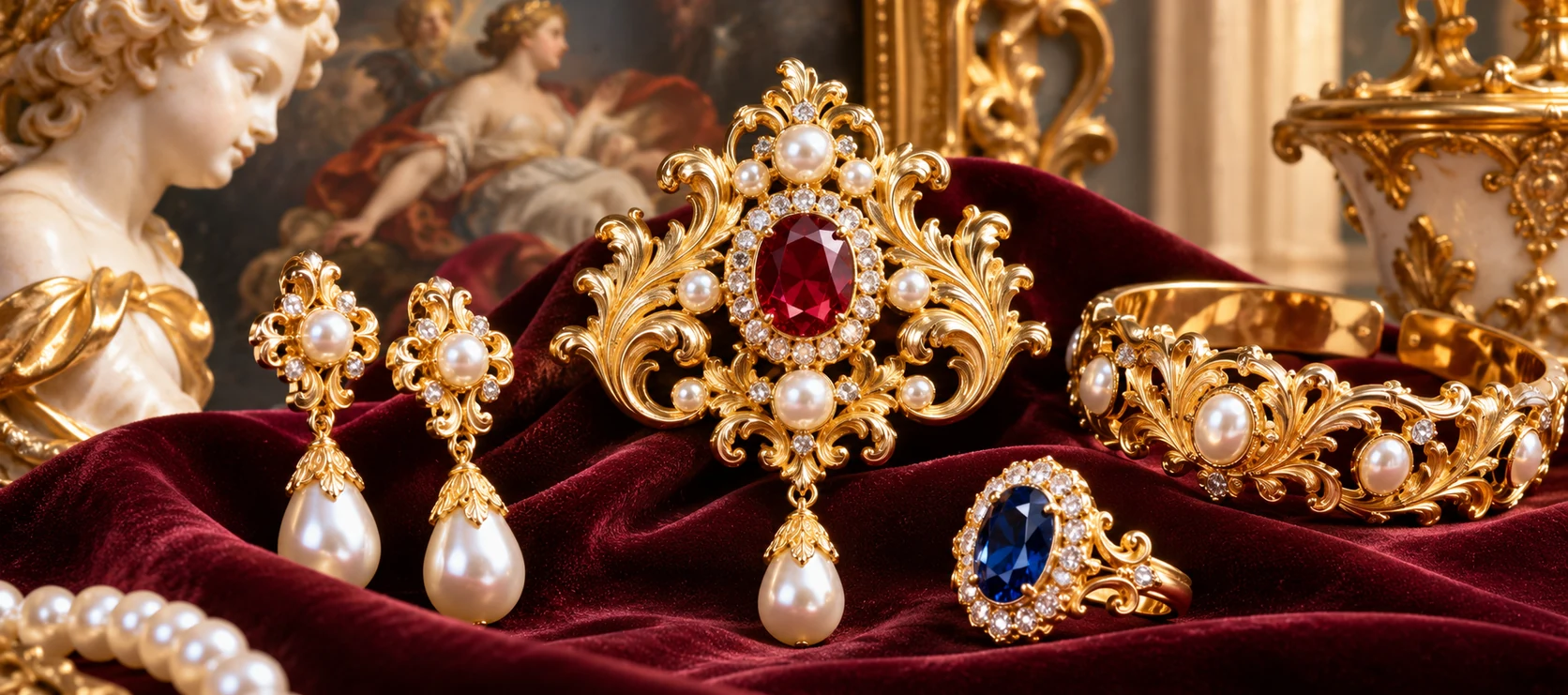
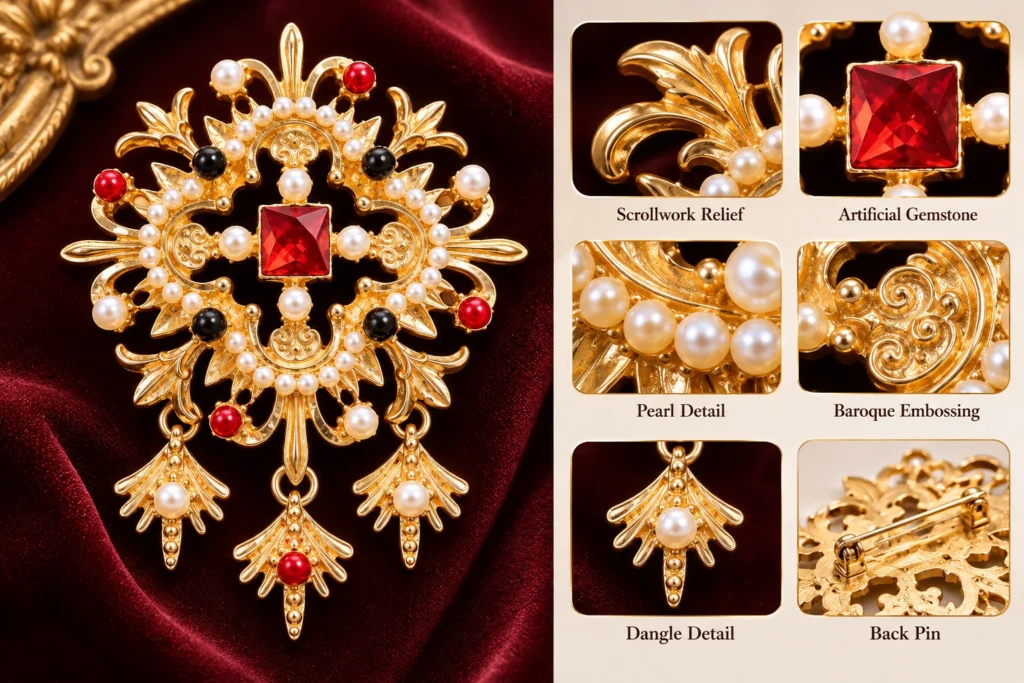
Our Baroque Pearl Brooch is a good example of the more theatrical side of this style. It combines an ornate gold-tone frame, layered scrollwork, synthetic gemstones, pearl accents and decorative hanging elements. We use a zinc-alloy body to give the raised patterns real dimension, rather than relying on a flat printed motif.
The design starts with the silhouette. A broad, balanced frame gives the brooch presence, while curling relief details lead the eye inward. We can then build contrast around a centerpiece with gemstone colors and pearl arrangements. The softer pearl finish plays against the brighter metal, keeping a heavily decorated piece from feeling like one solid block of gold.
The hanging details matter as well. They introduce a little movement when the wearer walks, which feels especially right for eveningwear, opera costumes, capes, shawls and runway looks. This is the kind of baroque jewelry style that works best when the accessory is meant to be seen, not hidden.
Of course, appearance is only half the job. A larger brooch needs an attachment that suits the garment. For a thick cape, a different backing or even a dual-pin structure may be worth reviewing; on a delicate fabric, the total weight and support are just as important as the front design. The actual product is made with synthetic pearls and gemstones, so we’re describing a Baroque-inspired aesthetic—not claiming it contains natural baroque pearls.
Example Two: Baroque Filigree Around a Perfume Bottle
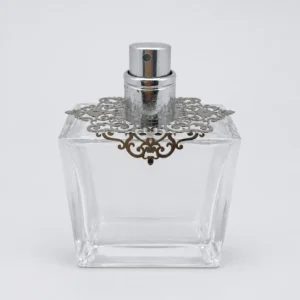
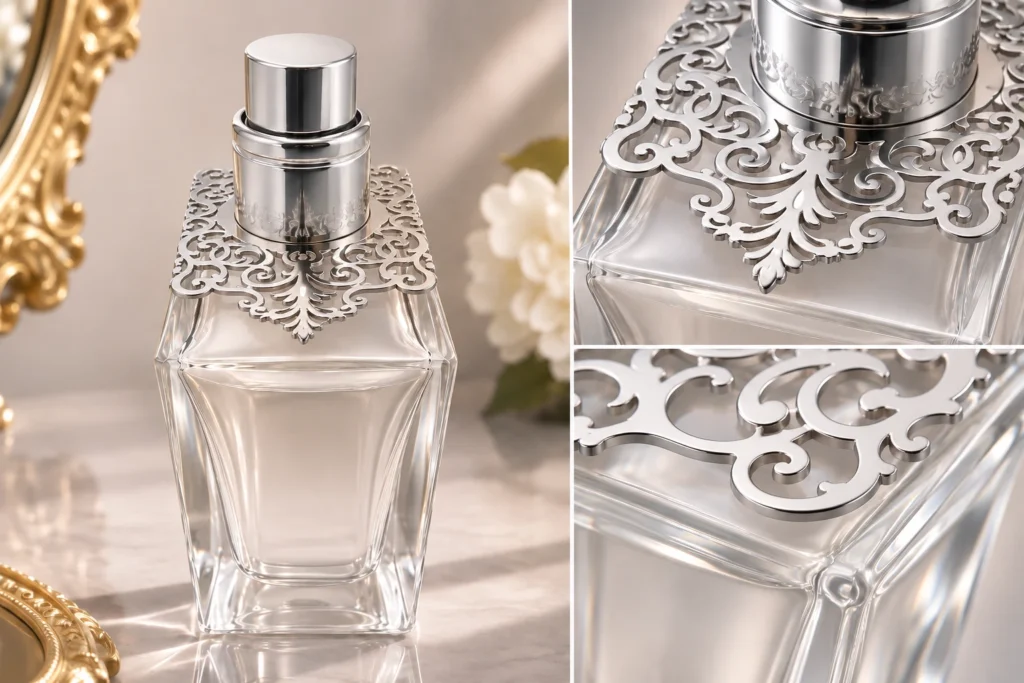
The same decorative language can look surprisingly light on a different product. Our Custom Baroque Perfume Metal Collar uses flowing scrolls, balanced floral motifs and intricate openwork to frame a perfume bottle’s neck and shoulders. The current design has a bright silver appearance, with PANTONE 20-0021 TPM listed as the color reference.
Here, the negative space is just as important as the metal. The cutout pattern allows the glass underneath to remain visible, so the accessory feels more like delicate metal lace than a heavy cover. On a clear square or rectangular bottle, the reflective silver detail adds a vintage-inspired accent without hiding the fragrance or the bottle’s original shape.
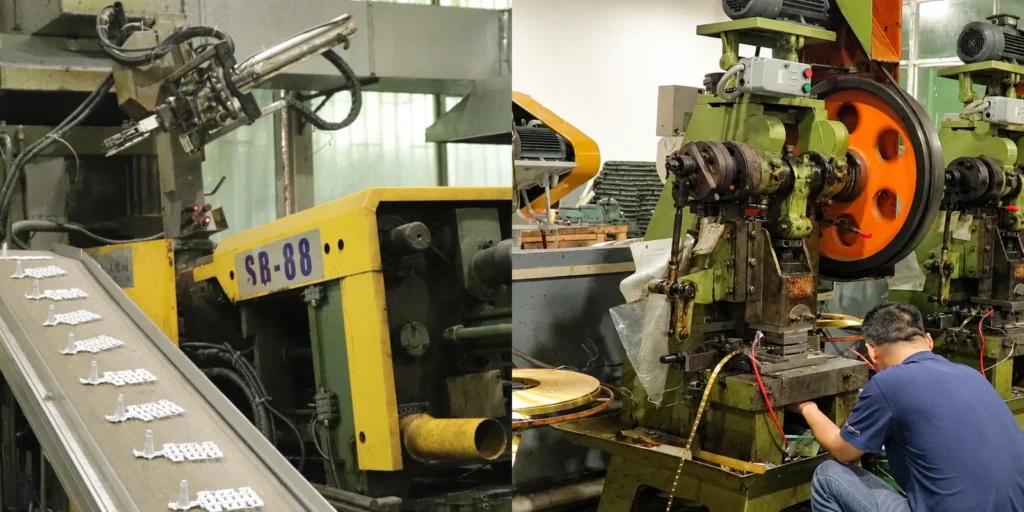
There’s also a crucial manufacturing difference between our two examples. The brooch uses die-cast zinc alloy for dimensional ornamentation. This collar is made from stainless steel using precision stamping: the sheet is stamped to form its outline and cutouts, shaped to follow the bottle shoulders, refined along the edges and given the required surface finish. The two products share a visual influence, but not the same manufacturing method.
Before we approve a collar design, we need to check its center opening against the bottle neck and sprayer, look at cap clearance and confirm that the formed metal follows the real glass profile. Narrow sections in the openwork must also be suitable for production, and the edges need a clean finish. A beautifully drawn filigree pattern is only useful when it fits the actual packaging.
Same Inspiration, Two Very Different Design Decisions
At first glance, a pearl brooch and a perfume bottle collar may not seem related. One is meant to sit on clothing; the other is designed around glass packaging. Yet both borrow the curved ornament and carefully arranged detail associated with baroque arts.
For the brooch, we choose depth, contrast and hanging elements to create a dramatic focal point. For the perfume collar, we choose a lighter silhouette and controlled negative space to frame the bottle rather than compete with it. The lesson is simple: don’t copy a historical motif at the same scale and in the same material every time. Adapt its character to the object you’re designing.
How We Turn a Baroque-Inspired Idea Into a Real Product
We usually begin by asking what the product should feel like. Is it bold and theatrical, romantic and vintage-inspired, or quietly luxurious? Once that direction is clear, we choose a few motifs—scrolls, flowers, ornamental borders or pearl details—instead of squeezing everything into one piece.
Next comes the production review. We look at the product’s overall size, line thickness, material, manufacturing method and assembly points. Raised details that work in zinc-alloy die casting may need to be simplified or redesigned for thin stamped stainless steel. A hanging brooch element must have an appropriate connector; a perfume collar must match the bottle’s actual neck and shoulder dimensions.
Then we make a sample and judge it on the real item—on the intended garment or on the actual perfume bottle. The best way to evaluate a finish, a decorative curve or a fixing method is to see how the part behaves outside a rendering. We also review visible surface details, attachment security, consistency and the approved finish before moving into a production order.
A Little Baroque Can Go a Long Way
The appeal of Baroque design has lasted for centuries because it makes objects feel expressive. But today’s product development calls for a little restraint, too. We don’t need every piece to look like a palace ceiling. Sometimes one sculpted brooch is enough; sometimes a thin, intricate collar around a perfume bottle says everything.
That balance—between artistic character and practical construction—is what we enjoy exploring. If you’re developing an accessory or a packaging detail inspired by baroque jewelry style, we’d be glad to look over a sketch, mood board or reference image with you and discuss what might work for sampling and production.
Send us your concept, intended application and any available dimensions. We’ll get back to you within 24 hours.
Email: sales012@wysecn.com
Website: https://buttonarea.com
WhatsApp: +86 13688844607
FAQ
Frequently Asked Questions About

Need project advice?
Add Your Heading TeOur team can review your drawing and recommend the right mold-making approach for your metal accessory project.xt Here
Drawing review
Structure optimization
Mass-production support
01. What makes a metal accessory Baroque-inspired?
Baroque-inspired accessories often feature flowing curves, ornate scrollwork, floral patterns, raised details, and contrasting materials. The key is creating a strong focal point rather than simply adding more decoration. Pearls, gemstones, and textured metal surfaces can help bring that dramatic, vintage-inspired look to modern products.
02. Why do you use different manufacturing processes for Baroque brooches and perfume bottle collars?
Different designs need different manufacturing methods. For our Baroque Pearl Brooch, we use zinc alloy die casting to create raised patterns and three-dimensional details. Our Baroque perfume bottle collar is made from stamped stainless steel, allowing us to produce intricate openwork patterns and shape the metal around the bottle's shoulders.
03. How do you make sure a Baroque metal collar fits a perfume bottle properly?
We check the bottle neck dimensions, shoulder shape, sprayer position, and cap clearance before finalizing the design. We also review the openwork structure and edges to make sure the collar can be produced and fitted correctly. A physical sample helps us confirm the final fit on the actual perfume bottle.
04. Are the pearls in your Baroque Pearl Brooch natural Baroque pearls?
No. Our Baroque Pearl Brooch uses synthetic pearls and gemstones to create its decorative appearance. The term "Baroque" describes the design inspiration, including its ornate gold-tone frame, flowing scrollwork, and layered details, rather than the use of natural Baroque pearls.