AI-Generated Product Images vs. Real Manufacturing: From Concept Render to Production-Ready Design
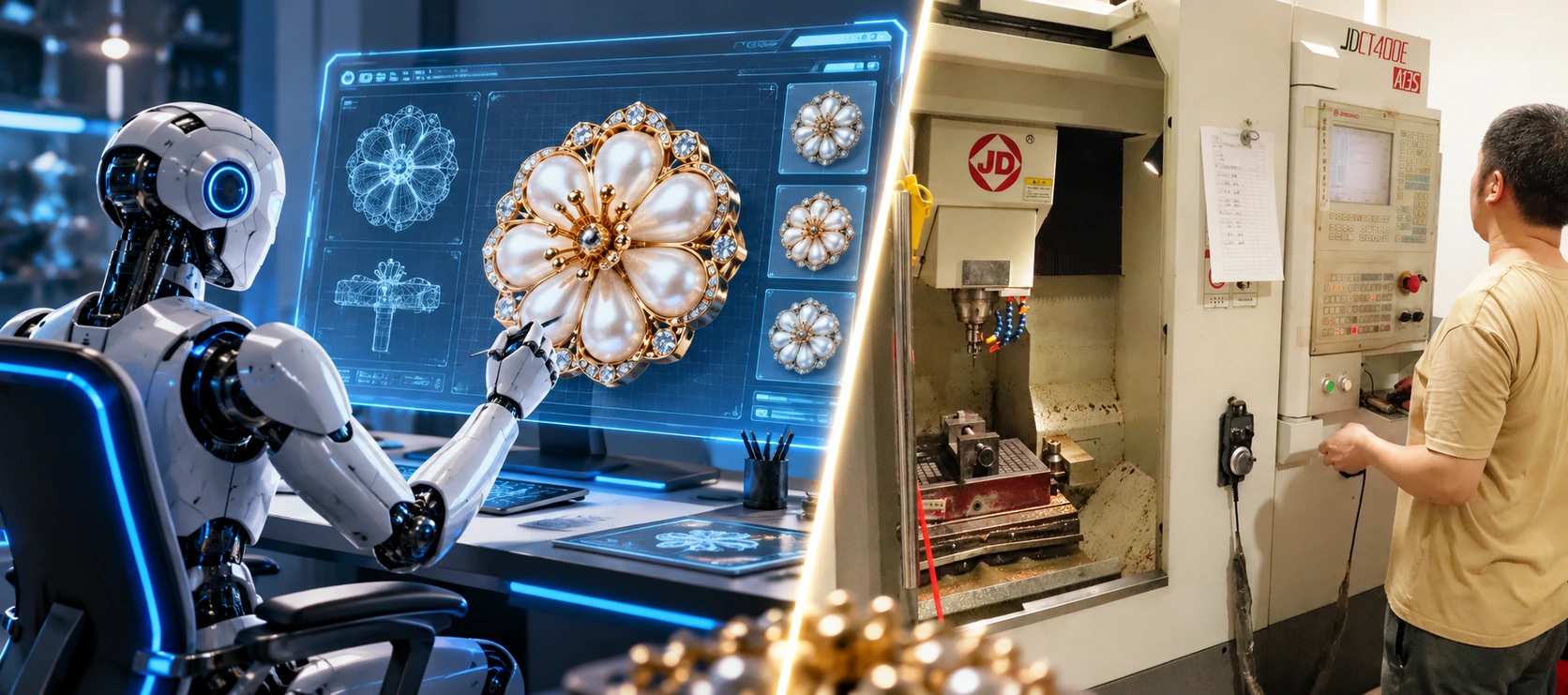
AI-generated product renders can make product development faster and easier, but turning a great-looking image into a reliable physical product still takes engineering review, sampling, testing, and close communication.
AI is changing the way products are imagined, discussed, and developed. We are seeing that change directly in our own day-to-day work. More and more customers now send us AI-generated product renders as the starting point for a new project instead of a traditional hand sketch or a fully prepared production drawing.
From a concept-development point of view, the advantages are easy to understand. A customer can describe an idea, upload a reference image, adjust the shape or style, and quickly create a visual direction without going through several rounds of back-and-forth with a designer. It is fast, convenient, and much easier to use than traditional design software.
Why AI Works So Well at the Concept Stage
For early product development, AI can be genuinely useful. It helps customers communicate what they want before every technical detail has been decided. A visual reference can make conversations about shape, proportion, decorative style, color, surface texture, and overall mood much more efficient.
Instead of saying, “I want something more vintage, more sculptural, and slightly heavier-looking,” a customer can show us an image. That is often a much better starting point for discussion.
AI can also help brands compare several directions before committing to tooling. One concept might look better with deeper relief, another with a cleaner edge, and another with a different plating tone. Exploring those ideas visually is much cheaper than building three different molds just to see which direction works best.
The Problem: A Good Render Is Not the Same as a Manufacturable Product
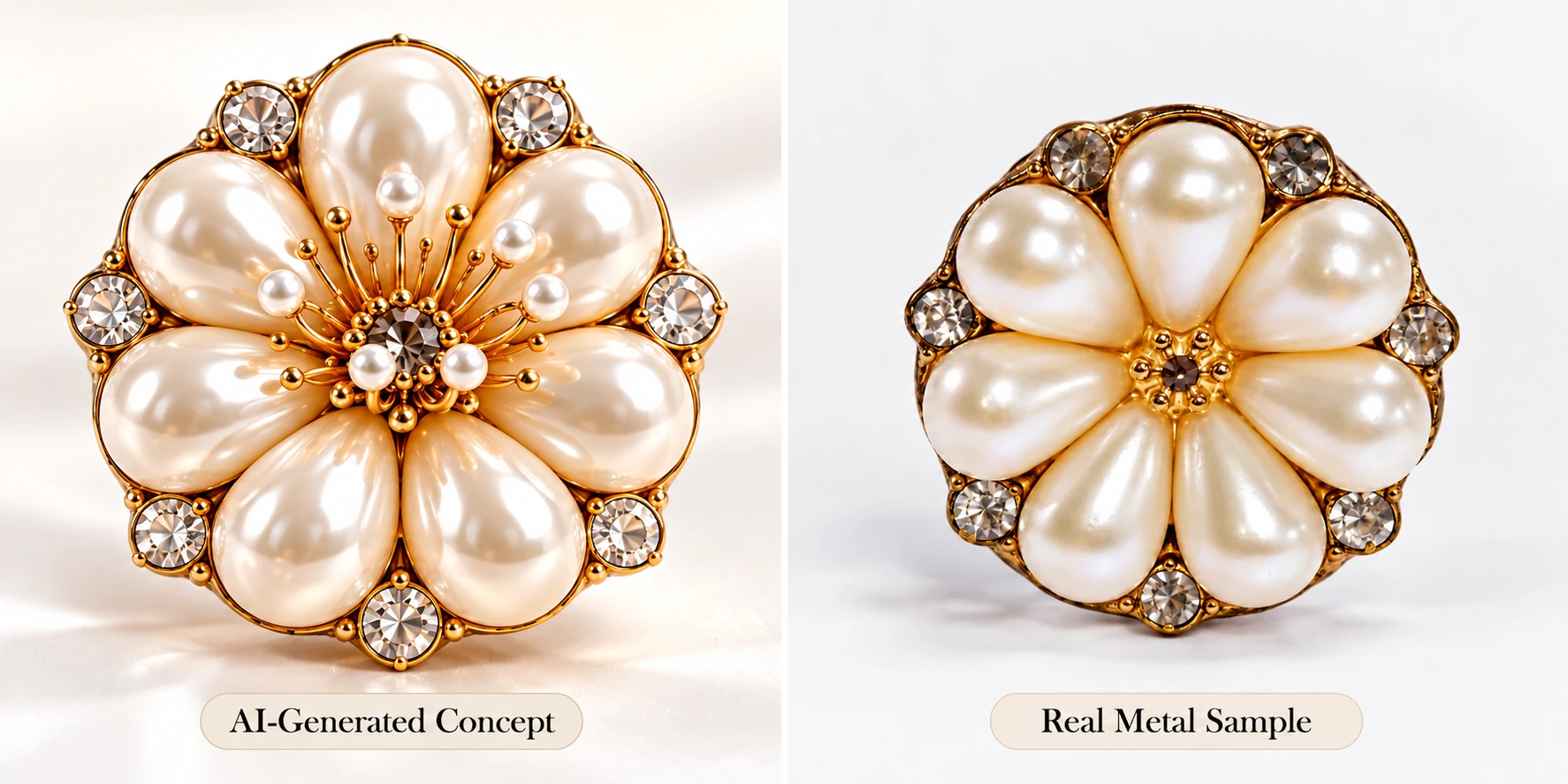
This is where the real conflict begins. AI only has to make the product look convincing on screen. Manufacturing has to make the product work in the real world.
A production design has to account for material behavior, wall thickness, structural strength, mold release, undercuts, polishing access, plating coverage, assembly space, attachment methods, tolerances, and the way the finished part will actually be used. An AI-generated image does not automatically understand those constraints.
That means a concept can look perfect in a render and still create serious problems once we try to build it.
1. The Process May Not Be Able to Produce the Shape Shown in the Image
Sometimes the visual effect depends on a shape that cannot be released from a die-casting mold, an internal structure that cannot be machined or assembled, or a decorative detail that is too small for the selected process.
A floating decorative element may have no real support point. A very deep undercut may require a more complex mold structure. A thin openwork line may look elegant in the render but may not fill consistently during die casting. A plating effect may also be shown in a way that is visually attractive but difficult to reproduce evenly on recessed areas.
2. The Product Can Be Made, but the Structure May Be Too Weak
Another common issue is strength. AI tends to optimize what we see, not what the part has to survive. A narrow connector, thin wall, sharp transition, or unsupported decoration may look refined in the image but become a weak point in the actual product.
If we copy the render exactly without engineering changes, the finished item may bend, crack, break during assembly, or fail after repeated use.
In these cases, our job is not to change the customer’s idea for no reason. We try to protect the visual character while improving the hidden engineering – for example, by slightly increasing a wall, adding support behind a decorative element, softening an internal corner, changing the attachment point, or adjusting the material and process.
3. The Sample May Look Close to the Render but Still Fail Quality Tests
A product does not become production-ready just because the first sample looks good in a photo. It still needs to meet the project requirements during assembly, handling, packaging, transport, and daily use.
If the design is too fragile or the production structure is unstable, bulk production can create a large number of defective or non-conforming parts. The result may be inconsistent dimensions, weak assembly, damaged details, poor plating coverage, or products that cannot pass the required quality checks.
This is especially important for B2B orders. A design that works once is not enough. It has to be repeatable across hundreds or thousands of pieces with acceptable consistency.
How We Turn an AI Concept into Something We Can Actually Manufacture
The answer is not to stop using AI. The answer is to treat the AI image as what it is: a concept reference.
During product design and sampling, our designers and production team review the concept, identify areas that may cause manufacturing or quality problems, and discuss the changes with the customer. There can be a lot of back-and-forth in this stage, but that communication is not wasted time. It is what helps turn a visual idea into a real product.
A typical project may move through the following steps:
- Confirm the visual direction – what parts of the AI render are essential to the customer’s idea?
- Define real specifications – size, material, finish, attachment method, use environment, quantity, and performance expectations.
- Engineering review – check whether the shape can be molded, machined, stamped, etched, plated, assembled, and inspected reliably.
- Revise the drawing or CAD – keep the design language while correcting weak or unmanufacturable details.
- Build the sample – use the real material and process whenever possible so the customer can judge the physical result.
- Test and approve – review appearance, structure, assembly, finish, and any project-specific quality requirements before bulk production.
- Move into mass production with an approved sample and clear inspection standard.
What Helps Us Review an AI-Generated Product Image Faster
If your starting point is an AI-generated product image, the project usually moves faster when you send the image together with as much practical information as you already know:
- Target size or approximate dimensions.
- Preferred material, if already decided.
- Where and how the part will be used.
- Required attachment or assembly method.
- Preferred finish, plating color, enamel, paint, stones, pearls, or other decoration.
- Expected order quantity.
- Any strength, corrosion, pull, pressure, aging, or other test requirements.
You do not need to solve every technical detail before contacting us. That is part of the development process. But the more we understand about how the product will actually be used, the easier it is to protect the original design while making it practical to manufacture.
Close Communication Matters More When the Starting Point Is AI
When an AI render and a real manufacturing process do not fully agree, the most important thing is clear communication. We may suggest changing a wall thickness, moving an attachment point, simplifying a small detail, or adjusting a finish. The customer may tell us which visual feature cannot be changed. That exchange helps both sides understand what matters most.
If communication is close and specific, design revisions move much more smoothly and misunderstandings are less likely. The goal is not simply to make the AI image look more technical. The goal is to preserve the customer’s intention while creating a product that can actually be manufactured, assembled, tested, and delivered with stable quality.
In our view, AI will become a normal part of product development. It is already making the concept stage faster. But the strongest workflow is not AI versus manufacturing. It is AI plus experienced designers, engineers, mold makers, production teams, and quality control working together.
A Concept Image Is the Beginning, Not the Final Production Drawing
AI can help a customer show us an idea in minutes. Manufacturing turns that idea into something that has to survive real materials, real forces, real assembly, and real quality standards.
That is why we welcome AI-generated product references, but we do not treat them as finished engineering drawings. We review, discuss, revise, sample, and test until the design is ready for production.
Have an AI-generated product concept and want to know whether it can actually be made? Send us the image, your target size, expected use, and any material or finish preferences. We can review the concept with you and help turn the visual idea into a production-ready metal accessory.
Contact ButtonArea
Email: sales012@wysecn.com
Website: https://buttonarea.com
WhatsApp: +86 13688844607
FAQ
Frequently Asked Questions About

Need project advice?
Add Your Heading TeOur team can review your drawing and recommend the right mold-making approach for your metal accessory project.xt Here
Drawing review
Structure optimization
Mass-production support
01. Can an AI-generated product image be used directly for manufacturing?
Not usually. An AI-generated image is best used as a concept reference. Before production, we still need to review the material, wall thickness, structure, mold release, attachment method, plating, assembly space, and other manufacturing requirements.
02. Why does an AI-generated design sometimes need to be changed before production?
Some details that look good in an AI render may be difficult to mold, machine, assemble, or plate reliably. We may adjust wall thickness, support points, undercuts, attachment positions, or small decorative details while keeping the original design direction as closely as possible.
03. What should I send with an AI-generated product image for a faster review?
Please send the AI image together with the target size, preferred material, intended use, attachment method, finish or plating requirements, expected quantity, and any testing requirements. Even approximate information can help us evaluate the design more efficiently.
04. How do you turn an AI concept into a production-ready metal product?
We normally confirm the visual direction first, define the real specifications, review manufacturability, revise the drawing or CAD, make a physical sample, test and approve the result, and then move into mass production based on the approved sample and inspection standard.