Perfume Cap Manufacturer Quality Checks: A Practical Guide for Fragrance Brands
What to look for from the first metal casting to the final packed carton — and the questions worth asking before you approve a production run.
Introduction: A Sample Is Not the Same as a Production Order
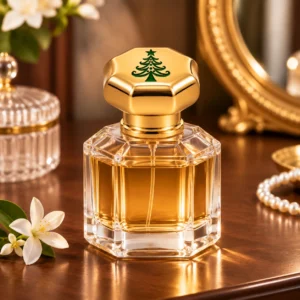
You are not simply buying a batch of metal pieces. You are trusting a manufacturer with a component that has to fit your bottle, represent your brand and arrive in good condition by the date your launch depends on. A Zamac cap can look perfect on a pre-production sample and still show problems in a larger run: a soft or uneven finish, scratches that remain after polishing, inconsistent colour, a loose insert or a decorative part that does not sit straight.
At ButtonArea, we develop metal packaging accessories for fragrance and spirits brands, including custom Zamac perfume caps, metal labels, collars and decorative components. Our related production work includes CNC mold development, zinc-alloy die casting, trimming, polishing, electroplating, decorative assembly and quality inspection. We believe buyers should assess a cap through a chain of checkpoints, not by looking at one approved sample or a catalogue photo.
This guide follows the main stages of that chain and explains what we recommend checking when developing a custom metal perfume cap. We also distinguish between checks we carry out as part of our production control and specific test levels that should be agreed for each project.
1. Start on the Casting Floor: Mold and Die-Casting Quality
Quality starts before the first cap reaches the polishing line. For a die-cast Zamac cap, mold design and casting conditions determine whether fine details can be reproduced consistently.
At the design-review stage, we look at the cap’s overall shape, wall thickness, raised and recessed details, draft angles, inner fitting and the areas where metal needs to flow into narrow features. CNC mold making helps us develop the tool around the approved design. During die casting, the team needs to watch for defects such as incomplete filling, cold shuts, air holes, shrinkage marks, flash, cracks and deformation.
What buyers should ask to see
- A drawing or 3D file showing the cap’s outer shape and inner structure.
- The approved sample used as the production reference.
- How first-piece and in-process checks are recorded.
- How the manufacturer handles casting defects and whether rejected parts are separated before finishing.
A useful supplier question is not simply “Can you make this shape?” but “Which details are most difficult to cast, how have you allowed for them in the mold, and how will you check them during production?”
2. Follow the Part Through Trimming, CNC Work and Polishing
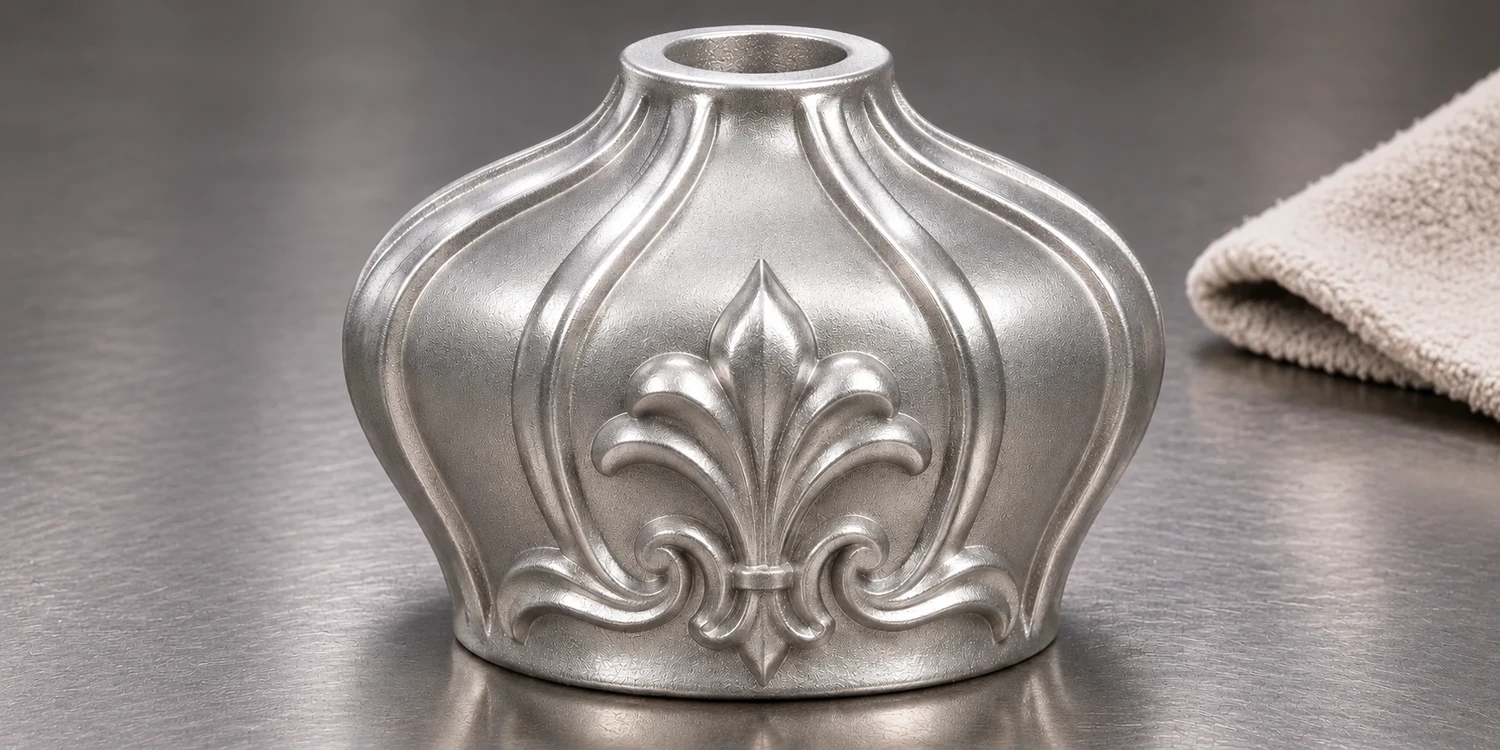
After casting, the cap may need trimming, deburring, CNC machining and polishing before it is ready for plating. These steps affect both appearance and fit.
At ButtonArea, the production review focuses on removing flash and unwanted casting marks while keeping the designed edges, grooves and raised details clear. Where the cap has an internal groove or a specific fitting surface, machining needs to maintain the dimensions required for assembly. Polishing should improve the surface without flattening fine relief or changing the intended shape.
What we check
- Parting lines, flash and burrs are removed where required.
- The top, side walls, corners and decorative recesses have an even surface.
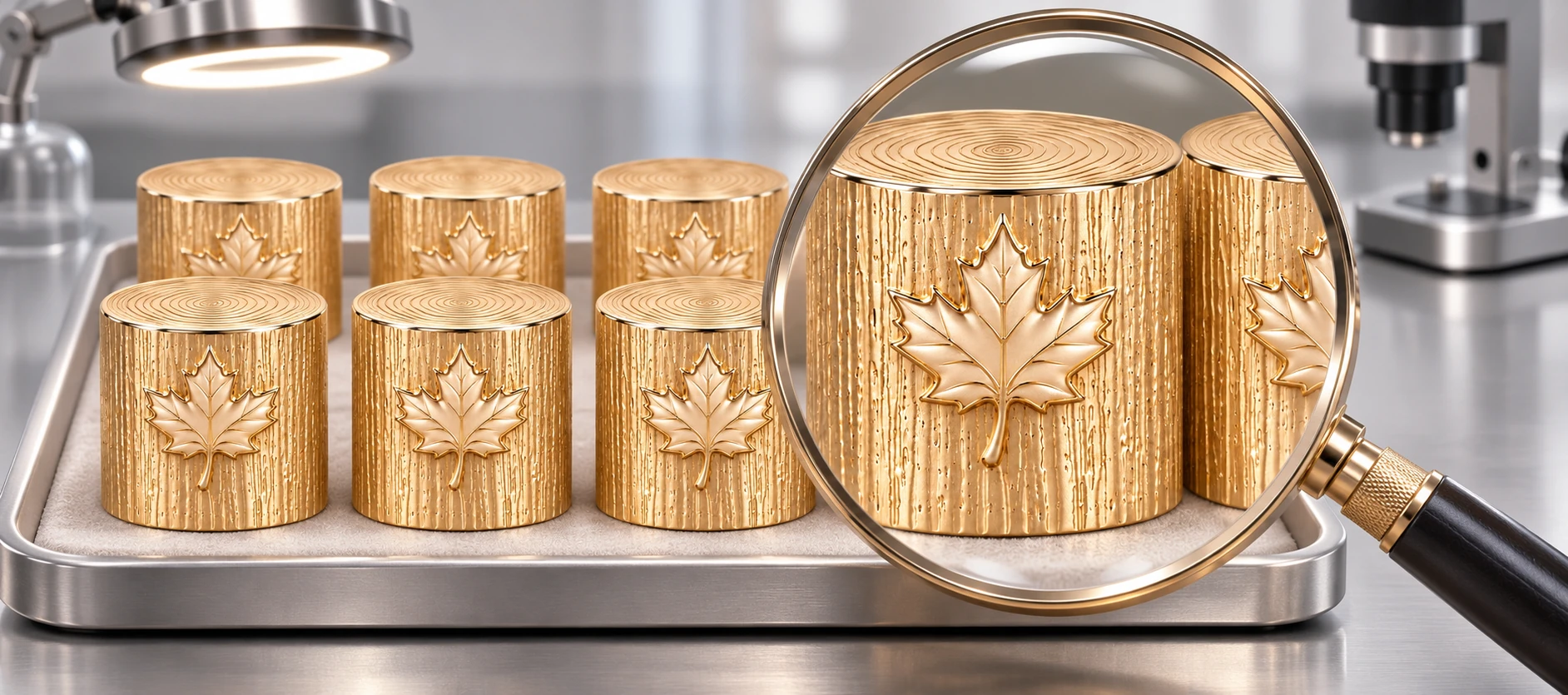
- Fine relief, lettering and logo details remain clear after polishing.
- The internal fitting and critical dimensions remain within the approved specification.
- There are no obvious deep scratches, pits or rough areas that would remain visible after plating.
3. Treat Electroplating as a Separate Quality Checkpoint
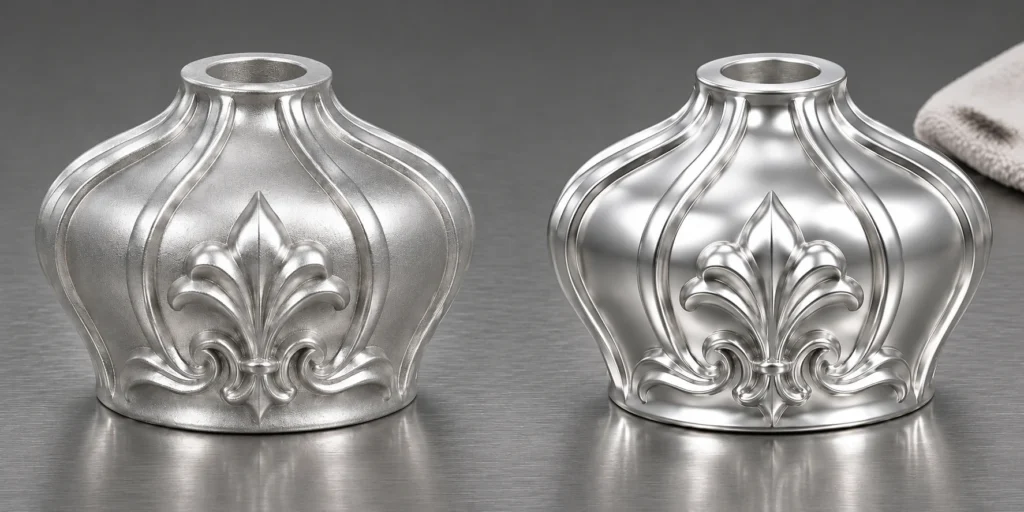
Electroplating has a major influence on the final look of a perfume cap. Bright gold, champagne gold, silver, rose gold, gunmetal and antique finishes can all vary depending on the base surface, preparation and plating conditions.
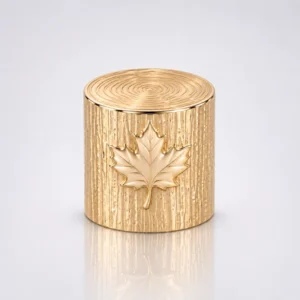
A colour name alone is not a complete specification. We recommend confirming a physical finish sample or approved reference on the actual cap shape. The inspection should cover the top, side walls, edges, recessed patterns and raised details, not just the most visible front surface.
What to review after plating
- Colour and gloss level against the approved sample or agreed colour reference.
- Even coverage across visible and less visible surfaces.
- No obvious stains, bubbles, peeling, exposed base metal or discolouration.
- No new scratches or handling marks.
- Raised logos and recessed patterns remain clear and visually balanced.
For ButtonArea projects, plated components are checked against the agreed appearance and project requirements before they move to the next stage. The inspection criteria should be confirmed before bulk production, especially when the cap uses a special metallic colour or a combination of matte and polished areas.
If electroplating is carried out by a specialist partner, ask how the parts are identified, protected during transfer and checked when they return. A clear handover standard helps prevent surface defects from being passed into assembly.
4. Inspect the Complete Assembly, Not Just the Metal Shell
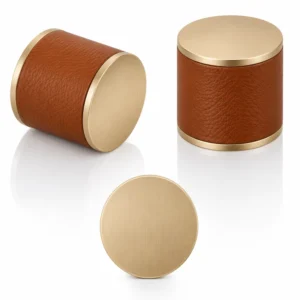
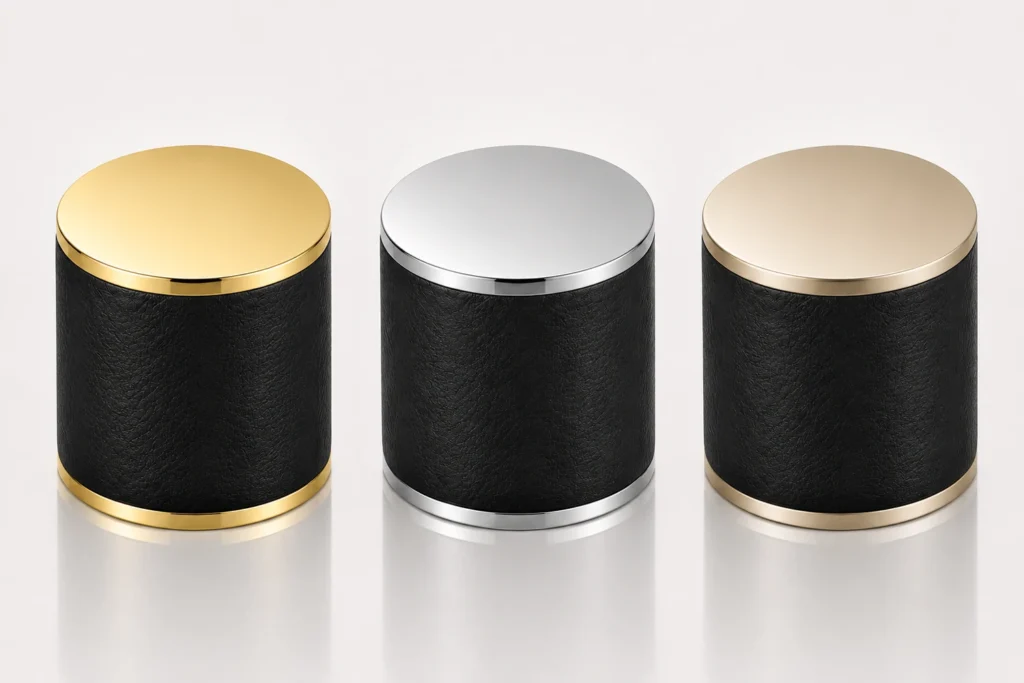
Many premium fragrance caps combine a Zamac outer shell with other components. Depending on the design, the assembly may include a PP or other inner cap, a magnet, a crystal or synthetic gemstone, enamel details, a leather wrap or a separate decorative insert.
Each component has to fit the overall design and stay in place during normal handling. A metal shell can pass its own appearance check while the finished cap still has an assembly problem.
Assembly checks should include
- The inner cap or insert sits in the correct position and is retained securely.
- The cap fits the bottle neck and pump assembly as intended.
- Magnets, where used, are correctly positioned and provide the agreed closing action.
- Crystals and gemstones match the approved colour, size and orientation, with no looseness or visible tilt.
- Enamel or printed details have clean edges, even colour and no obvious overflow or missing areas.
- Leather or other attached materials are aligned, firmly fixed and free from lifting edges or adhesive residue.
We recommend checking the assembled cap on the actual bottle or a dimensionally accurate test fixture. This confirms not only whether the parts fit individually, but whether the complete cap sits straight and feels right when used.
5. Build a Multi-Stage Inspection Line: From Incoming Check to Outgoing Check
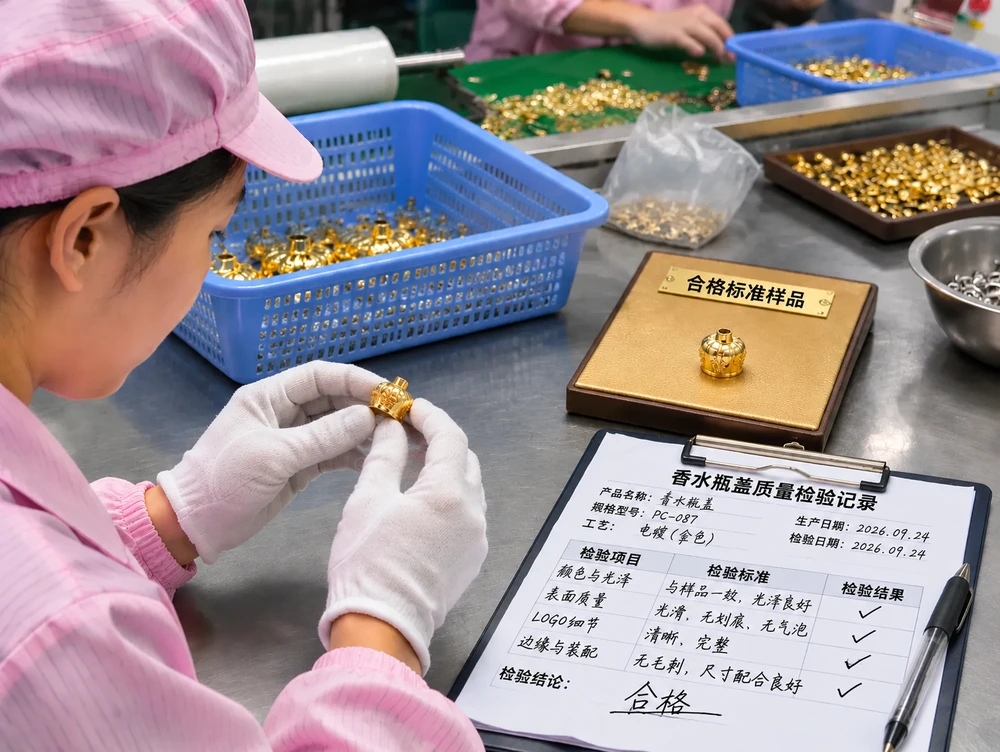
A reliable quality process should not depend on one final visual inspection. We recommend setting checkpoints throughout the order so issues can be caught close to the stage where they occur.
For ButtonArea’s custom metal accessories, the inspection plan can be organised around the following stages:
- Incoming quality check (IQC):review incoming materials and components against the approved specification.
- In-process quality check (IPQC):inspect key production stages such as casting, trimming, machining, polishing and assembly.
- Plated-part inspection:review the returned surface-finished components for colour, coverage and visible defects before assembly continues.
- Final quality check (FQC):check the complete cap against the approved sample, drawing and functional requirements.
- Outgoing quality check (OQC):verify the finished quantity, packing condition, carton labels and shipment details before dispatch.
This staged approach also makes it easier to trace a problem. If a plating issue appears, the team can review the surface-finishing checkpoint. If a cap sits unevenly, the review can return to the fitting dimensions or assembly stage.
6. Choose Reliability Tests That Match the Cap Design
A visual check cannot confirm every performance requirement. Depending on the material, finish, inner structure and intended use, a custom perfume cap may need additional testing.
ButtonArea’s quality checks can include salt-spray, aging, pull and pressure tests when they are relevant to the product and agreed project requirements. The purpose is to check whether the metal finish, assembled structure and decorative components remain suitable for the expected use.
Possible tests to discuss
- Salt-spray test:evaluates corrosion resistance of the selected finish under the agreed test conditions.
- Aging test:checks whether the finish, adhesive or decorative assembly changes after specified exposure.
- Pull test:evaluates the retention of an insert, attached component or other feature where pull strength matters.
- Pressure test:checks a component or assembly where a defined pressure or structural requirement applies.
- Friction or rub test:can be specified when the finish or printed detail is likely to experience repeated contact.
The important point is to define the test method, duration, sample quantity and acceptance criteria before production. A 48-hour salt-spray test or a 200-cycle friction test, for example, should only be stated as a project standard if both sides have agreed to it and the test is actually carried out under those conditions.
A useful test report should identify the tested sample, test conditions, duration or cycle count, result and acceptance decision. This makes the result meaningful for repeat orders and supplier evaluation.
7. Set Defect Standards and Agree What Happens When a Batch Fails
Before production starts, the buyer and manufacturer should agree what counts as a critical, major or minor defect. This is particularly important for high-visibility perfume caps, where small differences in colour, alignment or surface quality can affect the overall packaging appearance.
We recommend defining:
- Critical dimensions and bottle-fit requirements.
- Acceptable limits for colour and gloss variation.
- Surface defects that are not allowed, such as peeling, exposed base metal, cracks or sharp burrs.
- Requirements for logo clarity and decorative-component alignment.
- The inspection method and sampling level.
- The procedure for segregating, reworking or rejecting non-conforming parts.
Also agree what happens if a plated batch or assembled lot fails inspection. Will the affected parts be sorted, reworked, returned to the finishing partner or rejected as a full lot? The response should be clear before the order is placed, not negotiated after a problem appears.
8. Protect the Finish During Packing and International Shipping
A cap can pass every production check and still arrive damaged if the packing method is unsuitable. Polished or plated metal parts can scratch when they rub against each other, while protruding stones and decorative details can be damaged by impact.
We recommend selecting the packing method according to the cap’s weight, finish and decorative structure. Individual bags, blister trays, foam separators or compartmented inserts may be considered depending on the product.
Before shipment, confirm
- Each cap is protected from direct contact with other metal parts.
- Crystals, enamel details and protruding edges are protected from impact.
- The inner tray or divider prevents movement inside the carton.
- Carton strength and packing quantity suit the shipment route.
- Final quantity and carton labels match the order documents.
How Buyers Can Evaluate a Perfume Cap Manufacturer
Before placing a first order, we suggest asking a potential supplier a few specific questions:
- Which processes are handled by your team, and which are completed by specialist partners?Ask how components are tracked and checked when they move between processes.
- How do you check the first production pieces?Ask to see how the approved sample and drawing are used as references.
- What inspection stages are included?Confirm incoming, in-process, plated-part, final and outgoing checks where relevant.
- Which tests can you arrange for this design?Ask for the method, duration, sample quantity and acceptance criteria in writing.
- What happens when a batch fails?Confirm the sorting, rework, return or rejection procedure.
- Can we arrange customer or third-party inspection?Agree on the inspection stage and timing before shipment.
These questions help buyers understand not just what a supplier promises, but how the production and inspection process is organised.
What to Send Us for a Faster Quality Review
If you are developing a new custom Zamac perfume cap, it helps to provide:
- A bottle drawing or physical bottle sample, including neck and pump details.
- A cap drawing, 3D file or reference image.
- Material preference, target weight and overall dimensions.
- Plating colour, gloss level and surface-finish reference.
- Logo artwork and details of any crystal, enamel, leather or other decoration.
- Expected order quantity, sample requirements and target delivery date.
- Any required tests, inspection standards or packing instructions.
The clearer the requirements are at the start, the easier it is to prepare a useful sample and establish a production standard that both sides can follow.
Final Thoughts: Quality Is a Chain, Not a Single Inspection
A dependable perfume cap is the result of many connected decisions. Mold development, die casting, trimming, machining, polishing, electroplating, assembly, inspection and packing all affect the finished product. A strong quality process makes these stages visible and gives each one a clear checkpoint.
At ButtonArea, we support fragrance brands with custom metal packaging components, including custom Zamac perfume caps, metal labels and decorative collars. We work with customers to review designs, develop samples and agree on the inspection requirements that matter for each project.
If you are planning a new perfume cap or want to review the quality requirements for an existing design, send us your bottle drawing, reference sample or project details. We will be happy to discuss the development and inspection plan with you and get back to you within 24 hours.
Email: sales012@wysecn.com
Website: https://buttonarea.com
WhatsApp: +86 13688844607
FAQ
Frequently Asked Questions About

Need project advice?
Add Your Heading TeOur team can review your drawing and recommend the right mold-making approach for your metal accessory project.xt Here
Drawing review
Structure optimization
Mass-production support
01. What casting defects should be checked when manufacturing Zamac perfume caps?
Common defects include incomplete filling, cold shuts, air holes, shrinkage marks, flash, cracks, and deformation. We check the casting quality, fine details, wall thickness, and critical dimensions before moving parts to trimming and polishing.
02. How do you ensure consistent plating quality on custom metal perfume caps?
We compare the plating colour and gloss level against an approved physical sample or agreed colour reference. We also inspect coverage across the top, side walls, edges, and recessed details, checking for stains, bubbles, peeling, scratches, and exposed base metal.
03. How do you check gemstone assembly and fitting on luxury perfume caps?
We check that gemstones match the approved colour, size, and orientation, with no looseness or visible tilting. We also inspect the inner insert and test the assembled cap on the actual perfume bottle or a dimensionally accurate fixture to confirm proper fit.
04. What quality tests should be arranged before bulk production of perfume caps?
Depending on the design and project requirements, testing may include salt-spray, aging, pull, pressure, and friction tests. The test method, duration, sample quantity, and acceptance criteria should be agreed before production. We also check protective packaging to prevent scratches or gemstone damage during shipping.