Choosing the Right Metal for Custom Perfume Labels: Brass, Aluminum, Stainless Steel & Zinc Alloy
A practical guide to comparing metal options, matching materials to your bottle design and developing a label that looks right and performs well.
Introduction
A perfume label may look like a small part of the package, but it has a big job. It carries the brand name, helps define the bottle’s style and gives customers one of the first details to notice when they pick up a fragrance. When a brand moves from a paper or plastic label to metal, the choice of material matters just as much as the artwork.
At ButtonArea, we work with fragrance brands on custom metal packaging components, including bottle labels, caps, collars and decorative details. One question comes up again and again: which metal is right for this particular perfume bottle? Brass, aluminum, stainless steel and zinc alloy can all be used, but they differ in appearance, weight, forming options, finishing possibilities and cost.
In this guide, we compare the four materials in practical terms and explain how we approach material selection and custom label development. There is no single best metal for every project. The right choice depends on the bottle, the brand style and the production requirements.
1. Brass: A Warm, Premium Look with Good Formability
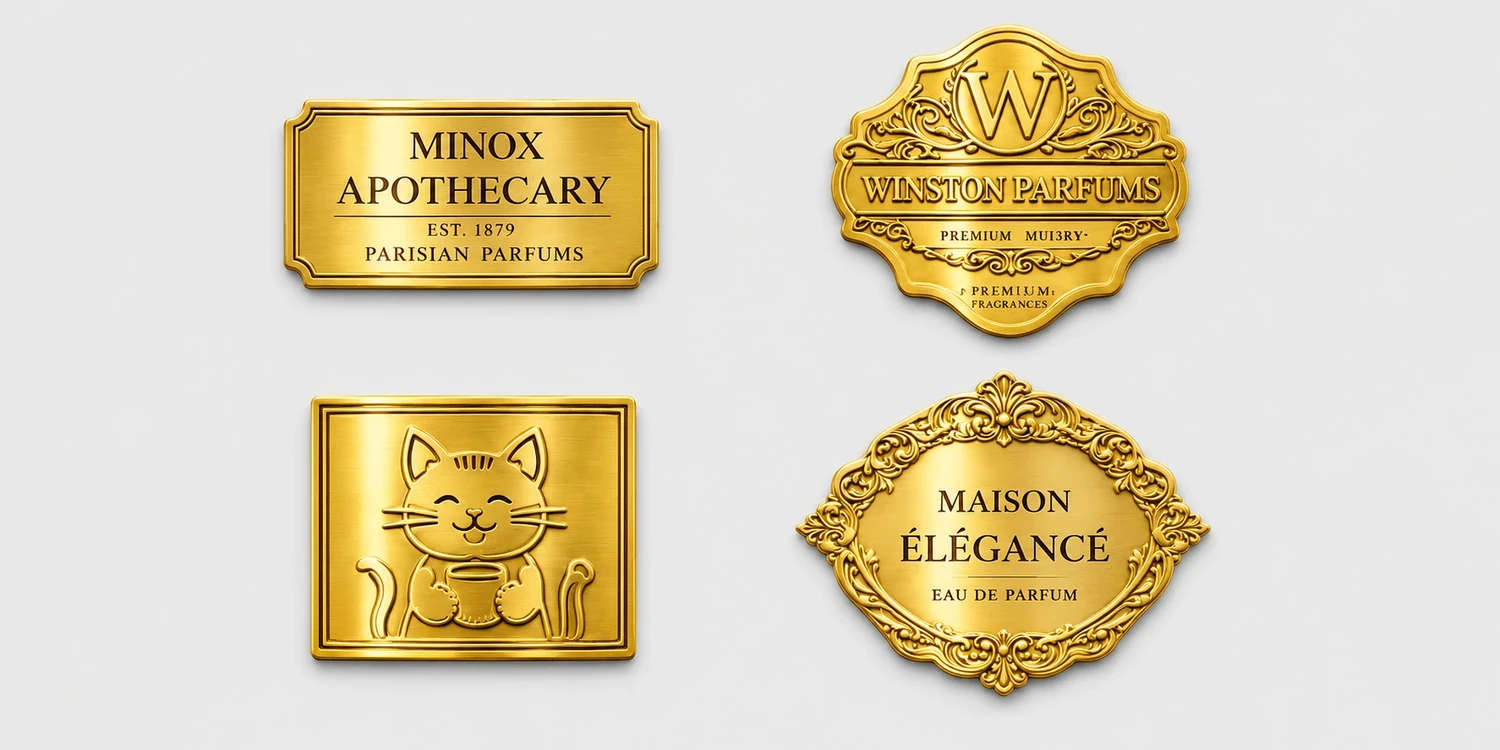
Brass is a popular option when a perfume label needs a rich metallic appearance and clearly defined details. Its warm natural colour already feels premium, and plating can take it in different directions, from bright gold and antique brass to silver-tone finishes.
One of brass’s main advantages is its ductility. It can be stamped and formed into labels with raised logos, recessed lettering, decorative borders and fine graphic details. This makes it a strong candidate for brands that want a relatively thin metal label with a crafted look.
What we like about brass
- Warm, substantial appearance that works well with classic, vintage and luxury fragrance designs.
- Well suited to stamping, embossing and debossing, so logos and lettering can have clear depth.
- Can be shaped to follow a bottle’s curve when the design and material thickness are planned properly.
- Accepts a range of finishes, including polished, brushed, plated and antique effects.
Things to consider
- Generally heavier than aluminum, so it may not be the first choice when minimum weight is essential.
- The surface can tarnish or change over time if left untreated; select the finish and protective coating for the intended use.
- Very fine details still need to be checked against the thickness, tooling and forming limits of the design.
We often recommend brass for premium front labels, embossed brand plates and designs where the metal itself should feel like part of the fragrance’s identity.
2. Aluminum: Lightweight and Flexible for Clean, Modern Labels
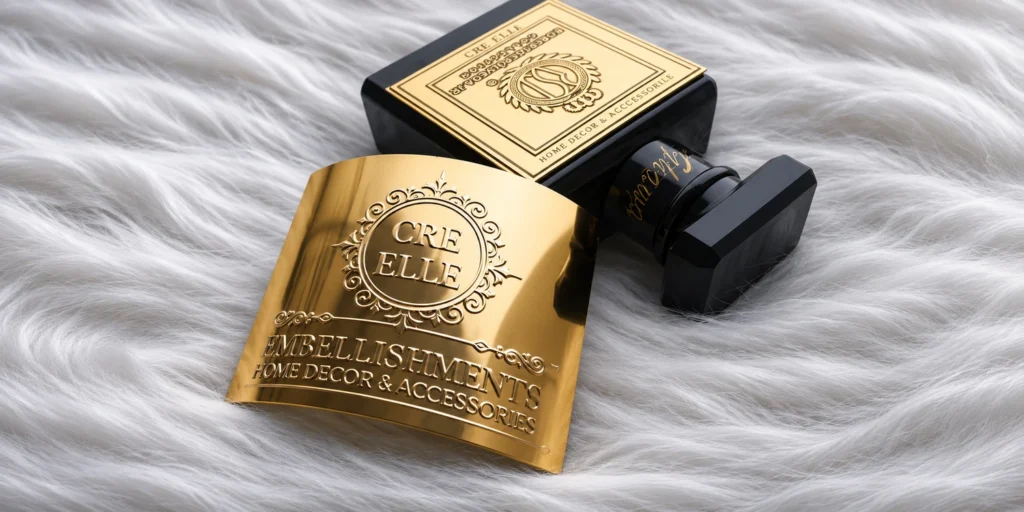
If weight is a priority, aluminum is worth considering. It is much lighter than brass and many stainless-steel options, which can help with smaller glass bottles, slim designs or labels that cover a relatively large area.
Aluminum can be stamped, cut and finished in different ways. It can create a neat, modern look, especially with brushed, matte or anodized-style finishes. It is useful when a brand wants a metal appearance without adding too much weight to the bottle.
What we like about aluminum
- Low weight makes it suitable for larger labels and packaging where weight needs to be controlled.
- Can be stamped or cut into custom outlines and simple decorative shapes.
- Works well with brushed and matte effects for a clean, contemporary look.
- A practical option when a label needs to sit on a lighter glass package.
Things to consider
- Relatively soft, so thin sections and exposed edges need to be designed with handling and deformation in mind.
- Deep relief may be more limited than with a thicker brass part or a die-cast zinc-alloy component.
- The final appearance depends on the alloy, surface preparation and finishing process.
We would look at aluminum for lightweight perfume labels, clean logo plates and designs where a slim profile matters more than a heavy, jewellery-like feel.
3. Stainless Steel: A Practical Choice for Durability and a Crisp Finish
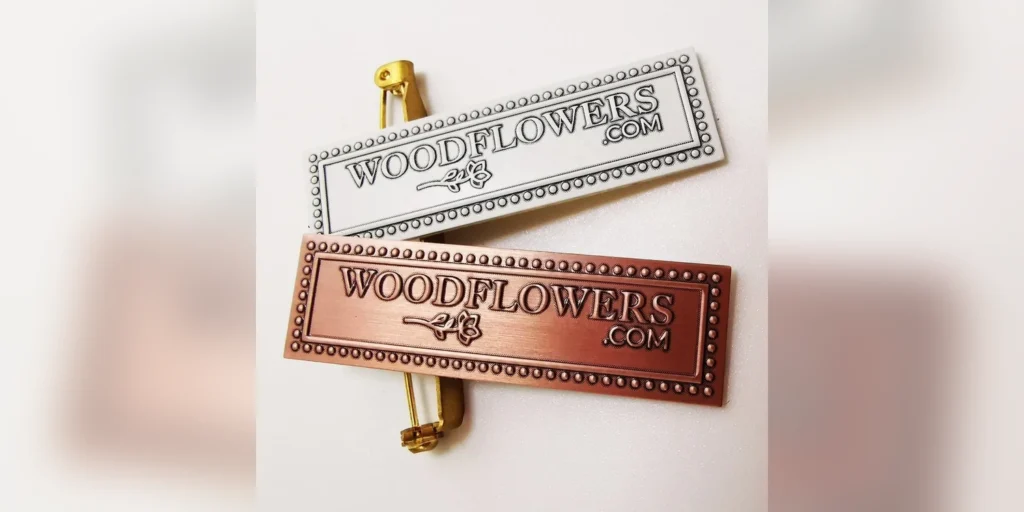
Stainless steel is often considered when durability, surface stability and a crisp metallic look are high on the list. It has a firm feel and can be finished with brushed, satin or polished surfaces.
For perfume packaging, stainless steel can be used for slim labels, nameplates and decorative plates. It is worth considering when a label may be handled frequently or when the brand wants a clean silver-tone appearance.
What we like about stainless steel
- Offers good strength and resistance to everyday wear.
- Many grades provide good corrosion resistance, although exact performance depends on the grade and environment.
- Can achieve a crisp brushed or polished appearance that suits modern and minimalist packaging.
- Useful for labels that need to remain dimensionally stable during normal handling.
Things to consider
- Can be harder to form than brass or aluminum, depending on grade and thickness.
- Cutting, stamping and forming may require suitable tooling and process planning.
- Weight and cost should be considered against the size and complexity of the label.
We would consider stainless steel for modern fragrance labels, clean silver-tone branding and projects where durability is more important than a warm, traditional metal appearance.
4. Zinc Alloy: Best for Thicker, More Three-Dimensional Metal Decorations
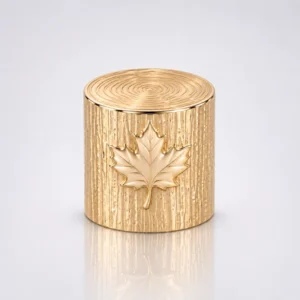
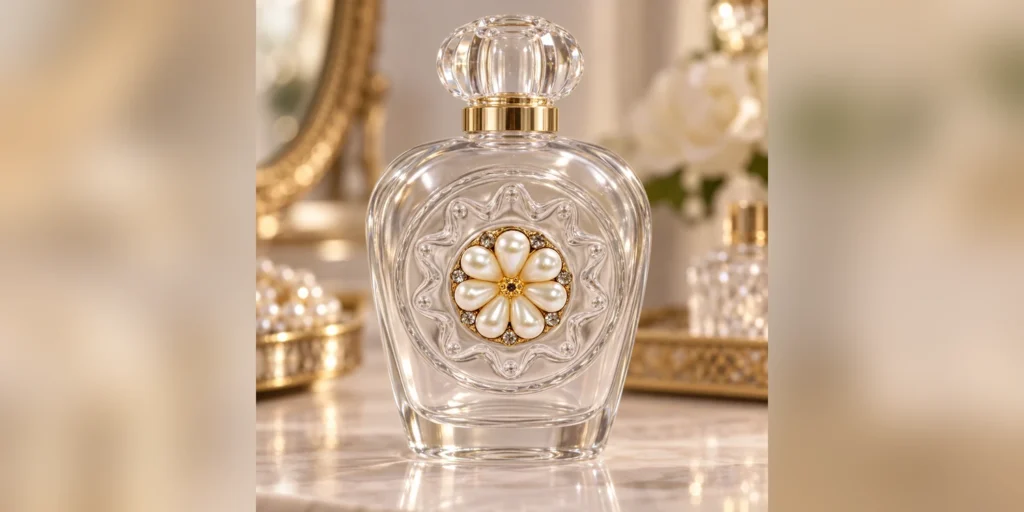
Zinc alloy, often referred to as Zamac, is different from brass, aluminum and stainless steel because it is commonly used for die-cast components rather than thin sheet-metal labels. Its good casting flow makes it suitable for forming thicker shapes, raised logos, sculpted borders and more complex three-dimensional details.
For a perfume bottle, a zinc-alloy label may be closer to a small decorative badge or metal ornament than a conventional flat label. This can be a good direction when a brand wants the front of the bottle to have a stronger visual presence.
What we like about zinc alloy
- Can form detailed three-dimensional shapes through die casting.
- Raised logos, recessed areas, decorative frames and sculpted motifs can be integrated into the body.
- Offers a solid metal feel and works with a wide range of plating and decorative finishes.
- Useful when the label is intended to be a visible design feature rather than a very thin plate.
Things to consider
- A die-cast zinc-alloy badge is generally thicker and heavier than a stamped brass or aluminum label.
- Requires mold development, so tooling cost and project quantity should be considered.
- The design needs to account for casting flow, wall thickness, draft and details that can release from the mold.
We would recommend zinc alloy when the design calls for a dimensional emblem, a raised decorative logo or a substantial metal ornament on the front of the perfume bottle.
At a Glance: Comparing the Four Materials
Material | Main strengths | Watch-outs | Good fit for |
Brass | Warm premium look; good for stamping and relief | Heavier; finish may need protection | Embossed labels and classic luxury designs |
Aluminum | Lightweight; clean modern finishes | Softer; deep relief may be limited | Large or slim lightweight labels |
Stainless steel | Strength; wear and corrosion resistance | Forming may need more demanding tooling | Modern labels and crisp silver-tone details |
Zinc alloy | Complex 3D shapes; solid feel; plating options | Needs a mold; usually thicker and heavier | Raised badges and sculpted metal ornaments |
This is a general comparison. The best choice still depends on the specific alloy or grade, thickness, label dimensions, surface finish, bottle shape and attachment method.
How We Help You Choose the Right Material
When a brand contacts us about custom perfume labels, we do not start by choosing a metal from a catalogue. We first look at the bottle and the job the label needs to do. A small logo plate on a flat glass panel has different requirements from a large decorative label that follows a tapered, curved bottle.
1. Start with the bottle shape
Is the label going onto a flat front panel, a cylindrical bottle or a bottle that becomes narrower toward the base? Curved and tapered glass surfaces need special attention. The label outline and curvature may need to be adjusted so it sits neatly against the glass rather than lifting at the edges.
2. Decide how much relief you want
For fine raised lettering on a relatively thin plate, stamped brass or aluminum may be suitable. For a thicker, more sculpted badge, zinc-alloy die casting may make more sense. If the design is mainly about a clean, flat silver-tone surface, stainless steel or aluminum could be a better fit.
3. Think about weight and hand feel
A heavier metal label can make a bottle feel more substantial, but it is not automatically better. We consider the glass bottle size, wall structure, label area and overall balance before recommending a material.
4. Choose the finish with the material
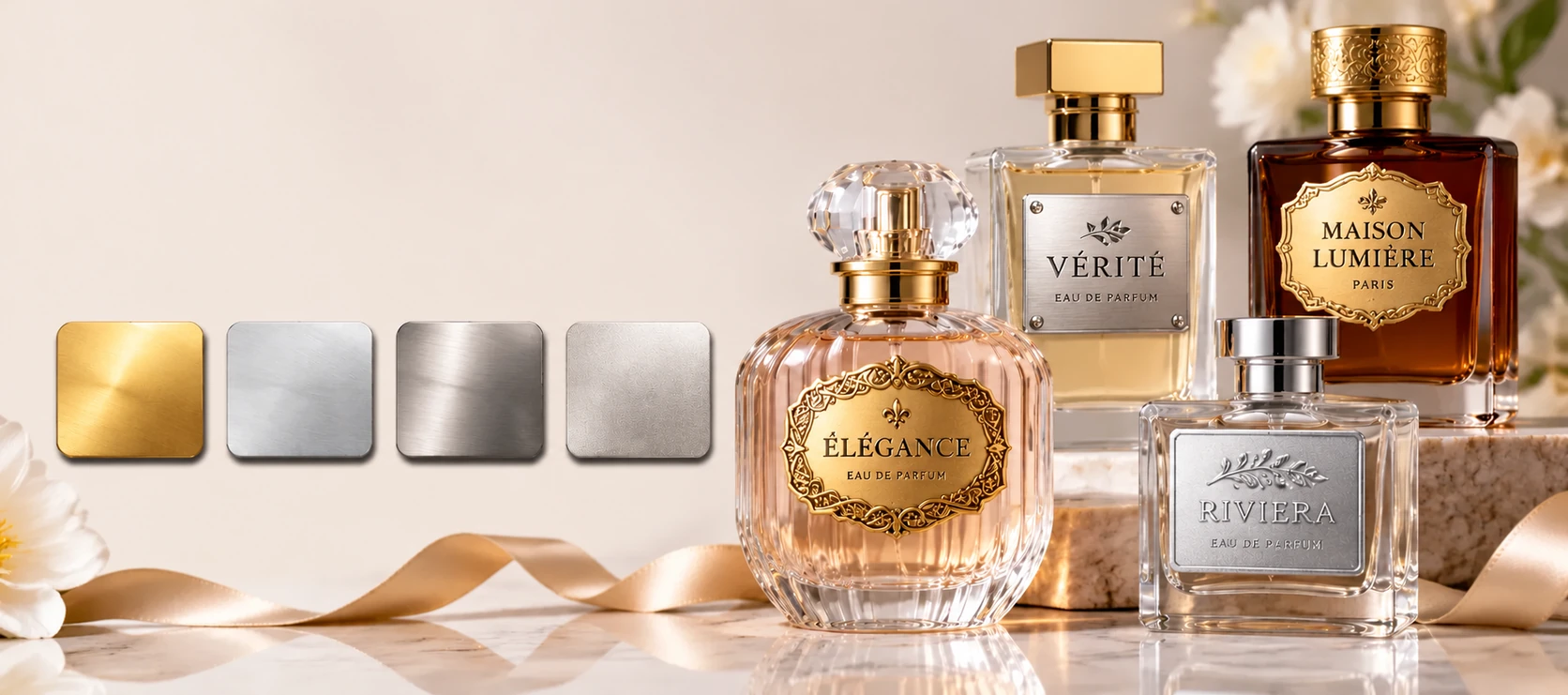
The same artwork can look very different in bright gold, brushed silver, matte nickel, antique brass or a dark metallic finish. We recommend reviewing the finish on a physical sample because the base metal, surface preparation and plating all affect the final appearance.
5. Confirm how the label will be attached
Common options include pressure-sensitive adhesive, such as a suitable 3M-backed system, or a mechanical fixing method where the bottle and design allow it. For curved glass, the adhesive, label flexibility, contact area and surface cleanliness all matter. We check the fixing method as part of the sample review.
How to Customize Perfume Labels: From Artwork to Approved Sample
If you are wondering how to customize perfume labels, the easiest way to start is to share the bottle and the design direction with us. We can then review the material, process and construction before moving into tooling or sampling.
- Share the bottle details. Send a bottle drawing or physical sample, including front-panel dimensions, curvature and any tapered areas.
- Provide your artwork. A vector logo, text layout, decorative pattern or clear reference image helps us review line thickness and detail.
- Choose the material and look. Tell us whether you prefer brass, aluminum, stainless steel or a zinc-alloy decorative badge, along with the target colour and finish.
- Confirm the construction. We will discuss thickness, relief depth, edge shape, adhesive or fixing method and any special assembly requirements.
- Review a sample. Check the size, fit, colour, logo clarity, surface quality and attachment before approving bulk production.
- Move into production and inspection. Once the sample is approved, we follow the agreed specifications and inspect the finished labels against the approved reference.
What Should You Send Us for a Faster Review?
To help us give you a useful recommendation without too many rounds of back-and-forth, it helps to prepare:
- A bottle drawing or physical glass bottle sample.
- Label dimensions and the area where it will be placed.
- Logo artwork and any text or decorative graphics.
- Preferred metal, colour and surface finish.
- Target quantity and expected launch schedule.
- Any requirements for curved surfaces, water exposure, handling or packaging.
If you are still at the concept stage, that is fine too. A reference image and a short explanation of the look you want are enough for an initial discussion.
Final Thoughts: Choose the Metal That Fits the Design
There is no single metal that works best for every perfume label. Brass offers a warm, premium look and good stamping options. Aluminum keeps the label light. Stainless steel brings strength and a crisp finish. Zinc alloy opens the door to thicker, more sculpted designs.
At ButtonArea, we help fragrance brands turn these choices into finished packaging components. Whether you need slim custom perfume bottle labels, an embossed brass nameplate or a three-dimensional zinc-alloy badge, we can review the bottle, discuss the right process and develop a sample for approval.
Send us your bottle drawing, logo artwork, reference images or physical sample. We will be happy to discuss your project and get back to you within 24 hours.
Email: sales012@wysecn.com
Website: https://buttonarea.com
WhatsApp: +86 13688844607
FAQ
Frequently Asked Questions About

Need project advice?
Add Your Heading TeOur team can review your drawing and recommend the right mold-making approach for your metal accessory project.xt Here
Drawing review
Structure optimization
Mass-production support
01. Can you help me choose the right metal for my custom perfume bottle labels?
Yes. We work with brass, aluminum, stainless steel and zinc alloy (Zamac). Brass is ideal for warm, premium finishes and embossed details, aluminum is suitable for lightweight labels, stainless steel offers strength and durability, while Zamac works well for thicker, three-dimensional decorative designs. We can recommend a material based on your bottle design and project requirements.
02. Can you customize embossed metal labels to fit curved or tapered perfume bottles?
Yes. We can customize the label shape, dimensions and curvature to match different perfume bottles. Before production, we review the bottle profile, label thickness, fitting area and attachment method to help ensure the label sits properly without lifting at the edges. A physical bottle sample is especially helpful for checking the fit.
03. What information do you need to provide a quote and develop a custom perfume label sample?
Please share your bottle drawing or physical sample, label dimensions, logo artwork, preferred metal material, plating colour, target quantity and expected delivery schedule. Reference images are also helpful. Our team will review the design, recommend a suitable manufacturing process and develop a sample for your approval before bulk production.